Emotion color matching
3–4歳Emotional Wellbeing用意するもの: Crayons or markers
Paper
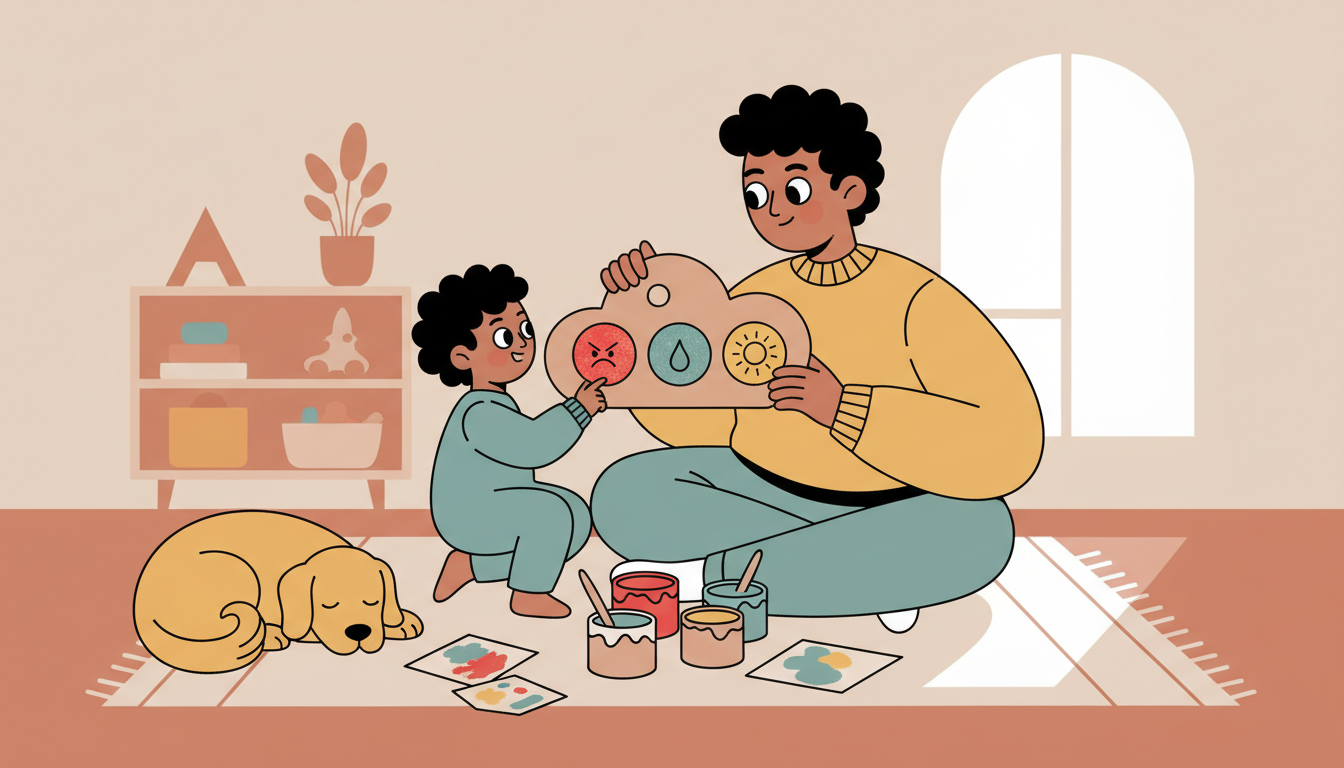
Assign colors to different emotions together. Maybe red for angry, blue for sad, yellow for happy. Throughout your time together, check in by asking what color they feel. You share your color too. Draw or paint with emotion colors. This gives your child concrete language for abstract feelings.
Steadilyの発達の旅の一部 — わが子に合わせてパーソナライズされているよ。
このアクティビティのやり方
Assign colors to different emotions together. Maybe red for angry, blue for sad, yellow for happy. Throughout your time together, check in by asking what color they feel. You share your color too. Draw or paint with emotion colors. This gives your child concrete language for abstract feelings.
効果がある理由
Concrete representations help young children understand abstract emotional concepts during the age when emotional vocabulary naturally expands. Emotional intelligence development in early childhood leads to better emotional recognition, expression, and regulation skills in adulthood (Goleman, 1995). Color coding makes emotions tangible during this critical period.
パパ・ママへのヒント
Let your child choose which colors match which feelings.
Keep it simple with three or four emotions at first.
Model sharing your own emotion colors honestly throughout the day.
用意するもの
Crayons or markers
Paper
学びの手法
Narrative and Literacy-Rich ExperiencesCollaborative and Cooperative PlayInquiry-Based Learning

このアクティビティ、楽しめた?これからの計画は私たちに任せて。
Steadilyはお子さんに合わせてすべてのアクティビティをパーソナライズするよ — 興味や発達段階、今伸ばしている特性に合わせて。だから、遊びの時間がもっと楽しくなって、一瞬一瞬が大切なものになるんだ。
Steadilyの仕組みを見る →