Color match game
2–3歳Emotional Wellbeing用意するもの: Household objects in different colors and colored paper or containers
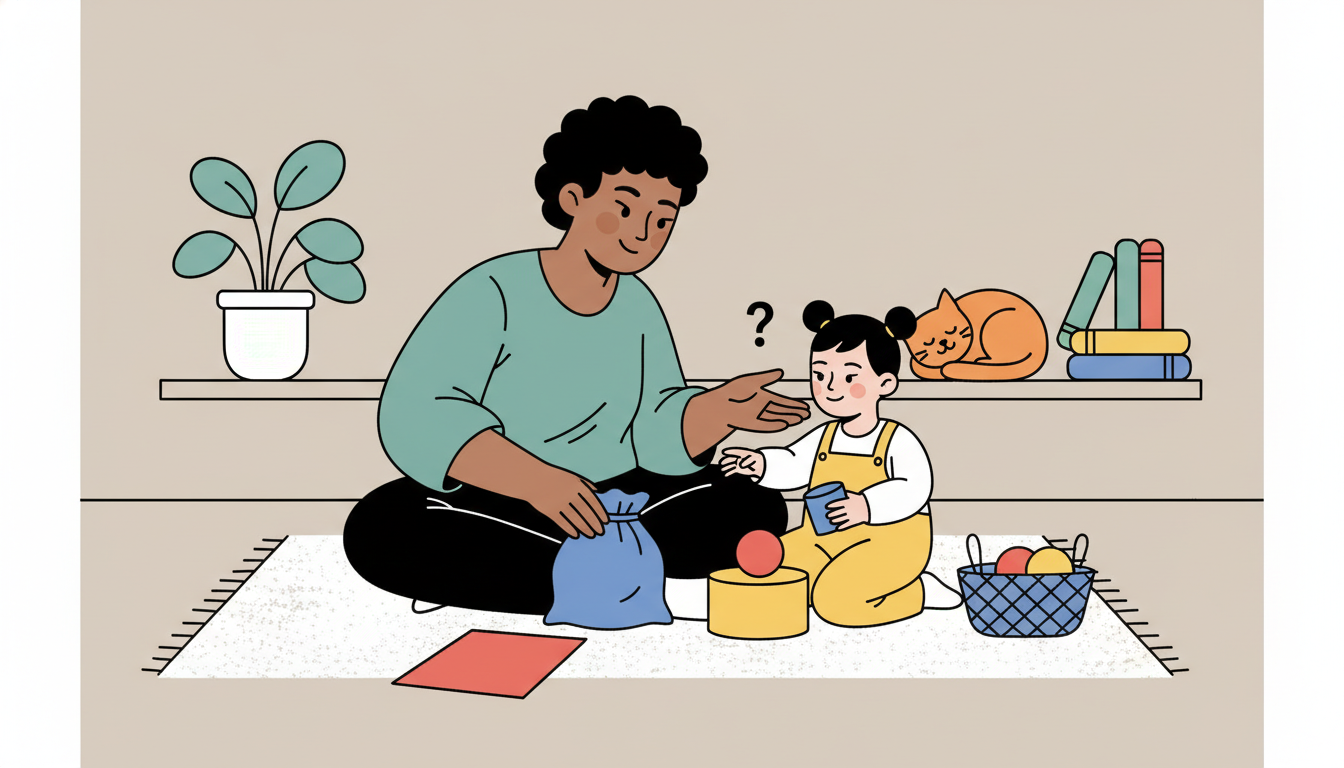
Gather objects of two or three different colors and play a matching game. Place colored paper or containers in front of your child and ask them to find things that match each color. When they pick the wrong color, don't immediately correct them. Instead, ask, 'Does that match?' and let them look again. This gentle prompting helps them learn to self-correct and persist when something doesn't work the first time. The simple challenge matches their ability to categorize by one attribute while building tolerance for making mistakes.
Steadilyの発達の旅の一部 — わが子に合わせてパーソナライズされているよ。
このアクティビティのやり方
Gather objects of two or three different colors and play a matching game. Place colored paper or containers in front of your child and ask them to find things that match each color. When they pick the wrong color, don't immediately correct them. Instead, ask, 'Does that match?' and let them look again. This gentle prompting helps them learn to self-correct and persist when something doesn't work the first time. The simple challenge matches their ability to categorize by one attribute while building tolerance for making mistakes.
効果がある理由
This activity builds cognitive resilience through manageable challenges that match developmental capabilities. Research shows that children with multi-domain resilience profiles, including cognitive resilience, demonstrate significantly better outcomes (Oh et al., 2022). The self-correction process teaches children that they can recognize and fix their own mistakes, building both problem-solving skills and emotional regulation. Your supportive scaffolding during this task helps establish the foundation for self-regulatory competence that supports lifelong resilience.
パパ・ママへのヒント
Start with very different colors like red and blue to make success more likely. Build confidence before adding challenge.
When your child self-corrects, celebrate it. Say, 'You figured out where it goes,' which reinforces the value of trying again.
Keep the game short, around five to eight minutes. This matches their attention span and keeps frustration manageable.
用意するもの
Household objects in different colors and colored paper or containers
学びの手法
Interactive Play-Based LearningSymbolic and Pretend PlaySocial Learning Through Peers

このアクティビティ、楽しめた?これからの計画は私たちに任せて。
Steadilyはお子さんに合わせてすべてのアクティビティをパーソナライズするよ — 興味や発達段階、今伸ばしている特性に合わせて。だから、遊びの時間がもっと楽しくなって、一瞬一瞬が大切なものになるんだ。
Steadilyの仕組みを見る →