What can we do game
2–3歳Emotional Wellbeing特別な道具は必要ありません
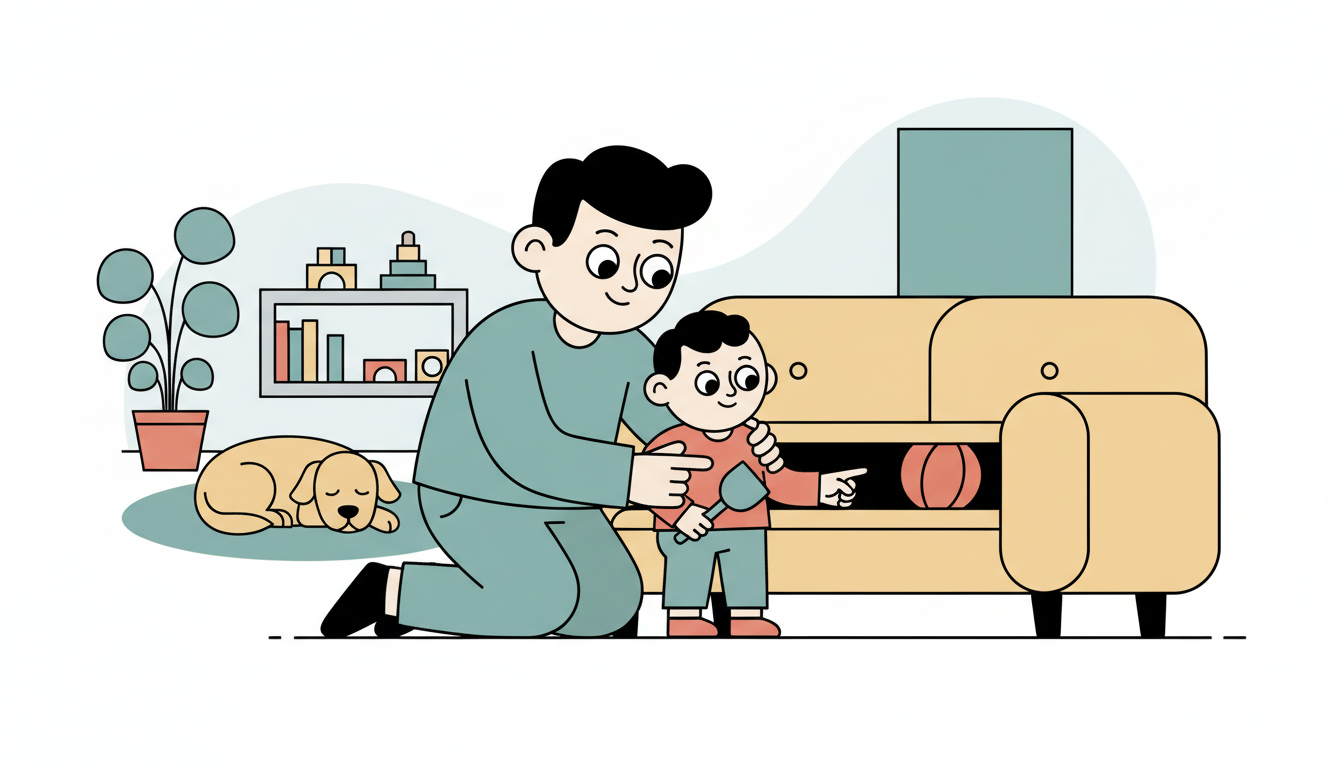
When a small problem comes up, ask your child, "What can we do?" For example, if a toy rolls under the couch, you might say, "The ball went under there. What can we do?" Offer simple options or demonstrate a solution. This shifts focus from the problem to possibilities, teaching solution-focused thinking in a way that's right for their age.
Steadilyの発達の旅の一部 — わが子に合わせてパーソナライズされているよ。
このアクティビティのやり方
When a small problem comes up, ask your child, "What can we do?" For example, if a toy rolls under the couch, you might say, "The ball went under there. What can we do?" Offer simple options or demonstrate a solution. This shifts focus from the problem to possibilities, teaching solution-focused thinking in a way that's right for their age.
効果がある理由
Solution-focused thinking is a key component of optimism, helping children see challenges as solvable rather than insurmountable. Research indicates that optimistic individuals develop better coping strategies when viewing difficulties as manageable (Carver, C. S., Scheier, M. F., & Segerstrom, S. C. (2010). Optimism. Clinical Psychology Review, 30(7), 879-889.). At this developmental stage, children are beginning to problem-solve through trial and error, making this the ideal time to introduce the concept that problems have solutions and we can find them together.
パパ・ママへのヒント
Start with very simple, concrete problems that have obvious solutions.
Offer two simple choices if your child doesn't respond. They're still learning how to think this way.
Celebrate the solution together once you find it. Say something like, "We figured it out."
用意するもの
None
学びの手法
Songs, Stories, and RhymesSymbolic and Pretend PlaySocial Learning Through Peers

このアクティビティ、楽しめた?これからの計画は私たちに任せて。
Steadilyはお子さんに合わせてすべてのアクティビティをパーソナライズするよ — 興味や発達段階、今伸ばしている特性に合わせて。だから、遊びの時間がもっと楽しくなって、一瞬一瞬が大切なものになるんだ。
Steadilyの仕組みを見る →