The feelings faces practice
3–4歳Family Connection用意するもの: Paper and crayons or markers
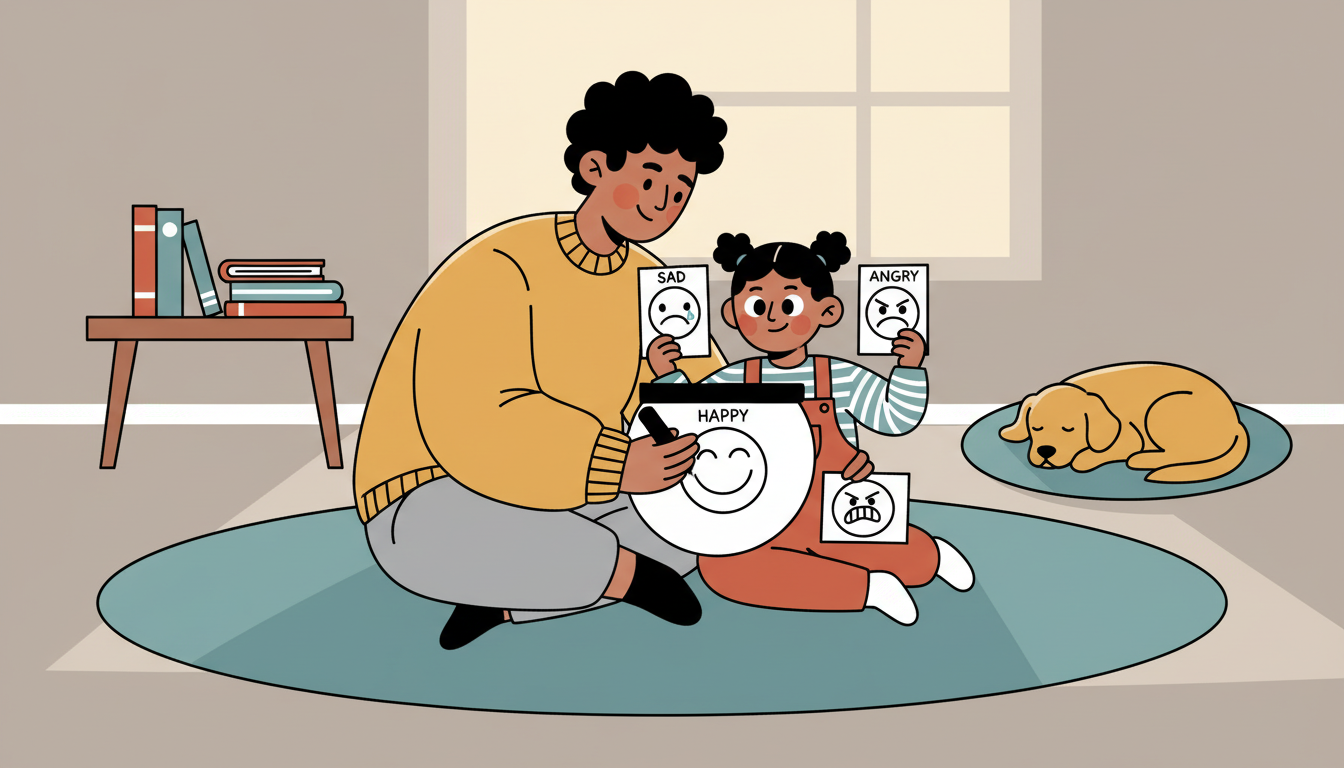
Make simple drawings of faces showing different emotions: happy, sad, angry, frustrated. When conflicts happen, ask your child to point to how they feel. Then you point to how you feel. This helps them understand that both people have feelings in a disagreement. Talk about how to make the sad or angry faces turn into happy faces together.
Steadilyの発達の旅の一部 — わが子に合わせてパーソナライズされているよ。
このアクティビティのやり方
Make simple drawings of faces showing different emotions: happy, sad, angry, frustrated. When conflicts happen, ask your child to point to how they feel. Then you point to how you feel. This helps them understand that both people have feelings in a disagreement. Talk about how to make the sad or angry faces turn into happy faces together.
効果がある理由
Understanding emotions is essential for effective conflict resolution. Children who learn to identify and express feelings show 30% better emotional regulation (Shantz, 1987). At this age, children are developing theory of mind and can begin to understand that others have different feelings. The visual faces make abstract emotions concrete and easier to discuss.
パパ・ママへのヒント
Keep the face drawings simple. Even basic circles with different mouths work well.
Use the faces during small, everyday conflicts to build the habit.
Validate whatever feeling your child identifies. All feelings are okay, even if the behavior needs to change.
用意するもの
Paper and crayons or markers
学びの手法
Collaborative and Cooperative PlayNarrative and Literacy-Rich ExperiencesStructured Learning Activities

このアクティビティ、楽しめた?これからの計画は私たちに任せて。
Steadilyはお子さんに合わせてすべてのアクティビティをパーソナライズするよ — 興味や発達段階、今伸ばしている特性に合わせて。だから、遊びの時間がもっと楽しくなって、一瞬一瞬が大切なものになるんだ。
Steadilyの仕組みを見る →