Story feelings talk
3–4歳Emotional Wellbeing用意するもの: Picture books
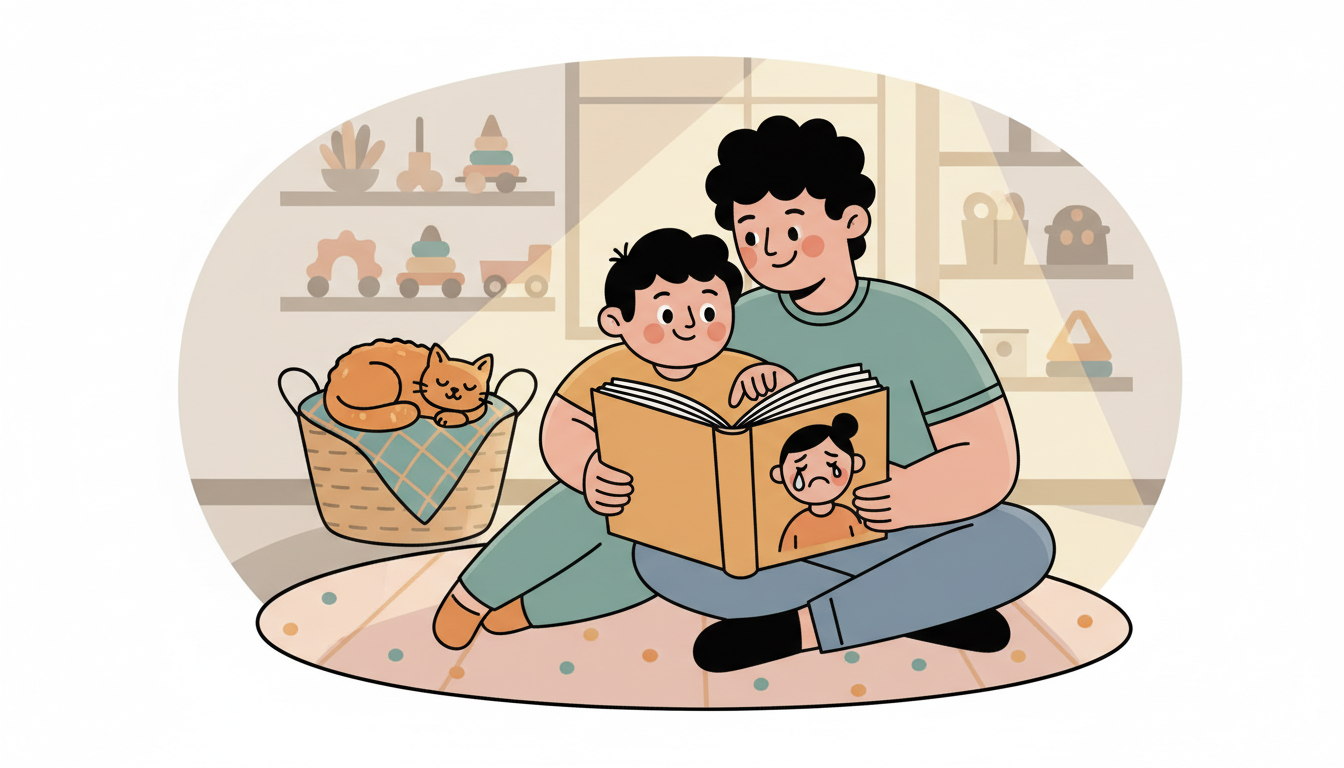
During your reading time, pause to discuss how story characters feel. Ask your child why they think the character feels that way. Point to facial expressions in pictures. Connect character emotions to times your child felt similar feelings. This builds empathy and emotional vocabulary through familiar stories.
Steadilyの発達の旅の一部 — わが子に合わせてパーソナライズされているよ。
このアクティビティのやり方
During your reading time, pause to discuss how story characters feel. Ask your child why they think the character feels that way. Point to facial expressions in pictures. Connect character emotions to times your child felt similar feelings. This builds empathy and emotional vocabulary through familiar stories.
効果がある理由
Theory of mind emerges at this age, enabling understanding of others' perspectives and emotions for the first time. Students with higher emotional intelligence show significantly better psychological well-being and enhanced social interactions (Brackett et al., 2011). Story discussions strengthen emotional understanding during this sensitive period.
パパ・ママへのヒント
Choose books with clear facial expressions in the illustrations.
Ask how do you think they feel before giving answers.
Connect story emotions to your child's real experiences.
用意するもの
Picture books
学びの手法
Narrative and Literacy-Rich ExperiencesCollaborative and Cooperative PlayInquiry-Based Learning

このアクティビティ、楽しめた?これからの計画は私たちに任せて。
Steadilyはお子さんに合わせてすべてのアクティビティをパーソナライズするよ — 興味や発達段階、今伸ばしている特性に合わせて。だから、遊びの時間がもっと楽しくなって、一瞬一瞬が大切なものになるんだ。
Steadilyの仕組みを見る →