Puppet feelings show
1–2歳Family Connection用意するもの: Sock puppet or stuffed animal
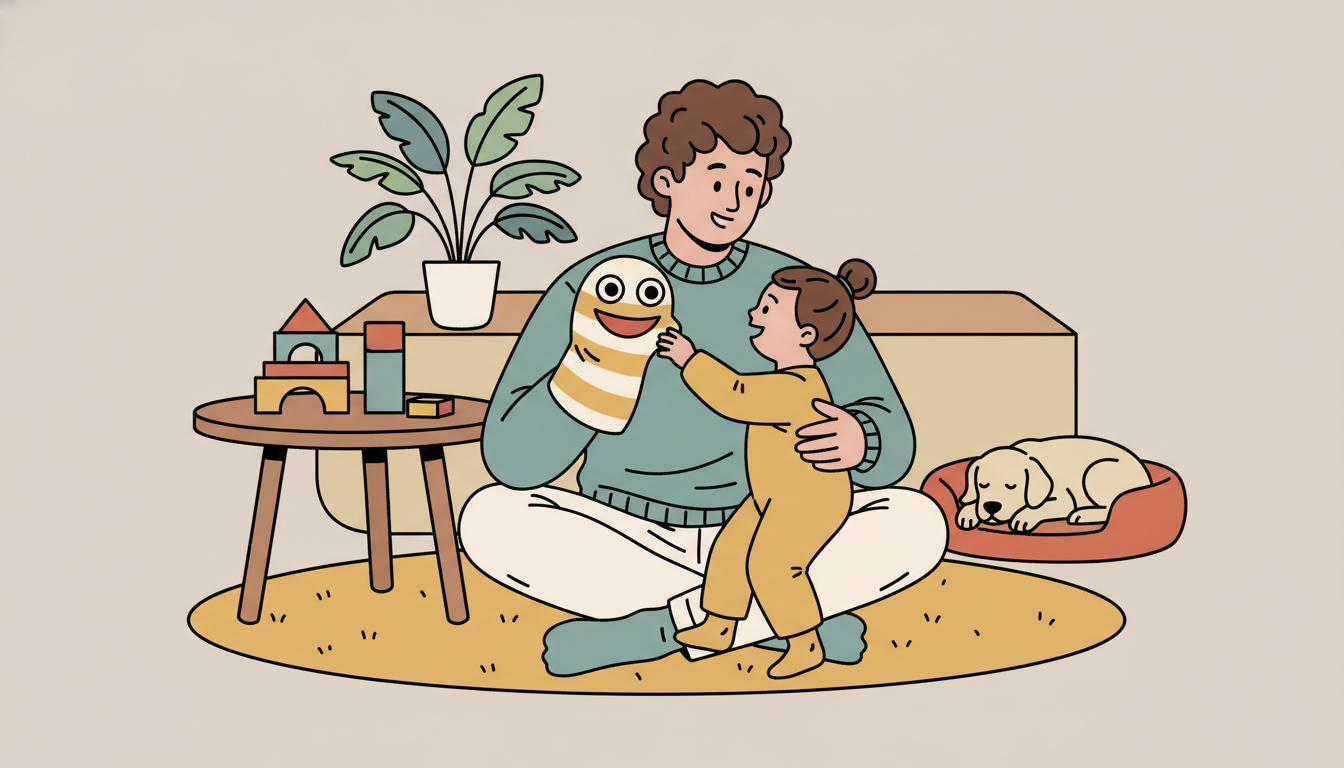
Use a simple sock puppet or stuffed animal to act out basic emotions. Make the puppet look happy, then sad, then scared. Name each feeling clearly. Let your child interact with the puppet. When the puppet is sad, you might ask 'Can you help puppet feel better?' This imaginative play lets your child explore emotions and practice caring responses in a playful way.
Steadilyの発達の旅の一部 — わが子に合わせてパーソナライズされているよ。
このアクティビティのやり方
Use a simple sock puppet or stuffed animal to act out basic emotions. Make the puppet look happy, then sad, then scared. Name each feeling clearly. Let your child interact with the puppet. When the puppet is sad, you might ask 'Can you help puppet feel better?' This imaginative play lets your child explore emotions and practice caring responses in a playful way.
効果がある理由
Symbolic play is emerging at this age and provides a safe way to explore perspective-taking and empathy. Research shows that positive family interactions and emotional modeling foster children's empathy abilities, leading to better social behavior (Sánchez-Pérez et al., 2018). Puppet play combines imitation and modeling with beginning symbolic thinking, allowing children to practice recognizing emotions and responding with care. The playful format makes emotional learning feel natural and engaging.
パパ・ママへのヒント
Keep the puppet's emotions simple and exaggerated. Big expressions are easier to read.
Use a gentle voice for the puppet. This keeps the activity calm and focused.
Let your child lead sometimes. Follow what interests them about the puppet's feelings.
用意するもの
Sock puppet or stuffed animal
学びの手法
Language-Rich EnvironmentImitation and ModelingBeginning Symbolic Play

このアクティビティ、楽しめた?これからの計画は私たちに任せて。
Steadilyはお子さんに合わせてすべてのアクティビティをパーソナライズするよ — 興味や発達段階、今伸ばしている特性に合わせて。だから、遊びの時間がもっと楽しくなって、一瞬一瞬が大切なものになるんだ。
Steadilyの仕組みを見る →