Pattern block building
3–4歳Success Mindset用意するもの: Building blocks, toys in different colors, or household items like spoons and forks
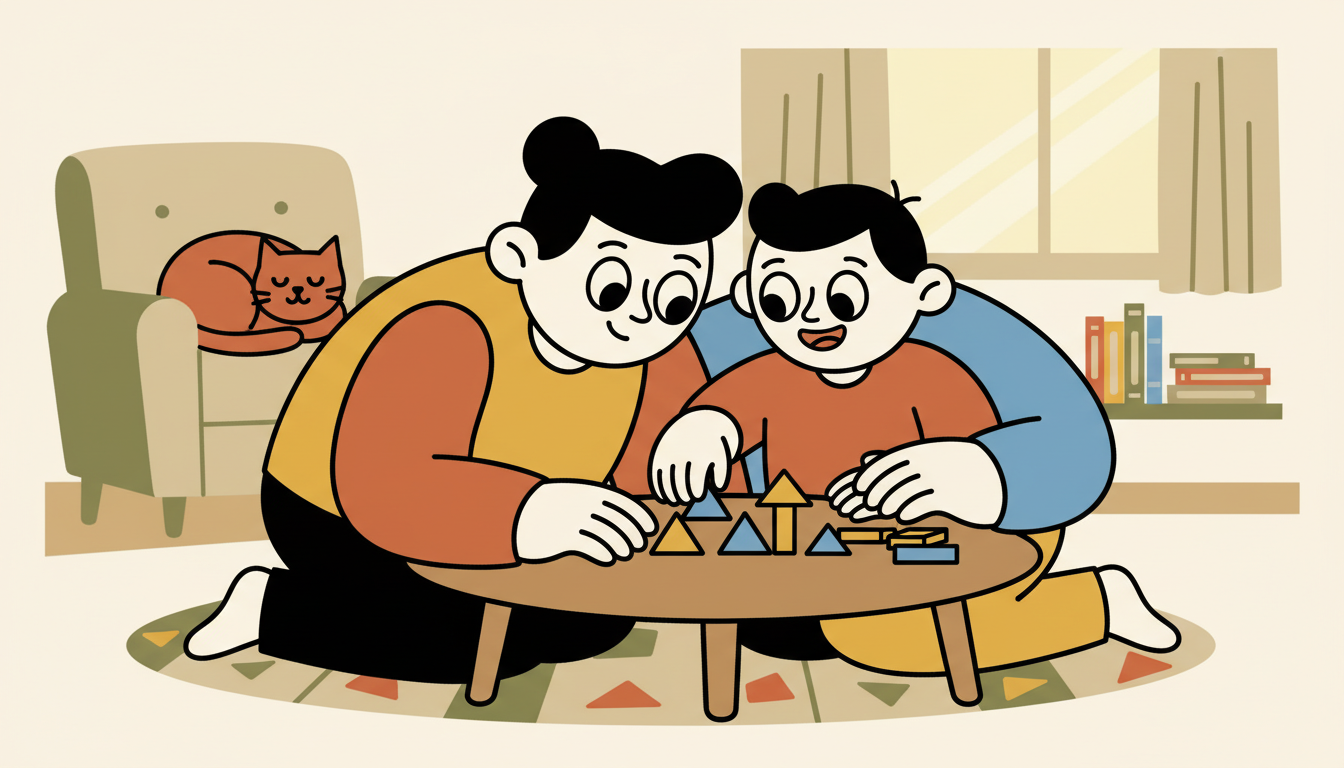
Create simple patterns using blocks or household items during playtime. Start with two colors alternating, then progress to more complex sequences. Ask your child to continue the pattern you started or create their own. This activity builds pattern recognition skills that are foundational for mathematical thinking. You can use blocks, toys, or even snacks like crackers in different shapes.
Steadilyの発達の旅の一部 — わが子に合わせてパーソナライズされているよ。
このアクティビティのやり方
Create simple patterns using blocks or household items during playtime. Start with two colors alternating, then progress to more complex sequences. Ask your child to continue the pattern you started or create their own. This activity builds pattern recognition skills that are foundational for mathematical thinking. You can use blocks, toys, or even snacks like crackers in different shapes.
効果がある理由
Pattern recognition is a core component of cognitive development and mathematical reasoning. Research shows that crystallized cognitive abilities like pattern knowledge in preschool significantly predict school achievement and mediate the relationship between fluid abilities and later academic performance (Schneider, Niklas, & Schmiedeler, 2014). Recognizing and creating patterns develops the logical thinking skills that support higher IQ development.
パパ・ママへのヒント
Start simple with AB patterns like red-blue-red-blue. Once your child masters this, try ABC patterns.
Let your child predict what comes next before placing the item. This builds logical thinking.
Celebrate their efforts when they recognize or create patterns independently.
用意するもの
Building blocks, toys in different colors, or household items like spoons and forks
学びの手法
Inquiry-Based LearningStructured Learning ActivitiesNarrative and Literacy-Rich Experiences

このアクティビティ、楽しめた?これからの計画は私たちに任せて。
Steadilyはお子さんに合わせてすべてのアクティビティをパーソナライズするよ — 興味や発達段階、今伸ばしている特性に合わせて。だから、遊びの時間がもっと楽しくなって、一瞬一瞬が大切なものになるんだ。
Steadilyの仕組みを見る →