Feelings picture walk
3–4歳Family Connection用意するもの: Family photos or photo album
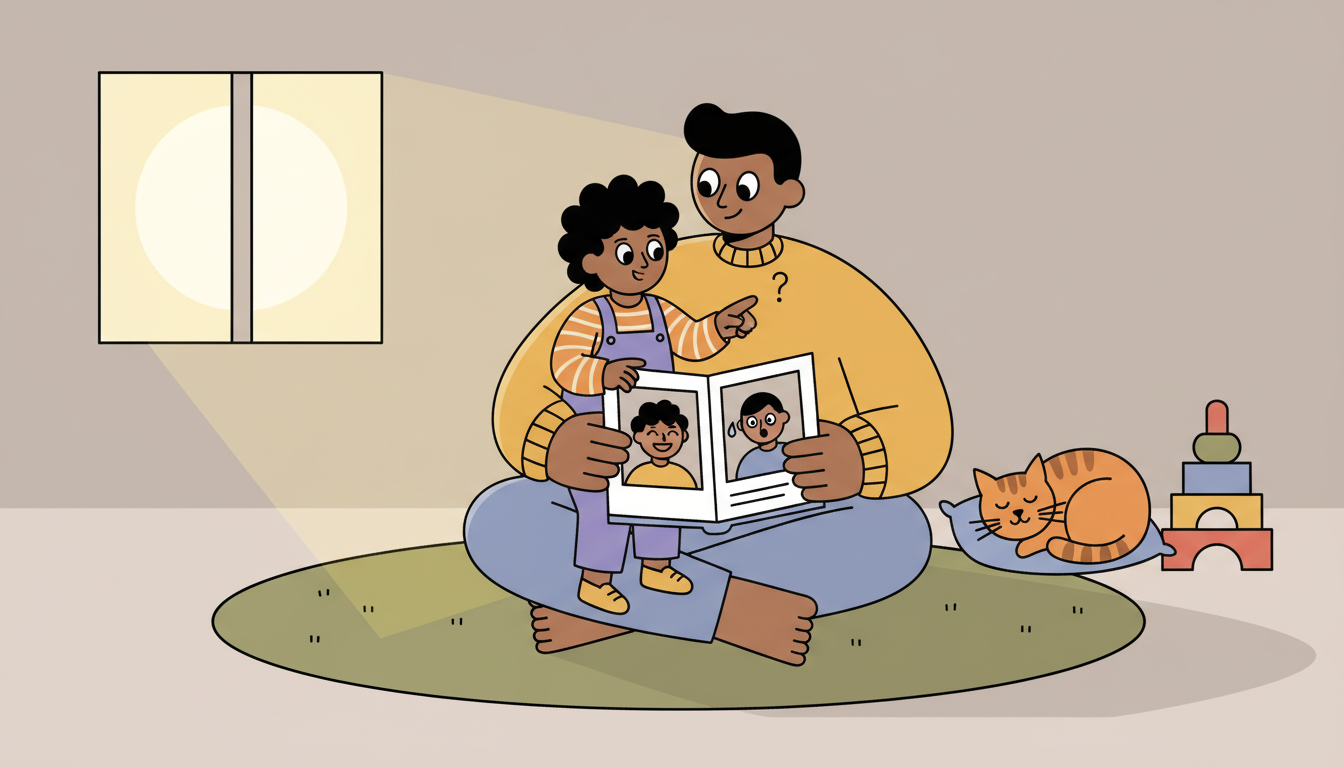
During your activity time, look at family photos together and talk about how people felt when each picture was taken. Ask your child to point out happy faces, sad faces, or surprised faces. Take turns guessing what made each person feel that way. You can say things like, 'Look at grandma's smile. How do you think she felt that day? What made her so happy?' This simple practice helps your child learn to read emotions in others.
Steadilyの発達の旅の一部 — わが子に合わせてパーソナライズされているよ。
このアクティビティのやり方
During your activity time, look at family photos together and talk about how people felt when each picture was taken. Ask your child to point out happy faces, sad faces, or surprised faces. Take turns guessing what made each person feel that way. You can say things like, 'Look at grandma's smile. How do you think she felt that day? What made her so happy?' This simple practice helps your child learn to read emotions in others.
効果がある理由
Recognizing and responding sensitively to others' emotions is a key childhood behavior that predicts stronger adult empathy and relationship quality (Eisenberg et al., 2015). At 36-48 months, children develop theory of mind, which allows them to understand that others have different thoughts and feelings. Looking at photos provides a safe, concrete way to practice identifying emotions in faces and body language. This skill forms the foundation for empathetic responses later.
パパ・ママへのヒント
Start with obvious emotions like big smiles or tears before moving to subtle expressions.
If your child struggles, give them two choices like 'Does she look happy or sad?'
Share your own feelings from the photos to model emotional awareness.
用意するもの
Family photos or photo album
学びの手法
Narrative and Literacy-Rich ExperiencesCollaborative and Cooperative PlayInquiry-Based Learning

このアクティビティ、楽しめた?これからの計画は私たちに任せて。
Steadilyはお子さんに合わせてすべてのアクティビティをパーソナライズするよ — 興味や発達段階、今伸ばしている特性に合わせて。だから、遊びの時間がもっと楽しくなって、一瞬一瞬が大切なものになるんだ。
Steadilyの仕組みを見る →