Feelings and faces
1–2歳Family Connection特別な道具は必要ありません
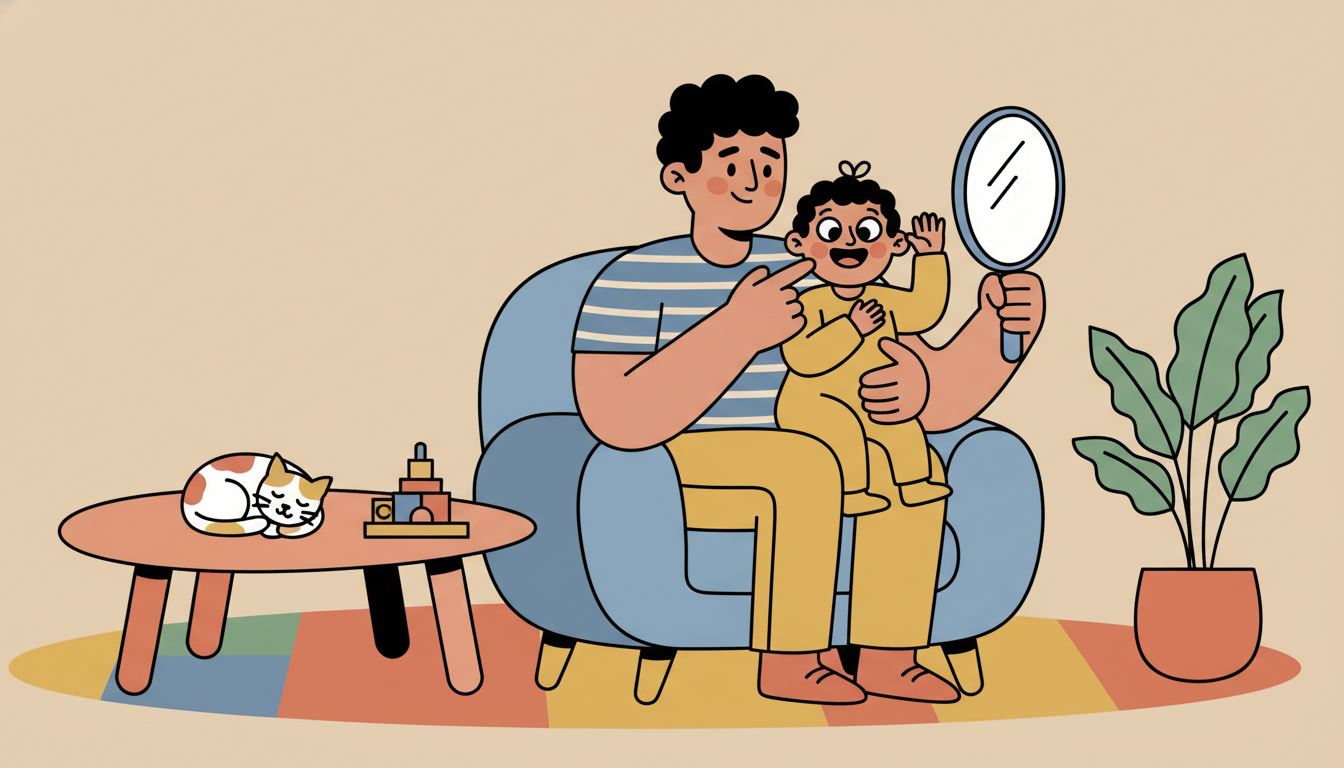
Throughout your day, name your child's feelings when you notice them. Say things like you look happy or I see you feel frustrated. Use a calm, warm tone. You can also make faces together in a mirror and name the emotions you both show.
Steadilyの発達の旅の一部 — わが子に合わせてパーソナライズされているよ。
このアクティビティのやり方
Throughout your day, name your child's feelings when you notice them. Say things like you look happy or I see you feel frustrated. Use a calm, warm tone. You can also make faces together in a mirror and name the emotions you both show.
効果がある理由
Naming and validating feelings establishes a safe space for open communication, which research shows is essential for building strong parent-child relationships (Hartos & Power, 2000). Quality communication that includes empathy and appropriate responses enhances relationship quality and supports your child's psychological development (Zhang & Li, 2024). Starting this practice during the language explosion period helps your child develop both emotional vocabulary and the habit of expressing feelings openly.
パパ・ママへのヒント
Keep emotion words simple. Happy, sad, mad, and scared work well for this age.
Name your own feelings too. This helps your child learn that everyone has emotions.
Stay calm and matter of fact. Your child is learning that feelings can be talked about safely.
用意するもの
None
学びの手法
Language-Rich EnvironmentImitation and Modeling

このアクティビティ、楽しめた?これからの計画は私たちに任せて。
Steadilyはお子さんに合わせてすべてのアクティビティをパーソナライズするよ — 興味や発達段階、今伸ばしている特性に合わせて。だから、遊びの時間がもっと楽しくなって、一瞬一瞬が大切なものになるんだ。
Steadilyの仕組みを見る →