Feeling faces pretend play
2–3歳Family Connection用意するもの: Stuffed animals or dolls
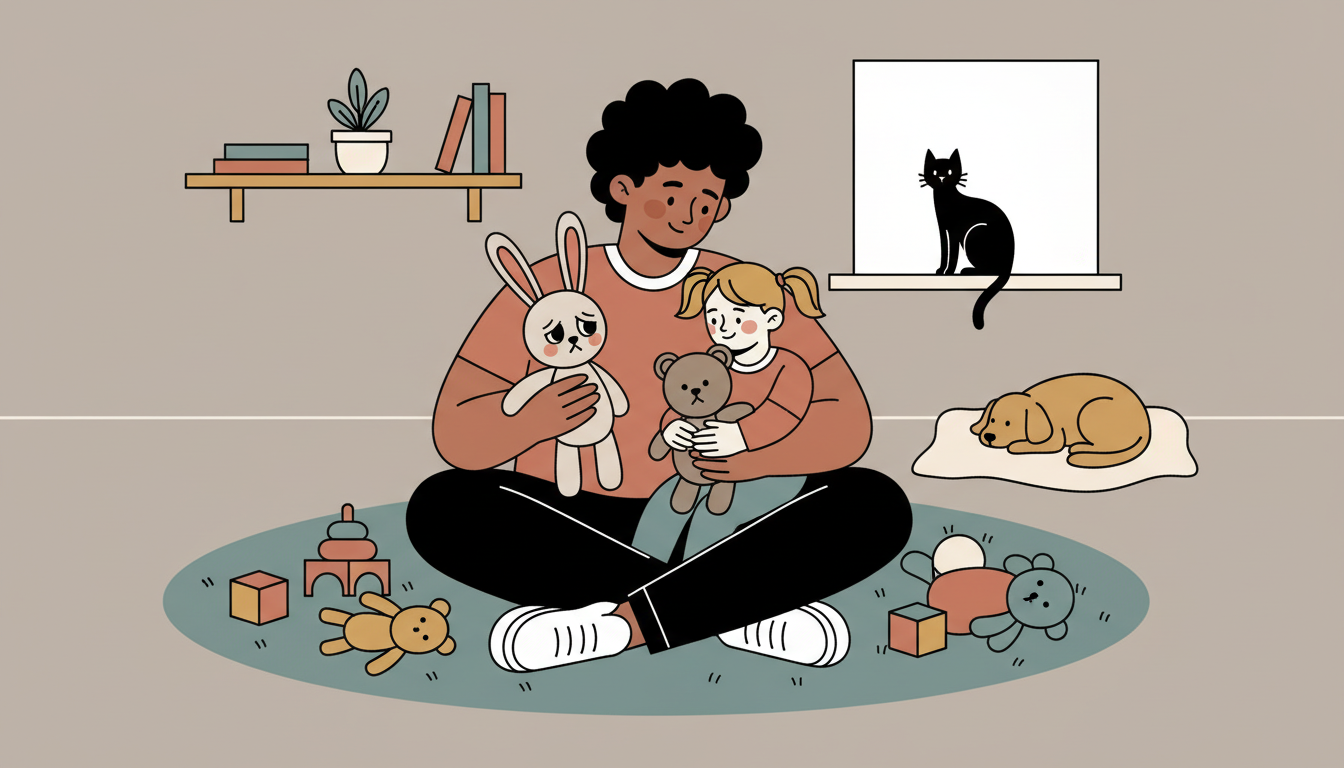
Use stuffed animals or dolls to act out different feelings during play. Make one toy sad and have it go to another toy for a hug. Say "Bunny feels sad. Bunny goes to mama for a cuddle." Then invite your child to help the sad toy feel better. This teaches that coming to someone you trust when you feel bad is a healthy way to cope.
Steadilyの発達の旅の一部 — わが子に合わせてパーソナライズされているよ。
このアクティビティのやり方
Use stuffed animals or dolls to act out different feelings during play. Make one toy sad and have it go to another toy for a hug. Say "Bunny feels sad. Bunny goes to mama for a cuddle." Then invite your child to help the sad toy feel better. This teaches that coming to someone you trust when you feel bad is a healthy way to cope.
効果がある理由
Pretend play helps children understand emotions and relationships in a safe context. Secure attachments help children learn to empathize, develop relationships, and cope with stress (Canadian Psychological Association, 2024). Through symbolic play, your child practices emotional expression and learns that seeking comfort from trusted adults is a positive coping strategy, which supports their developing attachment security.
パパ・ママへのヒント
Name the emotions simply as you play. Use words like happy, sad, scared, or frustrated.
Show how the parent toy responds with warmth and comfort. This models the secure base your child needs.
Follow your child's lead. If they want to make all the toys happy, that's fine. The key is showing comfort works.
用意するもの
Stuffed animals or dolls
学びの手法
Symbolic and Pretend PlaySongs, Stories, and RhymesInteractive Play-Based Learning

このアクティビティ、楽しめた?これからの計画は私たちに任せて。
Steadilyはお子さんに合わせてすべてのアクティビティをパーソナライズするよ — 興味や発達段階、今伸ばしている特性に合わせて。だから、遊びの時間がもっと楽しくなって、一瞬一瞬が大切なものになるんだ。
Steadilyの仕組みを見る →