Two-choice problem solving
1–2歳Family Connection特別な道具は必要ありません
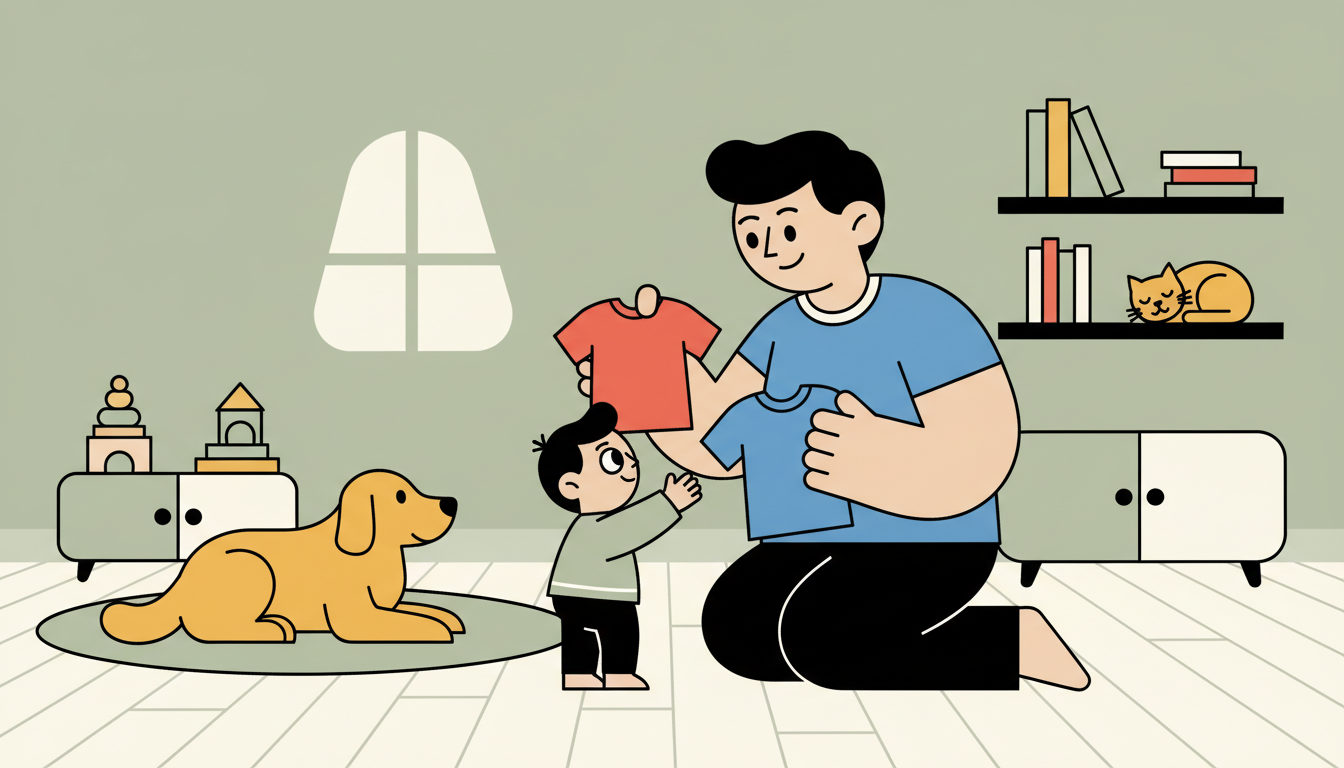
When a conflict arises, offer your child two simple choices to resolve it. For example, if they don't want to get dressed, say 'Red shirt or blue shirt?' This gives them a sense of control while still moving forward. Keep choices simple and show both options. This teaches early problem-solving and compromise.
Steadilyの発達の旅の一部 — わが子に合わせてパーソナライズされているよ。
このアクティビティのやり方
When a conflict arises, offer your child two simple choices to resolve it. For example, if they don't want to get dressed, say 'Red shirt or blue shirt?' This gives them a sense of control while still moving forward. Keep choices simple and show both options. This teaches early problem-solving and compromise.
効果がある理由
At 12-24 months, children are developing basic problem-solving abilities through trial and error. Offering two choices respects their growing autonomy while teaching that conflicts can have multiple solutions. This approach reduces power struggles and models collaborative problem-solving. Children who learn these collaborative problem-solving approaches maintain stronger family bonds across developmental transitions (Robin & Foster, 1989). Early exposure to problem-solving skills leads to significantly better peer relationships and 25% fewer behavioral problems (Webster-Stratton & Reid, 2004).
パパ・ママへのヒント
Hold up both choices or point to them so your child can see what you mean. Visual support helps at this age.
Stay calm and patient while they choose. It may take a minute for them to decide, and that's okay.
用意するもの
None
学びの手法
Language-Rich EnvironmentImitation and Modeling

このアクティビティ、楽しめた?これからの計画は私たちに任せて。
Steadilyはお子さんに合わせてすべてのアクティビティをパーソナライズするよ — 興味や発達段階、今伸ばしている特性に合わせて。だから、遊びの時間がもっと楽しくなって、一瞬一瞬が大切なものになるんだ。
Steadilyの仕組みを見る →