Texture treasure hunt
1–2歳Success Mindset用意するもの: Household items with varied textures (blanket, pinecone, wooden spoon, paper, fabric)
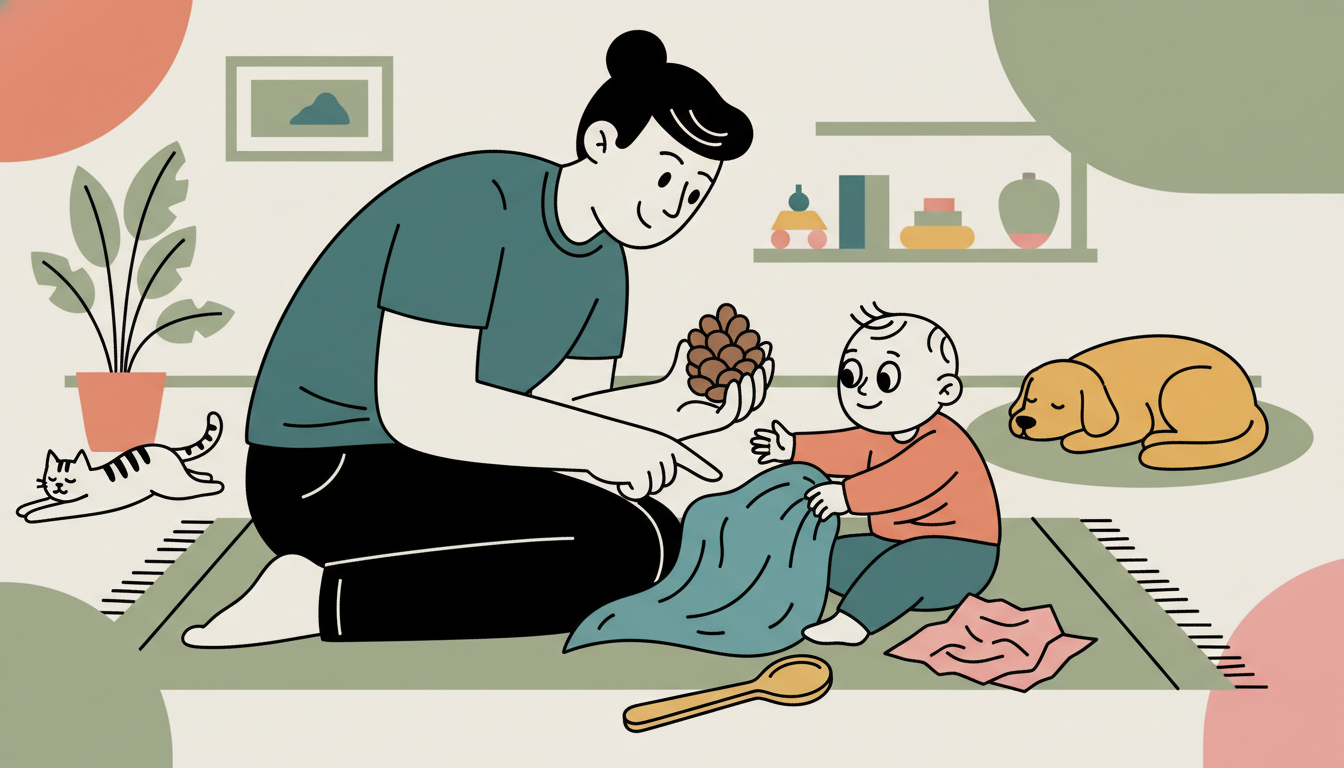
Gather items with different textures from around your home and let your child explore each one. Include things like a soft blanket, bumpy pinecone, smooth wooden spoon, or crinkly paper. Spread them on the floor and watch your child move from one to another, touching and examining. Name each texture as they explore. This activity turns your home into an exciting sensory discovery zone.
Steadilyの発達の旅の一部 — わが子に合わせてパーソナライズされているよ。
このアクティビティのやり方
Gather items with different textures from around your home and let your child explore each one. Include things like a soft blanket, bumpy pinecone, smooth wooden spoon, or crinkly paper. Spread them on the floor and watch your child move from one to another, touching and examining. Name each texture as they explore. This activity turns your home into an exciting sensory discovery zone.
効果がある理由
This sensory exploration activity capitalizes on your toddler's peak curiosity period and natural drive to understand their environment through touch. Research indicates that fostering curiosity during early childhood optimizes learning and engagement, with curious children more motivated to explore and discover (Arnone et al., 2011). Supporting this natural exploration helps establish curiosity as a lifelong trait while building important neural connections through hands-on experience.
パパ・ママへのヒント
Choose items that are safe for your child to mouth, since they may still explore this way.
Keep the activity short, around five minutes, to match their attention span.
Follow their lead and show interest in whatever captures their attention most.
用意するもの
Household items with varied textures (blanket, pinecone, wooden spoon, paper, fabric)
学びの手法
Hands-On ExplorationBeginning Symbolic Play

このアクティビティ、楽しめた?これからの計画は私たちに任せて。
Steadilyはお子さんに合わせてすべてのアクティビティをパーソナライズするよ — 興味や発達段階、今伸ばしている特性に合わせて。だから、遊びの時間がもっと楽しくなって、一瞬一瞬が大切なものになるんだ。
Steadilyの仕組みを見る →