Naming big feelings together
1–2歳Family Connection特別な道具は必要ありません
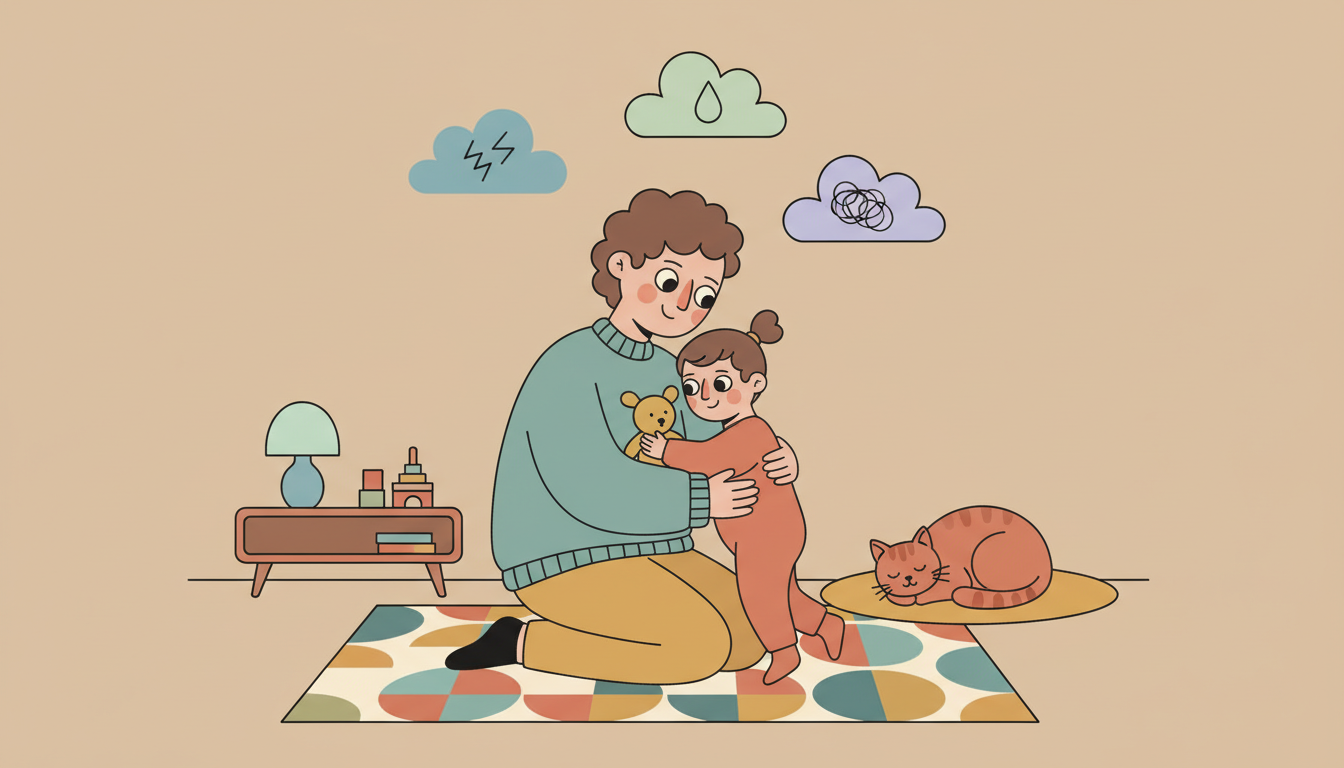
When your child gets upset during play or daily activities, kneel down to their level and calmly name what they might be feeling. Use simple words like mad, sad, or frustrated. Your calm presence helps them learn that feelings are okay and can be talked about. This creates a foundation for handling disagreements peacefully later on.
Steadilyの発達の旅の一部 — わが子に合わせてパーソナライズされているよ。
このアクティビティのやり方
When your child gets upset during play or daily activities, kneel down to their level and calmly name what they might be feeling. Use simple words like mad, sad, or frustrated. Your calm presence helps them learn that feelings are okay and can be talked about. This creates a foundation for handling disagreements peacefully later on.
効果がある理由
Your child is just beginning to connect words with their internal experiences. When you label emotions during conflicts, you're teaching the first step of conflict resolution: recognizing and naming feelings. Research shows that children who learn to calmly discuss disagreements and express frustration with words show 30% better emotional regulation throughout development (Shantz, 1987). At this age, your modeling is the primary teaching tool. Early training in these foundational skills leads to significantly better peer relationships and 25% fewer behavioral problems (Webster-Stratton & Reid, 2004).
パパ・ママへのヒント
Stay calm and use a gentle voice, even when your child is very upset. Your regulation helps them learn to regulate.
Wait until the biggest wave of emotion passes before trying to talk. Sometimes just being present is enough.
用意するもの
None
学びの手法
Language-Rich EnvironmentImitation and Modeling

このアクティビティ、楽しめた?これからの計画は私たちに任せて。
Steadilyはお子さんに合わせてすべてのアクティビティをパーソナライズするよ — 興味や発達段階、今伸ばしている特性に合わせて。だから、遊びの時間がもっと楽しくなって、一瞬一瞬が大切なものになるんだ。
Steadilyの仕組みを見る →