Name that feeling
1–2歳Family Connection特別な道具は必要ありません
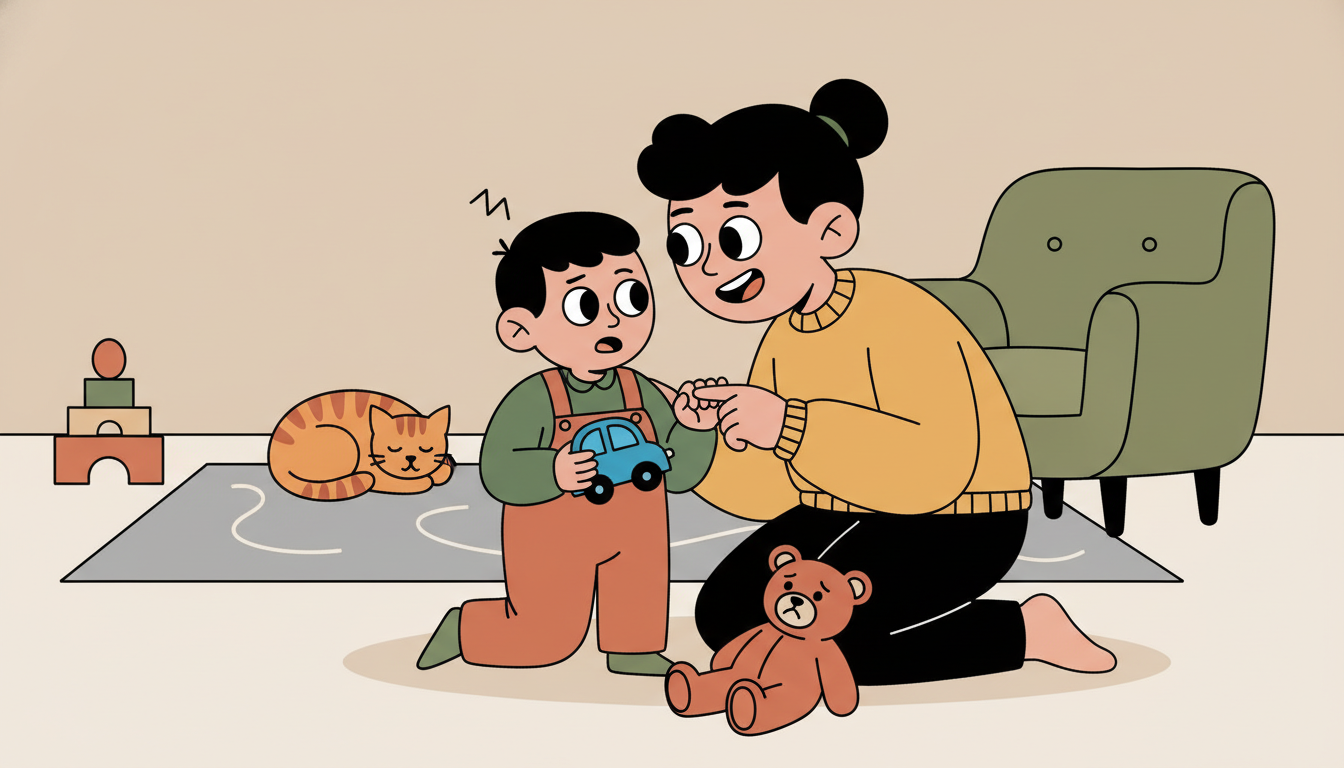
Throughout your time together, point out and name emotions you see in yourself, your child, and others around you. When your child looks frustrated with a toy, say 'You feel frustrated.' When you smile, say 'I feel happy.' When another child cries, say 'Baby is sad.' This simple labeling helps your child begin to recognize and understand emotions in themselves and others.
Steadilyの発達の旅の一部 — わが子に合わせてパーソナライズされているよ。
このアクティビティのやり方
Throughout your time together, point out and name emotions you see in yourself, your child, and others around you. When your child looks frustrated with a toy, say 'You feel frustrated.' When you smile, say 'I feel happy.' When another child cries, say 'Baby is sad.' This simple labeling helps your child begin to recognize and understand emotions in themselves and others.
効果がある理由
Labeling emotions builds the foundation for empathy by helping children recognize feelings in themselves and others. Research shows that parental empathy toward children predicts the child's own empathy development, and when parents model emotional awareness, children learn to understand and respond to others' emotions (Liu et al., 2020). At this age, children are beginning to move from emotional contagion to early cognitive empathy, making consistent emotion labeling particularly effective.
パパ・ママへのヒント
Keep your emotion words simple and clear. Use the same basic emotion words consistently (happy, sad, mad, scared).
Match your facial expression to the emotion you are naming. Your child learns by watching your face.
Acknowledge your child's attempts to show concern for others, even small ones. Say 'You noticed baby is sad' when they look at a crying child.
用意するもの
None
学びの手法
Language-Rich EnvironmentImitation and ModelingBeginning Symbolic Play

このアクティビティ、楽しめた?これからの計画は私たちに任せて。
Steadilyはお子さんに合わせてすべてのアクティビティをパーソナライズするよ — 興味や発達段階、今伸ばしている特性に合わせて。だから、遊びの時間がもっと楽しくなって、一瞬一瞬が大切なものになるんだ。
Steadilyの仕組みを見る →