Helper moments
1–2歳Family Connection特別な道具は必要ありません
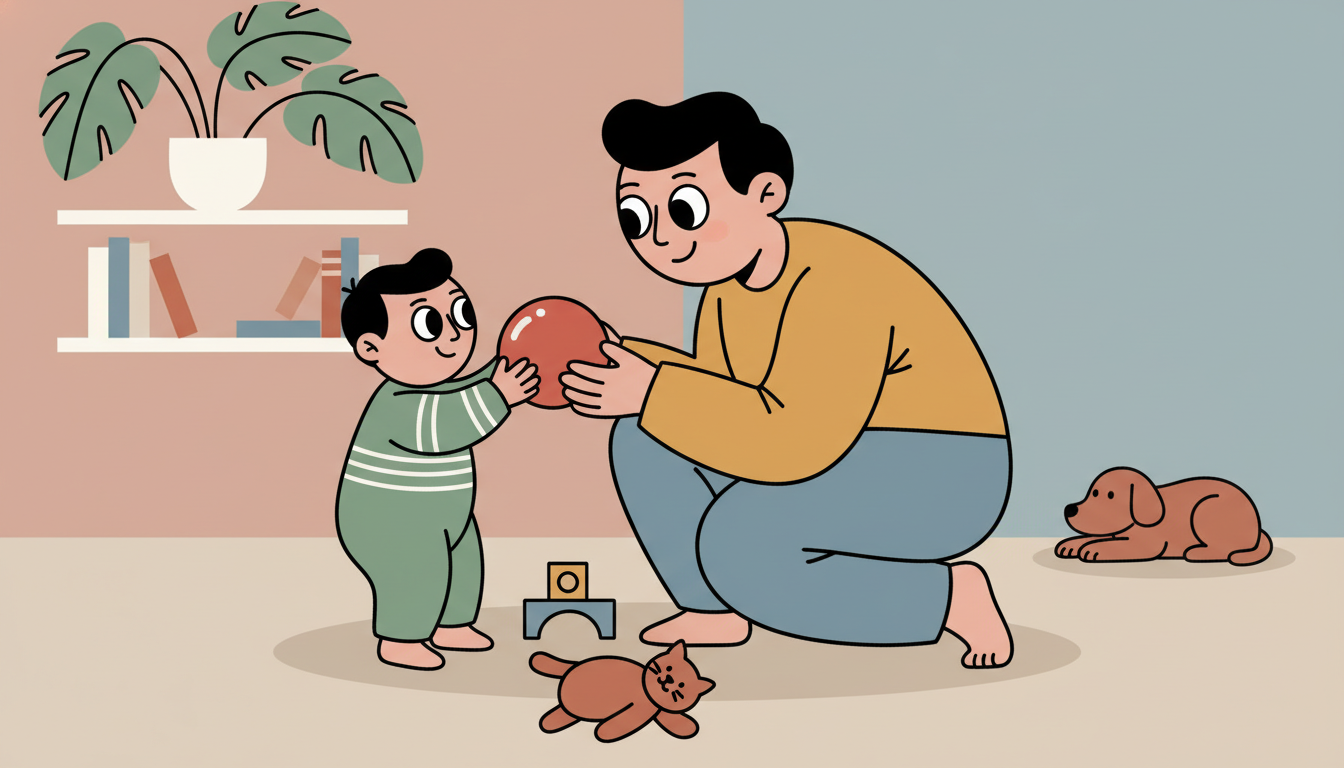
Create simple opportunities for your child to help when someone needs something. If you drop something, say 'Oh no' with a sad face, then ask 'Can you help me?' When your child brings the item, say 'Thank you for helping. That made me feel happy.' Point out when others need help too. This teaches your child that their actions can help others feel better.
Steadilyの発達の旅の一部 — わが子に合わせてパーソナライズされているよ。
このアクティビティのやり方
Create simple opportunities for your child to help when someone needs something. If you drop something, say 'Oh no' with a sad face, then ask 'Can you help me?' When your child brings the item, say 'Thank you for helping. That made me feel happy.' Point out when others need help too. This teaches your child that their actions can help others feel better.
効果がある理由
Learning that their actions affect others' feelings is a crucial step in empathy development. Parental empathy has indirect effects on children's social competence, with empathetic parents raising children who show significantly higher social competence and fewer behavioral issues (Liu et al., 2020). Creating helping opportunities lets children practice responding to others' needs while receiving immediate positive feedback. This builds both the skill and motivation for empathetic behavior, supporting the development from emotional awareness to compassionate action.
パパ・ママへのヒント
Make the help very simple. Picking up one item or bringing you something nearby works well.
Show clear appreciation. Your positive response teaches your child that helping matters.
Name your feelings before and after. Say 'I felt sad. Now I feel happy. You helped me.'
用意するもの
None
学びの手法
Language-Rich EnvironmentImitation and ModelingBeginning Symbolic Play

このアクティビティ、楽しめた?これからの計画は私たちに任せて。
Steadilyはお子さんに合わせてすべてのアクティビティをパーソナライズするよ — 興味や発達段階、今伸ばしている特性に合わせて。だから、遊びの時間がもっと楽しくなって、一瞬一瞬が大切なものになるんだ。
Steadilyの仕組みを見る →