Happy ending stories
2–3歳Emotional Wellbeing用意するもの: Picture books or none for made-up stories
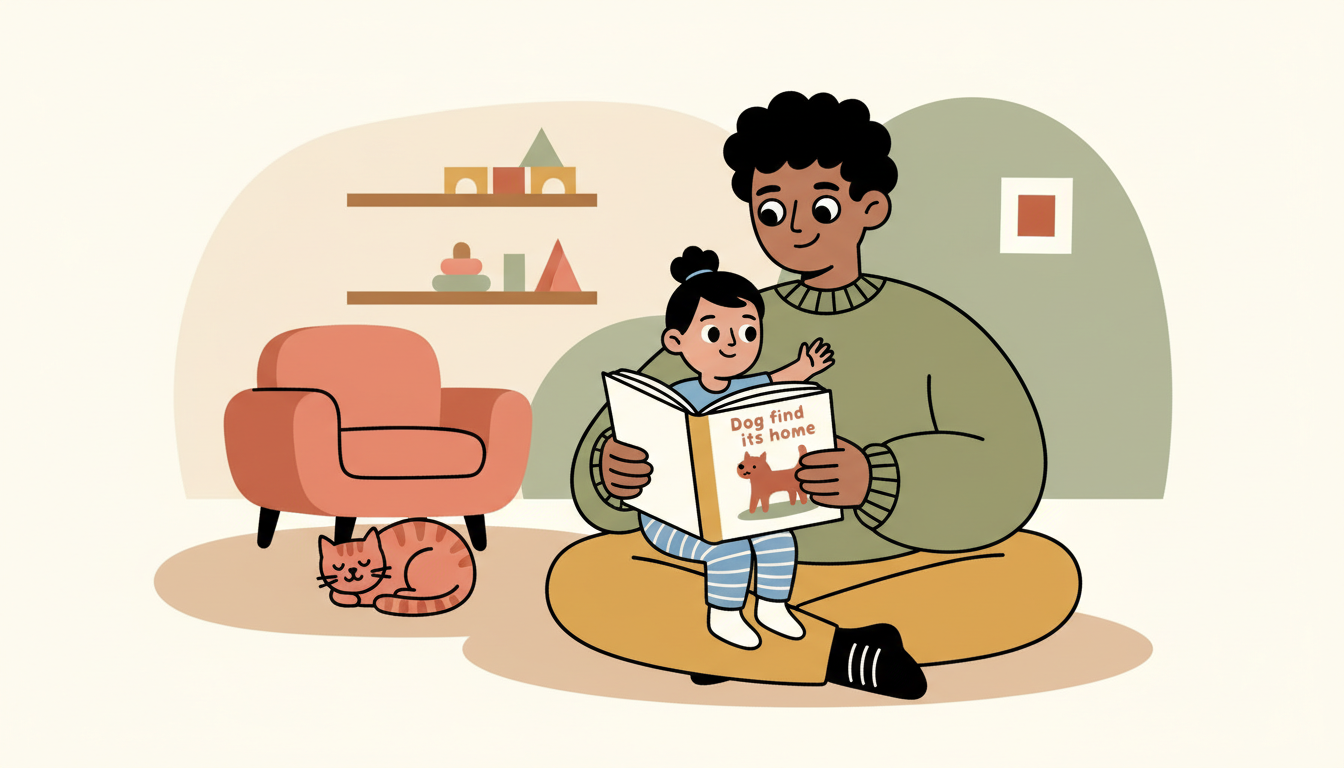
Read or tell simple stories where characters face small challenges but things work out well. For example, "The puppy was lost, but then he found his way home." Keep stories short and clear. Point out how things got better at the end. This teaches your child that problems can have positive solutions.
Steadilyの発達の旅の一部 — わが子に合わせてパーソナライズされているよ。
このアクティビティのやり方
Read or tell simple stories where characters face small challenges but things work out well. For example, "The puppy was lost, but then he found his way home." Keep stories short and clear. Point out how things got better at the end. This teaches your child that problems can have positive solutions.
効果がある理由
Stories with positive resolutions help children develop optimistic expectations about outcomes. Research demonstrates that learned optimism can be taught and significantly improves confidence and perseverance (Seligman, M. E. P., Ernst, R. M., Gillham, J., Reivich, K., & Linkins, M. (2009). Positive education: Positive psychology and classroom interventions. Oxford Review of Education, 35(3), 293-311.). At this age, narrative learning is powerful because children are beginning to understand simple cause and effect, and positive story patterns shape their expectations about how situations resolve.
パパ・ママへのヒント
Use picture books you already have, or make up simple stories about everyday situations.
Emphasize the positive resolution. You might say, "See, it was okay in the end."
Connect stories to your child's experiences when possible. This helps them see how positive outcomes happen in real life too.
用意するもの
Picture books or none for made-up stories
学びの手法
Songs, Stories, and RhymesSymbolic and Pretend PlaySocial Learning Through Peers

このアクティビティ、楽しめた?これからの計画は私たちに任せて。
Steadilyはお子さんに合わせてすべてのアクティビティをパーソナライズするよ — 興味や発達段階、今伸ばしている特性に合わせて。だから、遊びの時間がもっと楽しくなって、一瞬一瞬が大切なものになるんだ。
Steadilyの仕組みを見る →