Feelings in books
1–2歳Family Connection用意するもの: Picture books with clear emotions shown on faces
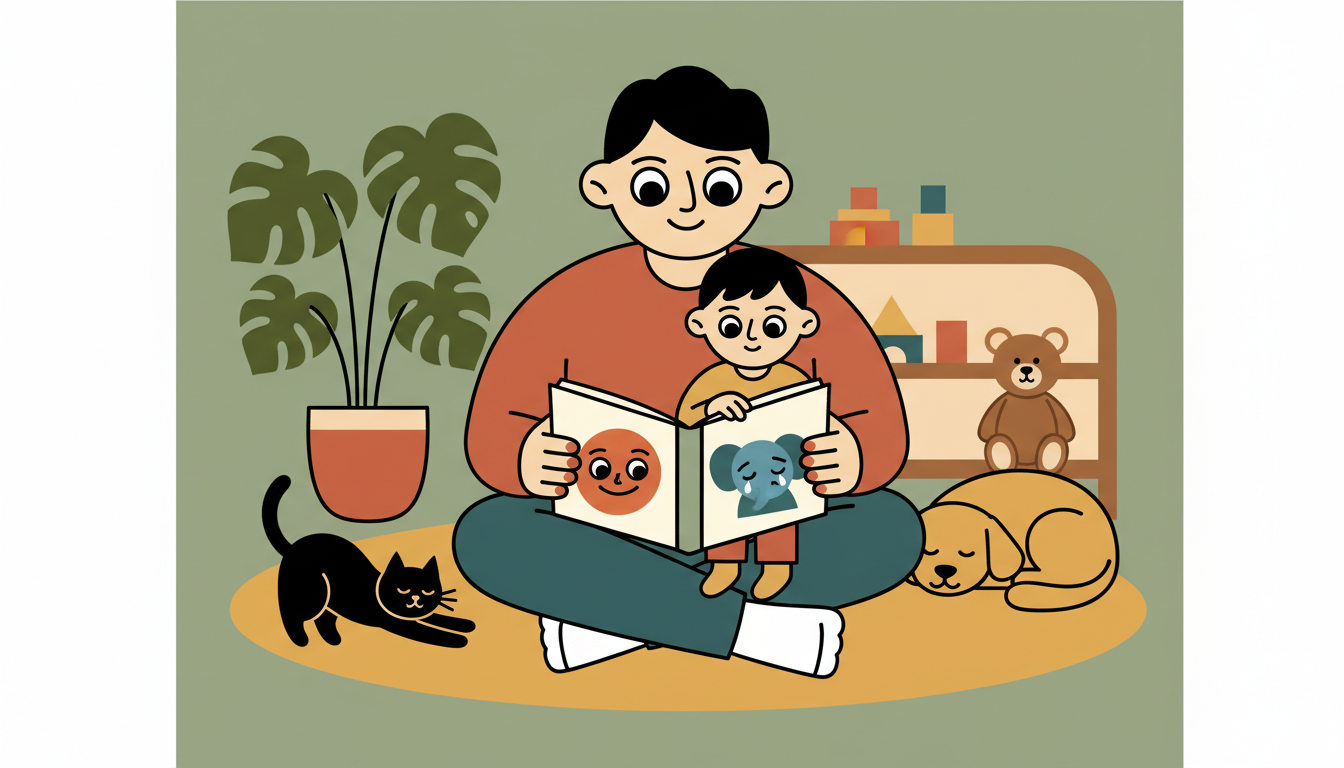
Choose a simple picture book and point out how characters feel as you read together. When you see a happy character, point and say 'She is happy. See her smile?' When a character looks sad, say 'He is sad' and make a sad face. Pause to let your child look at the pictures. This helps your child learn to recognize emotions in others through the safe distance of a story.
Steadilyの発達の旅の一部 — わが子に合わせてパーソナライズされているよ。
このアクティビティのやり方
Choose a simple picture book and point out how characters feel as you read together. When you see a happy character, point and say 'She is happy. See her smile?' When a character looks sad, say 'He is sad' and make a sad face. Pause to let your child look at the pictures. This helps your child learn to recognize emotions in others through the safe distance of a story.
効果がある理由
Books provide a valuable tool for building empathy by showing diverse emotional situations in a safe, controlled way. Research shows that empathy development follows a predictable path from emotional contagion in infancy to cognitive empathy later, and books support this progression by helping children recognize and understand others' emotions (Eisenberg et al., 2015). The language-rich environment of reading together also supports the vocabulary explosion happening at this age, giving children words to think and talk about feelings.
パパ・ママへのヒント
Pick books with clear facial expressions in the pictures. Simple board books work well.
Keep your comments short and clear. One or two words about the feeling is enough.
Let your child point at pictures too. Follow their interest and name what they notice.
用意するもの
Picture books with clear emotions shown on faces
学びの手法
Language-Rich EnvironmentImitation and ModelingBeginning Symbolic Play

このアクティビティ、楽しめた?これからの計画は私たちに任せて。
Steadilyはお子さんに合わせてすべてのアクティビティをパーソナライズするよ — 興味や発達段階、今伸ばしている特性に合わせて。だから、遊びの時間がもっと楽しくなって、一瞬一瞬が大切なものになるんだ。
Steadilyの仕組みを見る →