Emotional storytelling with toys
1–2歳Emotional Wellbeing用意するもの: Stuffed animals or dolls your child already has
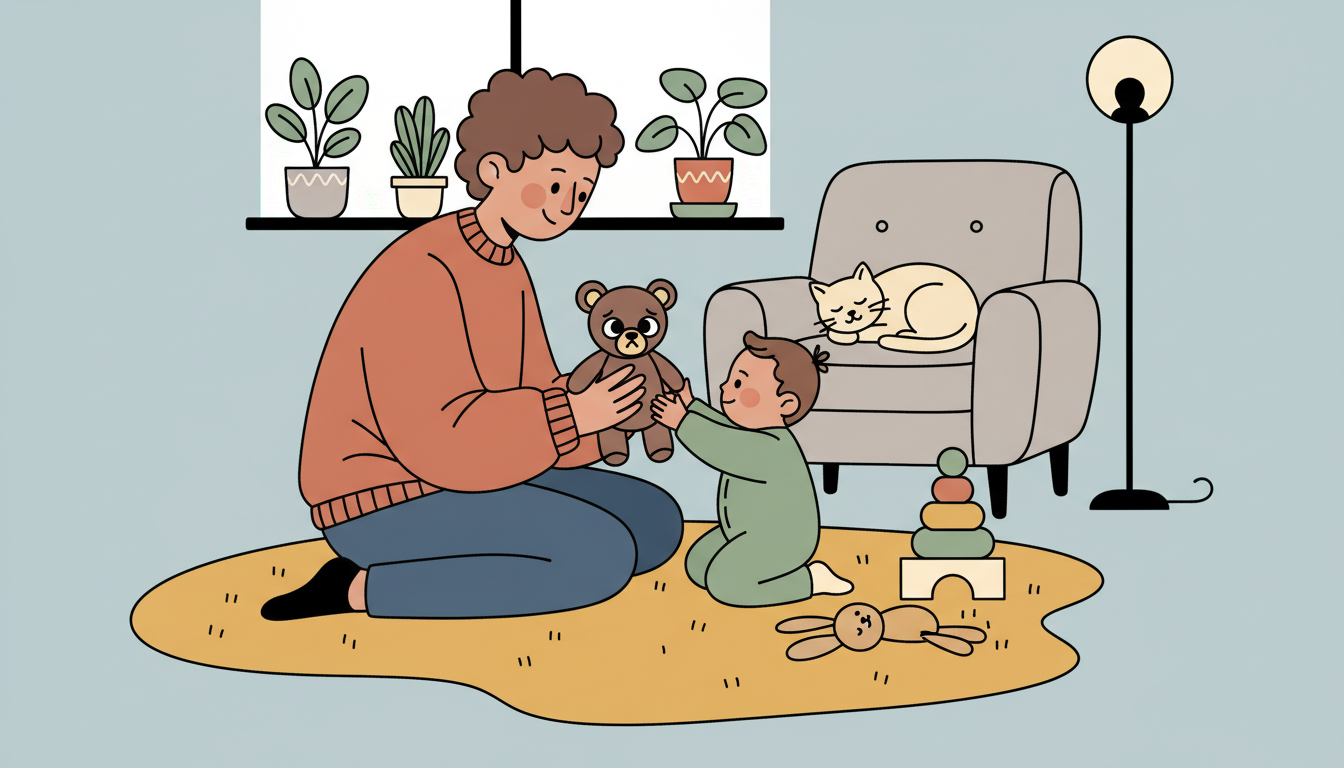
During play time, use your child's toys to act out simple emotional scenarios. Make a stuffed bear sad because it lost its toy, then help it feel better. Use simple language like 'Bear is sad. Bear needs a hug.' Invite your child to help comfort the toy. This uses symbolic play to explore feelings safely.
Steadilyの発達の旅の一部 — わが子に合わせてパーソナライズされているよ。
このアクティビティのやり方
During play time, use your child's toys to act out simple emotional scenarios. Make a stuffed bear sad because it lost its toy, then help it feel better. Use simple language like 'Bear is sad. Bear needs a hug.' Invite your child to help comfort the toy. This uses symbolic play to explore feelings safely.
効果がある理由
Beginning symbolic play at this age allows children to explore emotional scenarios safely. This builds both emotional understanding and empathy as children practice helping others feel better. Children with higher emotional intelligence show significantly better relationship satisfaction and job performance in adulthood (Bar-On, 2006). Pretend play supports emotional skill development.
パパ・ママへのヒント
Keep scenarios very simple with clear emotions and resolutions.
Let your child lead sometimes and respond to their play ideas.
End scenarios positively to show that emotions pass and problems can be solved.
用意するもの
Stuffed animals or dolls your child already has
学びの手法
Language-Rich EnvironmentImitation and ModelingBeginning Symbolic Play

このアクティビティ、楽しめた?これからの計画は私たちに任せて。
Steadilyはお子さんに合わせてすべてのアクティビティをパーソナライズするよ — 興味や発達段階、今伸ばしている特性に合わせて。だから、遊びの時間がもっと楽しくなって、一瞬一瞬が大切なものになるんだ。
Steadilyの仕組みを見る →