Mirror emotion practice
0–6ヶ月Emotional Wellbeing用意するもの: Mirror
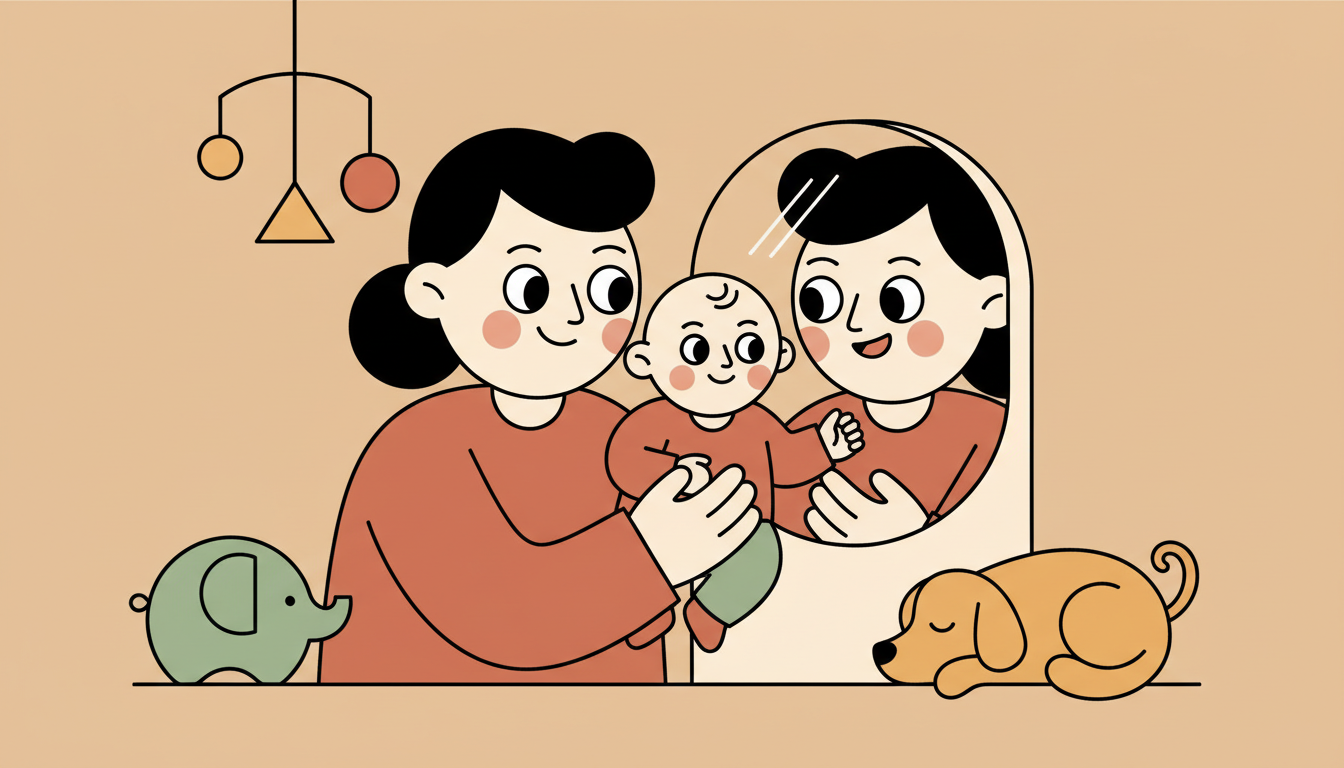
Hold your child in front of a mirror during a calm moment. Make gentle facial expressions and wait for them to respond. Try a smile, then a surprised face, then back to calm. This helps them see emotions change and return to baseline. Name the emotions simply like happy or surprised. This early emotion recognition supports their developing ability to understand and regulate feelings.
Steadilyの発達の旅の一部 — わが子に合わせてパーソナライズされているよ。
このアクティビティのやり方
Hold your child in front of a mirror during a calm moment. Make gentle facial expressions and wait for them to respond. Try a smile, then a surprised face, then back to calm. This helps them see emotions change and return to baseline. Name the emotions simply like happy or surprised. This early emotion recognition supports their developing ability to understand and regulate feelings.
効果がある理由
Recognizing and experiencing different emotions in a safe context builds emotional regulation skills. When children see emotions change and resolve, they begin to understand that feelings are temporary and manageable. This supports the development of resilience through emotional awareness and regulation. Research demonstrates that children with higher emotional resilience show significantly better outcomes, with early emotional regulation predicting later adaptive functioning (Liew et al., 2008). The responsive interaction and emotion modeling during this activity create neural pathways for understanding and managing emotional states.
パパ・ママへのヒント
Keep expressions gentle and changes slow. Big dramatic faces may startle young infants.
Watch their reaction. If they seem uncertain, return to smiling right away.
Do this when they are content, not when they are upset or tired.
用意するもの
Mirror
学びの手法
Responsive InteractionMovement-Based Learning

このアクティビティ、楽しめた?これからの計画は私たちに任せて。
Steadilyはお子さんに合わせてすべてのアクティビティをパーソナライズするよ — 興味や発達段階、今伸ばしている特性に合わせて。だから、遊びの時間がもっと楽しくなって、一瞬一瞬が大切なものになるんだ。
Steadilyの仕組みを見る →