Giving hugs for help
1–2 anniEmotional WellbeingNessun materiale necessario
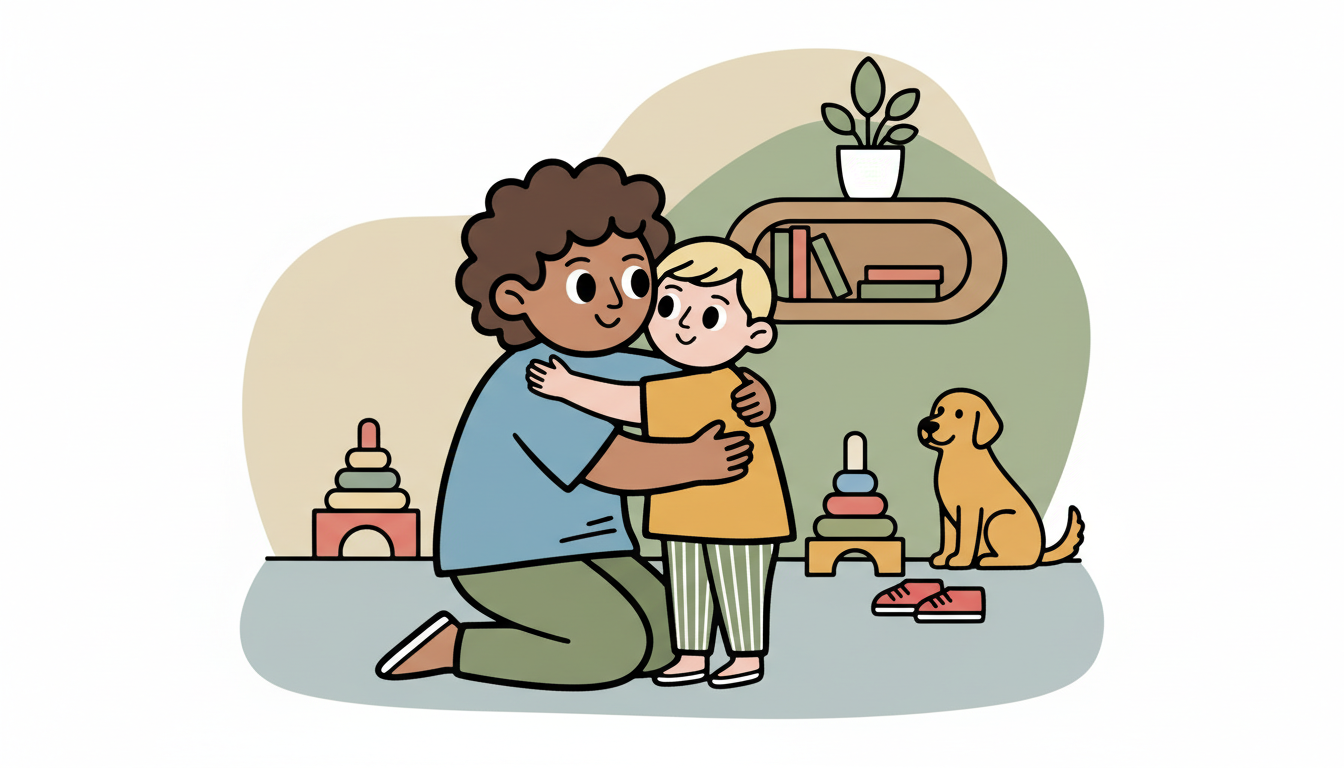
When someone helps your child with something like putting on shoes or cleaning up toys, suggest a thank you hug. Model by giving a hug yourself, then encourage your child to do the same. This physical expression of thanks feels natural for toddlers. It connects appreciation with warm, positive feelings and strengthens relationships through affection.
Parte del percorso di sviluppo Steadily — personalizzato per il tuo bambino.
Come svolgere questa attività
When someone helps your child with something like putting on shoes or cleaning up toys, suggest a thank you hug. Model by giving a hug yourself, then encourage your child to do the same. This physical expression of thanks feels natural for toddlers. It connects appreciation with warm, positive feelings and strengthens relationships through affection.
Perché funziona
Physical expressions of gratitude match the developmental stage where toddlers are learning non-verbal communication. Showing appreciation through hugs reinforces positive relationships and creates emotional connections to thankfulness. Research shows that childhood gratitude habits developed through regular acknowledgment predict adult gratitude practices, which are linked to 15% greater life satisfaction and reduced stress (Emmons & McCullough, 2003).
Consigli per i genitori
Always ask if the other person wants a hug before encouraging your child.
Model gentle, brief hugs so your child learns appropriate touch.
Praise your child when they show appreciation in any way.
Materiali necessari
None
Metodi di apprendimento
Language-Rich EnvironmentImitation and Modeling

Ti è piaciuta questa attività? Lascia che siamo noi a pianificare per te.
Steadily personalizza ogni attività per il tuo bambino — i suoi interessi, la sua fase di crescita, i tratti che sta sviluppando — così il momento del gioco è più divertente e ogni istante conta.
Scopri come funziona Steadily →