Mirror feeling faces
2–3 anniEmotional WellbeingMateriali: Mirror
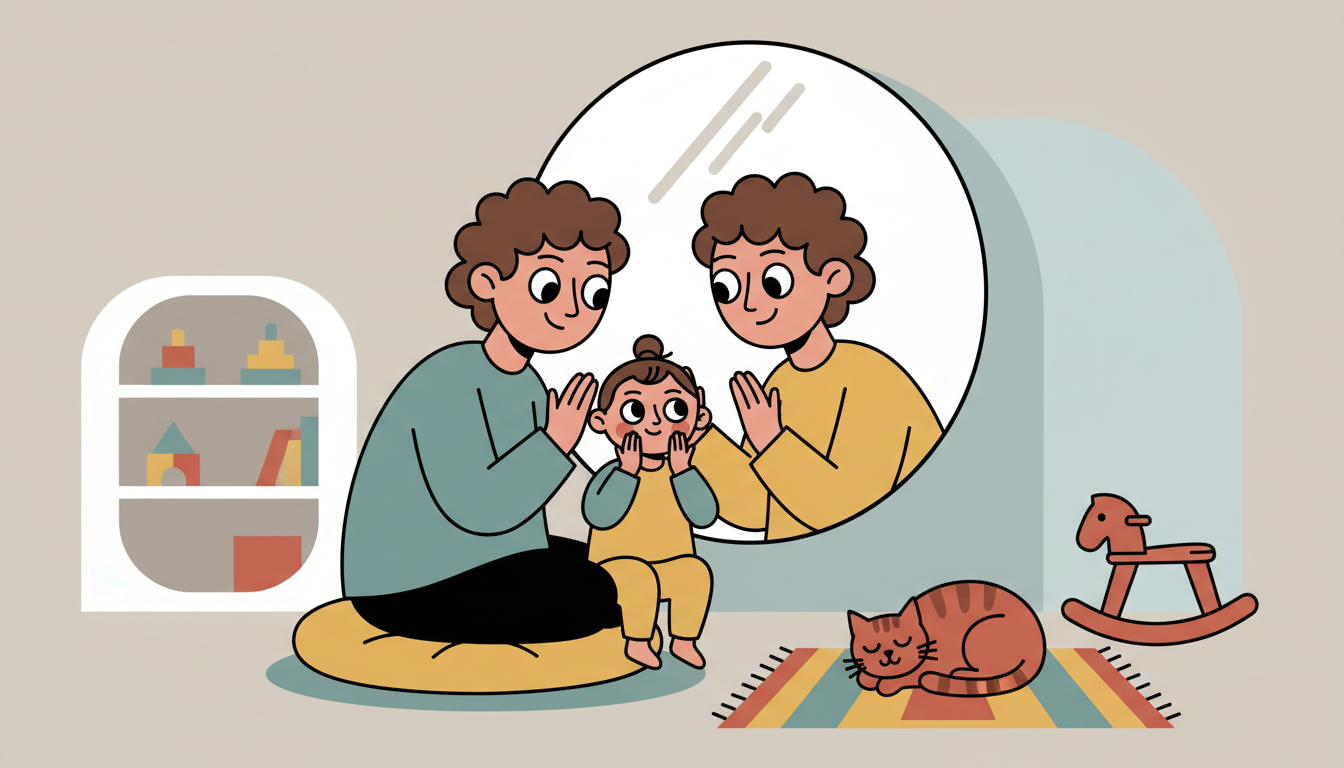
Sit with your child in front of a mirror and make different facial expressions together. Name each emotion as you make the face. Try happy, sad, surprised, angry, and silly faces.
Parte del percorso di sviluppo Steadily — personalizzato per il tuo bambino.
Come svolgere questa attività
Sit with your child in front of a mirror and make different facial expressions together. Name each emotion as you make the face. Try happy, sad, surprised, angry, and silly faces.
This activity builds emotional vocabulary during natural play time. Your child learns to connect facial expressions with feeling words, which is the foundation of emotional recognition.
Perché funziona
At this age, children are developing the language skills needed to label emotions for the first time. Research shows that children whose emotions were acknowledged and labeled by parents at age 2-3 showed significantly better emotional regulation and understanding at age 4-5 (Goleman, 1995). Making faces in the mirror helps children connect internal feelings with external expressions, building the foundation for emotional intelligence including self-awareness and empathy.
Consigli per i genitori
Start with your child's current mood and name it. Let them lead sometimes and guess what feeling they're showing.
If they resist making certain faces, that's okay. You can model the expression and simply say the word.
Materiali necessari
Mirror
Metodi di apprendimento
Symbolic and Pretend PlaySongs, Stories, and RhymesSocial Learning Through Peers

Ti è piaciuta questa attività? Lascia che siamo noi a pianificare per te.
Steadily personalizza ogni attività per il tuo bambino — i suoi interessi, la sua fase di crescita, i tratti che sta sviluppando — così il momento del gioco è più divertente e ogni istante conta.
Scopri come funziona Steadily →