I can't do it yet
3–4 anniSuccess MindsetNessun materiale necessario
When your child says 'I can't do it,' add the word 'yet' to the end. Practice using 'yet' language together throughout your activities. Make it playful and notice when your child starts using it on their own. Celebrate when you hear them say 'I can't do it yet.'
Parte del percorso di sviluppo Steadily — personalizzato per il tuo bambino.
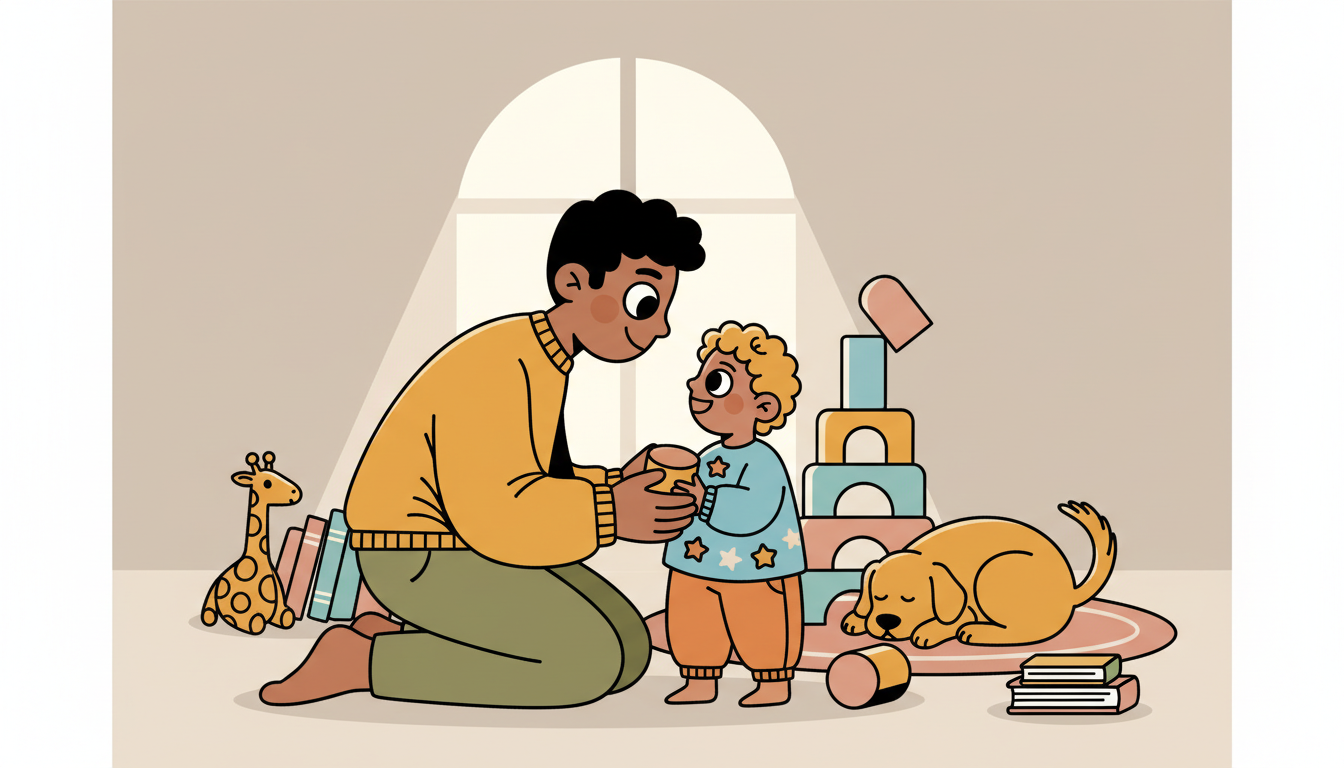
Come svolgere questa attività
When your child says 'I can't do it,' add the word 'yet' to the end. Practice using 'yet' language together throughout your activities. Make it playful and notice when your child starts using it on their own. Celebrate when you hear them say 'I can't do it yet.'
Perché funziona
The word 'yet' fundamentally changes how children think about their abilities. It transforms a statement of inability into a statement about current status and future potential. Research shows that children who adopt growth mindset language show greater persistence and develop stronger skills over time, with parents' growth mindset beliefs directly influencing children's persistence.
(Song, Y., Barger, M. M., & Bub, K. L. (2022). Growth mindset and children's persistence and academic skills. Frontiers in Education, 6, 791652.)
Consigli per i genitori
Model 'yet' language yourself: 'I can't open this jar yet. Let me try twisting harder.'
When your child uses 'yet' naturally, acknowledge it warmly: 'I heard you say yet. That shows you know you'll get better with practice.' Don't turn this into pressure. Keep it light and positive.
Materiali necessari
None
Metodi di apprendimento
Inquiry-Based LearningStructured Learning ActivitiesProject-Based Learning

Ti è piaciuta questa attività? Lascia che siamo noi a pianificare per te.
Steadily personalizza ogni attività per il tuo bambino — i suoi interessi, la sua fase di crescita, i tratti che sta sviluppando — così il momento del gioco è più divertente e ogni istante conta.
Scopri come funziona Steadily →