Feelings in our story
2–3 anniFamily ConnectionMateriali: Picture books with clear facial expressions
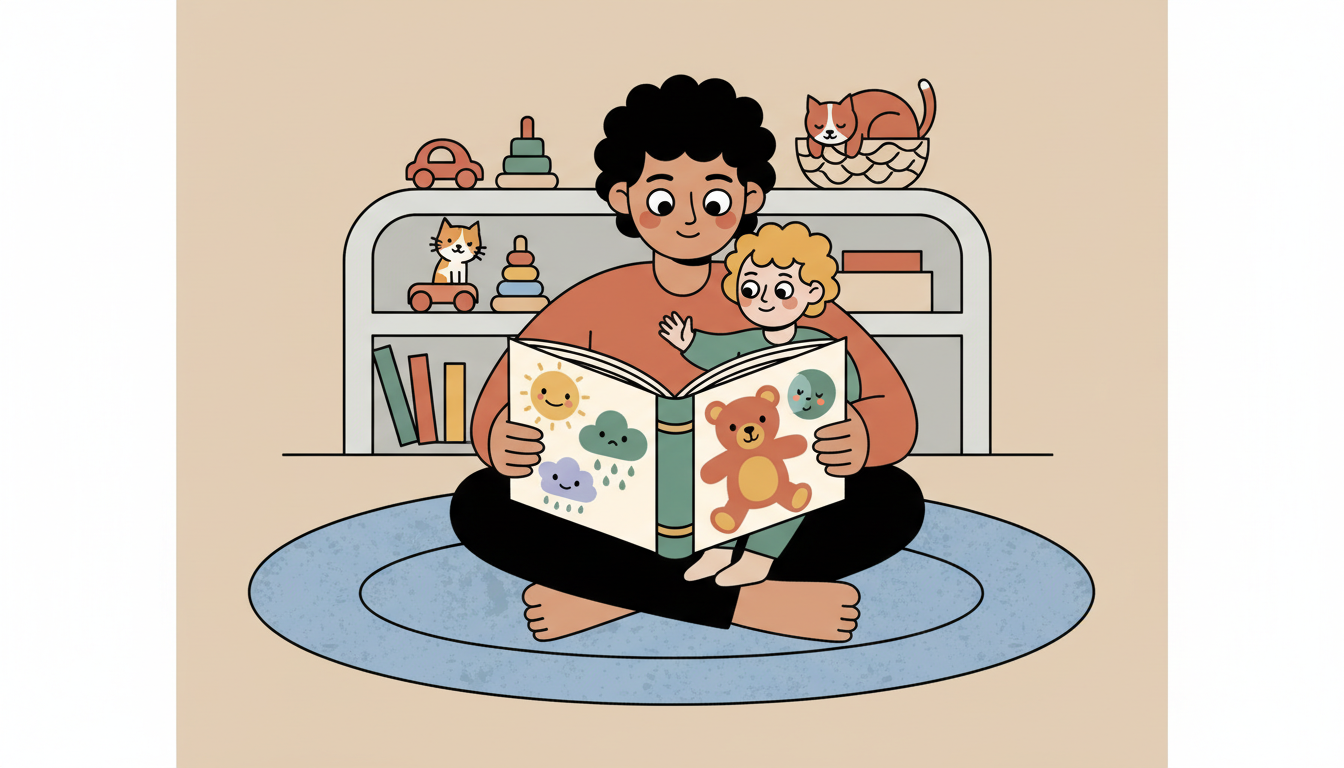
During story time, pause to point out characters' emotions. Ask simple questions like 'Is teddy happy or sad?' Help your child notice facial expressions in the pictures. Name the emotions you see together. This turns reading time into an empathy learning moment.
Parte del percorso di sviluppo Steadily — personalizzato per il tuo bambino.
Come svolgere questa attività
During story time, pause to point out characters' emotions. Ask simple questions like 'Is teddy happy or sad?' Help your child notice facial expressions in the pictures. Name the emotions you see together. This turns reading time into an empathy learning moment.
Perché funziona
Reading books about feelings and discussing characters' emotions helps children begin distinguishing self from others and recognizing that others have feelings. This activity leverages the critical developmental window when basic empathetic awareness becomes possible for the first time (Hoffman, M. L., 2000). Songs, stories, and rhymes enhance learning during this age, making books an ideal tool for empathy development.
Consigli per i genitori
Start with basic emotions like happy, sad, and mad. Use the same emotion words consistently.
Point to your own face to show the emotion, then point to the character. Your child learns by watching you model empathy.
Materiali necessari
Picture books with clear facial expressions
Metodi di apprendimento
Symbolic and Pretend PlaySongs, Stories, and RhymesSocial Learning Through Peers

Ti è piaciuta questa attività? Lascia che siamo noi a pianificare per te.
Steadily personalizza ogni attività per il tuo bambino — i suoi interessi, la sua fase di crescita, i tratti che sta sviluppando — così il momento del gioco è più divertente e ogni istante conta.
Scopri come funziona Steadily →