Emotion faces game
4–5 anniFamily ConnectionMateriali: Optional: a mirror
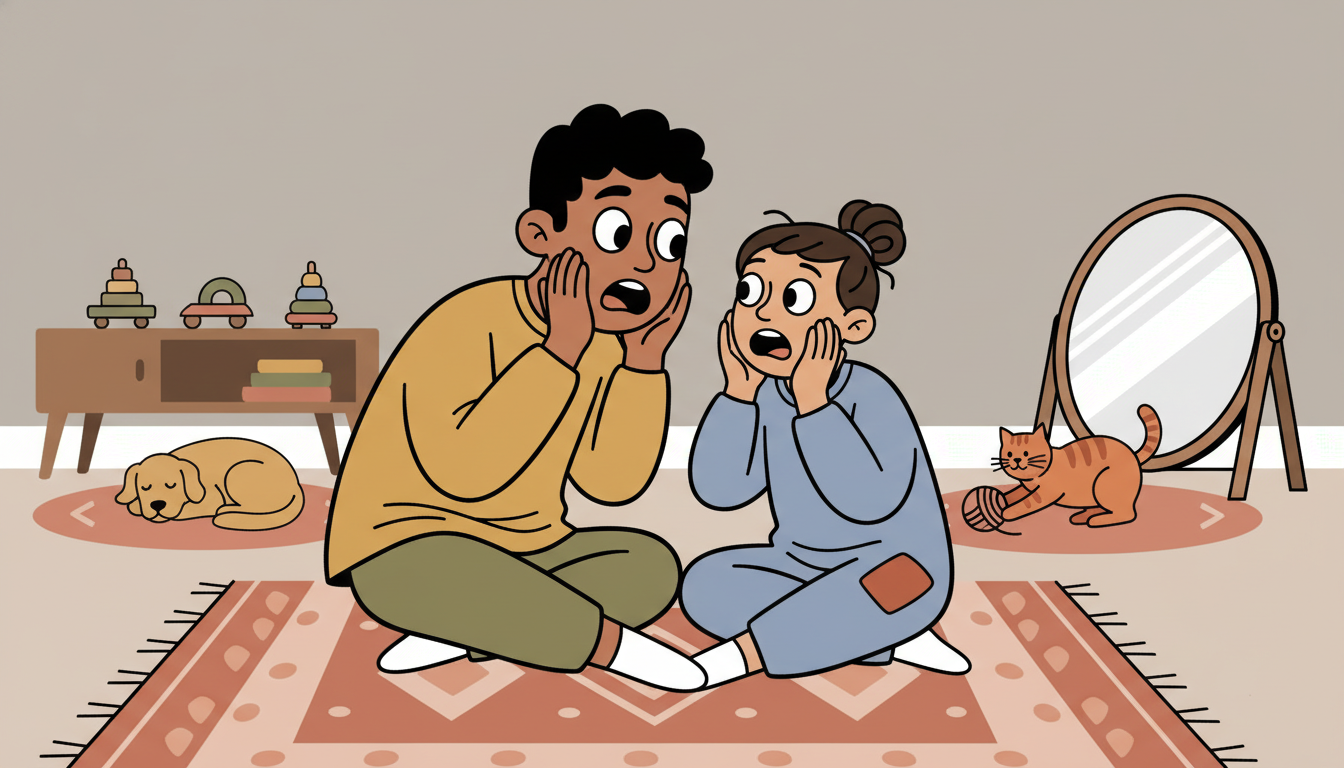
Take turns making different feeling faces and guessing what emotion the other person is showing. Start with basic emotions like happy, sad, angry, and scared, then add more complex ones like surprised, frustrated, or proud. Talk about times you each felt that way. You can also use a mirror to explore facial expressions together. This makes emotion recognition fun and interactive.
Parte del percorso di sviluppo Steadily — personalizzato per il tuo bambino.
Come svolgere questa attività
Take turns making different feeling faces and guessing what emotion the other person is showing. Start with basic emotions like happy, sad, angry, and scared, then add more complex ones like surprised, frustrated, or proud. Talk about times you each felt that way. You can also use a mirror to explore facial expressions together. This makes emotion recognition fun and interactive.
Perché funziona
Secure attachment helps children develop better emotion expression and recognition. Research shows securely attached children exhibit significantly more appropriate emotion expression and less task-incongruent affect during interactions (Borelli et al., 2021). Playing with emotions in a safe, fun context teaches children that feelings can be expressed and understood.
Consigli per i genitori
Make this playful and light. Exaggerate expressions to make it easier and more fun for your child.
Validate whatever emotions your child mentions. All feelings are okay to have and talk about.
Materiali necessari
Optional: a mirror
Metodi di apprendimento
Cooperative LearningMetacognitive StrategiesProject-Based and Thematic Learning

Ti è piaciuta questa attività? Lascia che siamo noi a pianificare per te.
Steadily personalizza ogni attività per il tuo bambino — i suoi interessi, la sua fase di crescita, i tratti che sta sviluppando — così il momento del gioco è più divertente e ogni istante conta.
Scopri come funziona Steadily →