Emotion color matching
3–4 anniEmotional WellbeingMateriali: Crayons or markers
Paper
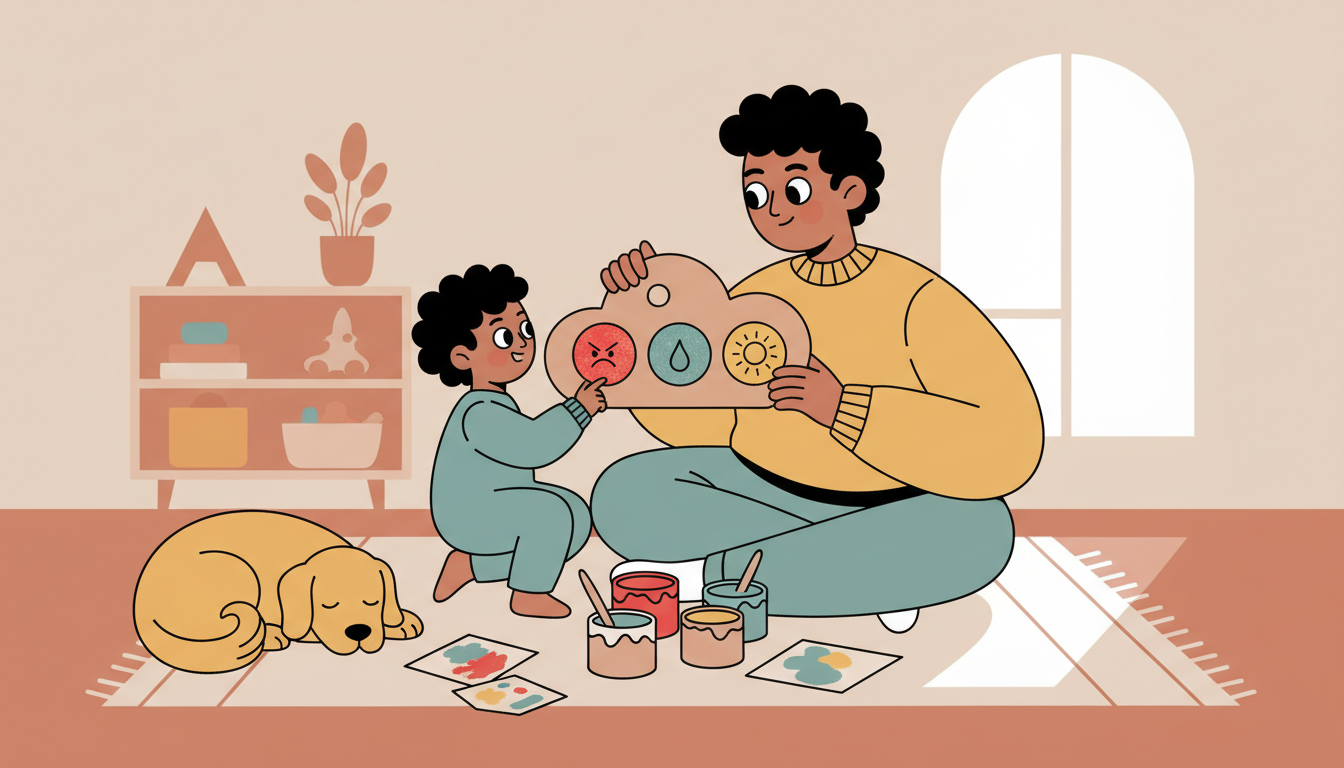
Assign colors to different emotions together. Maybe red for angry, blue for sad, yellow for happy. Throughout your time together, check in by asking what color they feel. You share your color too. Draw or paint with emotion colors. This gives your child concrete language for abstract feelings.
Parte del percorso di sviluppo Steadily — personalizzato per il tuo bambino.
Come svolgere questa attività
Assign colors to different emotions together. Maybe red for angry, blue for sad, yellow for happy. Throughout your time together, check in by asking what color they feel. You share your color too. Draw or paint with emotion colors. This gives your child concrete language for abstract feelings.
Perché funziona
Concrete representations help young children understand abstract emotional concepts during the age when emotional vocabulary naturally expands. Emotional intelligence development in early childhood leads to better emotional recognition, expression, and regulation skills in adulthood (Goleman, 1995). Color coding makes emotions tangible during this critical period.
Consigli per i genitori
Let your child choose which colors match which feelings.
Keep it simple with three or four emotions at first.
Model sharing your own emotion colors honestly throughout the day.
Materiali necessari
Crayons or markers
Paper
Metodi di apprendimento
Narrative and Literacy-Rich ExperiencesCollaborative and Cooperative PlayInquiry-Based Learning

Ti è piaciuta questa attività? Lascia che siamo noi a pianificare per te.
Steadily personalizza ogni attività per il tuo bambino — i suoi interessi, la sua fase di crescita, i tratti che sta sviluppando — così il momento del gioco è più divertente e ogni istante conta.
Scopri come funziona Steadily →