Emotion check-in time
3–4 anniFamily ConnectionNessun materiale necessario
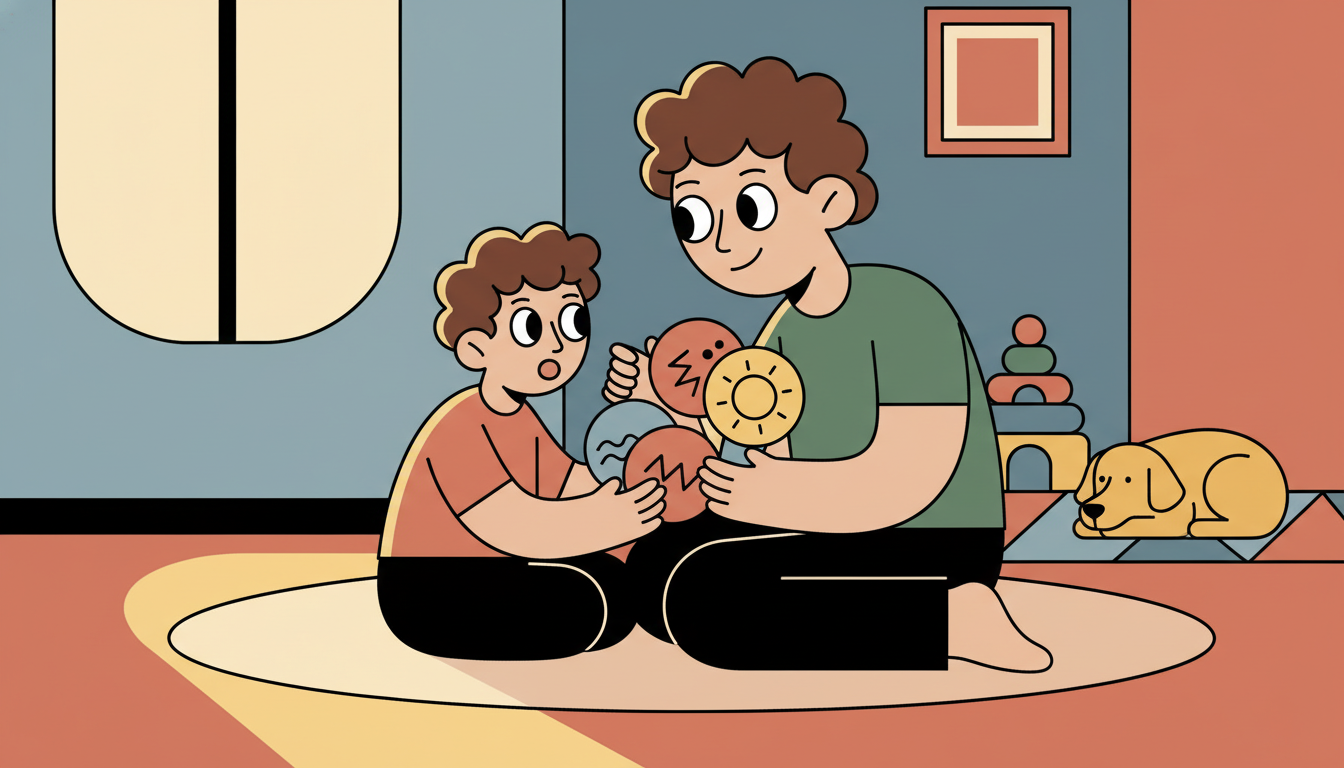
Set aside a few minutes each day to ask your child how they are feeling. Listen closely and reflect back what you hear. You might say, "It sounds like you felt frustrated when your tower fell down." This simple practice helps your child feel understood and builds trust between you.
Parte del percorso di sviluppo Steadily — personalizzato per il tuo bambino.
Come svolgere questa attività
Set aside a few minutes each day to ask your child how they are feeling. Listen closely and reflect back what you hear. You might say, "It sounds like you felt frustrated when your tower fell down." This simple practice helps your child feel understood and builds trust between you.
Perché funziona
Secure attachment helps children learn to express emotions appropriately and develop better emotional regulation throughout life (Ainsworth et al., 1978). When you attune to and validate your child's emotions, you strengthen their ability to trust you with their feelings. Research shows securely attached children demonstrate better emotion understanding and modulation, as they learn to appraise situations with changing demands (Thompson, 2008).
Consigli per i genitori
Let your child lead the conversation. You do not need to fix their feelings, just acknowledge them.
Use simple feeling words like happy, sad, frustrated, or excited. Your child will learn to name their emotions.
If your child is not ready to talk, that is okay. You can try again later. Stay patient and available.
Materiali necessari
None
Metodi di apprendimento
Collaborative and Cooperative PlayNarrative and Literacy-Rich ExperiencesProject-Based Learning

Ti è piaciuta questa attività? Lascia che siamo noi a pianificare per te.
Steadily personalizza ogni attività per il tuo bambino — i suoi interessi, la sua fase di crescita, i tratti che sta sviluppando — così il momento del gioco è più divertente e ogni istante conta.
Scopri come funziona Steadily →