Comfort the sad toy
2–3 anniFamily ConnectionMateriali: Toys or stuffed animals
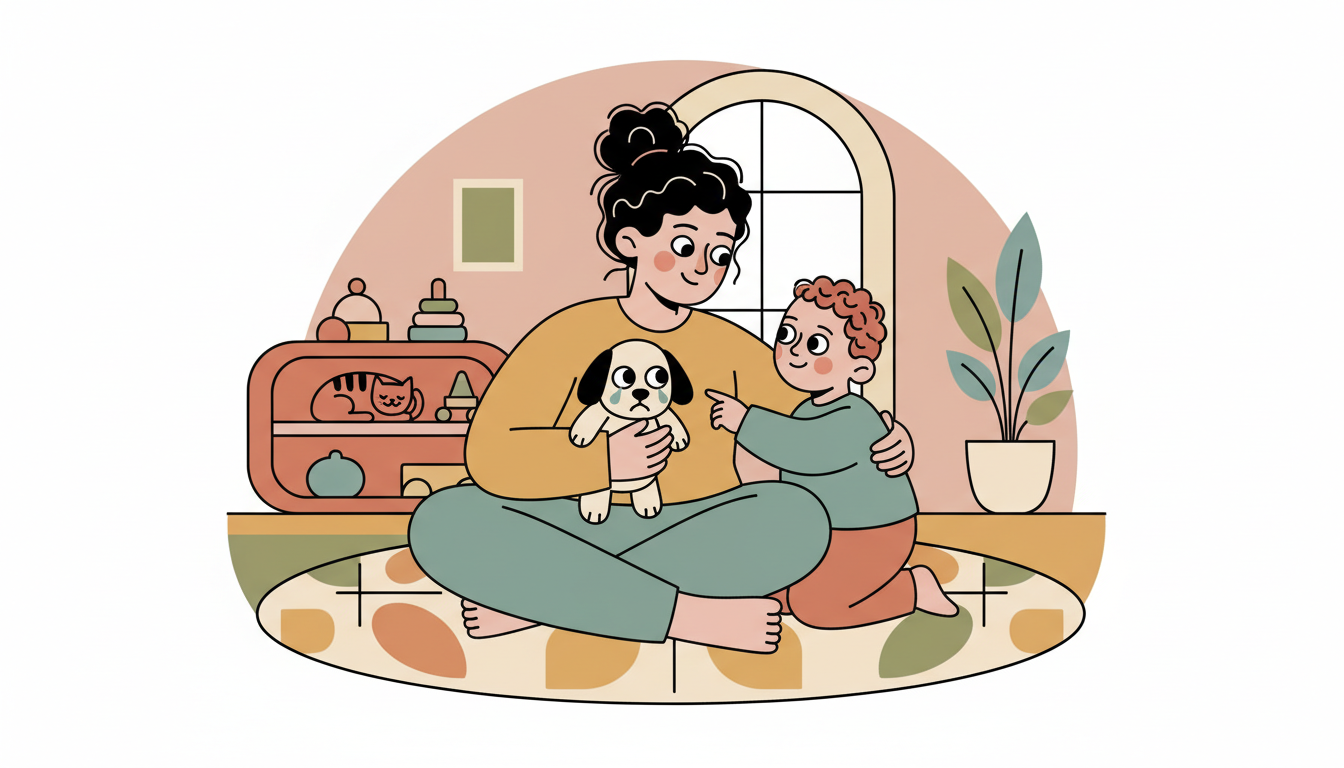
During play, pretend one of your child's toys is sad or hurt. Say 'Oh no, doggy fell down. Doggy is sad and crying.' See what your child does. If needed, model comforting: 'I will give doggy a hug. There, there, you will be okay.' Invite your child to help comfort the toy too.
Parte del percorso di sviluppo Steadily — personalizzato per il tuo bambino.
Come svolgere questa attività
During play, pretend one of your child's toys is sad or hurt. Say 'Oh no, doggy fell down. Doggy is sad and crying.' See what your child does. If needed, model comforting: 'I will give doggy a hug. There, there, you will be okay.' Invite your child to help comfort the toy too.
Perché funziona
Early empathy training through pretend play scenarios predicts prosocial behavior and peer acceptance later in childhood. This activity uses symbolic and pretend play, which is critical for emotional development, to practice responding compassionately to others' distress (Hoffman, M. L., 2000). The theory of mind foundations being established now through such activities are critical for all future empathy development.
Consigli per i genitori
Follow your child's lead. Some children will naturally comfort the toy. Others need you to show them first.
Praise any caring response. Even just touching the toy gently shows emerging empathy.
Materiali necessari
Toys or stuffed animals
Metodi di apprendimento
Symbolic and Pretend PlaySongs, Stories, and RhymesSocial Learning Through Peers

Ti è piaciuta questa attività? Lascia che siamo noi a pianificare per te.
Steadily personalizza ogni attività per il tuo bambino — i suoi interessi, la sua fase di crescita, i tratti che sta sviluppando — così il momento del gioco è più divertente e ogni istante conta.
Scopri come funziona Steadily →