What helps you feel better
3–4 anniEmotional WellbeingNessun materiale necessario
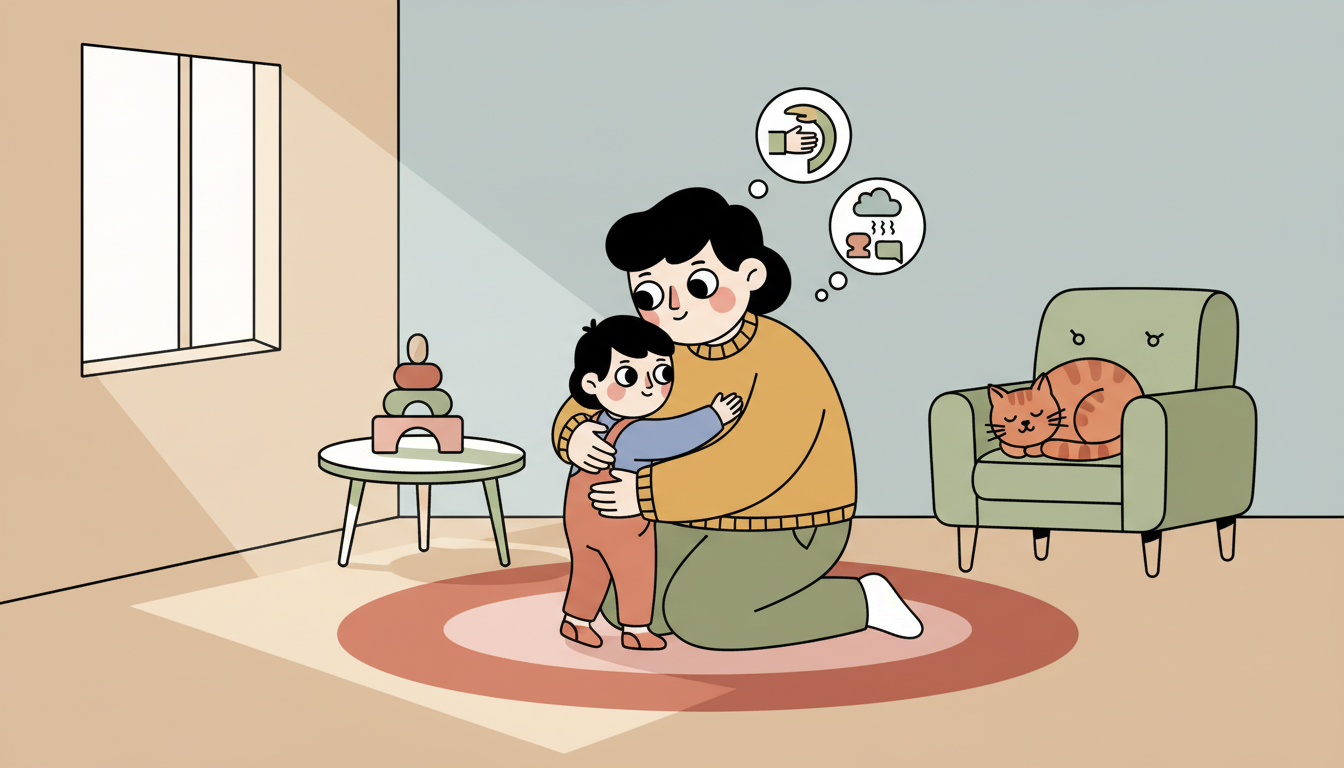
During quiet activities together, ask your child to think about times they felt upset and what made them feel better. Was it a hug, taking deep breaths, or talking about it? Help them notice what works for them. This builds self-awareness and gives them tools for future challenges.
Parte del percorso di sviluppo Steadily — personalizzato per il tuo bambino.
Come svolgere questa attività
During quiet activities together, ask your child to think about times they felt upset and what made them feel better. Was it a hug, taking deep breaths, or talking about it? Help them notice what works for them. This builds self-awareness and gives them tools for future challenges.
Perché funziona
Identifying personal coping strategies builds the self-awareness and emotional regulation that underpin resilience. Research demonstrates that resilience interventions teaching students to identify and use coping skills lead to significant increases in emotional regulation and adaptive behaviors (Castro-Olivo et al., 2022). Children who develop this self-knowledge show better ability to manage stress throughout their lives.
Consigli per i genitori
Start with recent, specific examples your child can remember.
Validate all their answers, even if they seem simple like "Mommy's hug."
Revisit this conversation regularly as your child grows and discovers new coping strategies.
Materiali necessari
None
Metodi di apprendimento
Project-Based LearningInquiry-Based LearningStructured Learning Activities

Ti è piaciuta questa attività? Lascia che siamo noi a pianificare per te.
Steadily personalizza ogni attività per il tuo bambino — i suoi interessi, la sua fase di crescita, i tratti che sta sviluppando — così il momento del gioco è più divertente e ogni istante conta.
Scopri come funziona Steadily →