Teddy needs care
2–3 anniFamily ConnectionMateriali: Stuffed animals or dolls
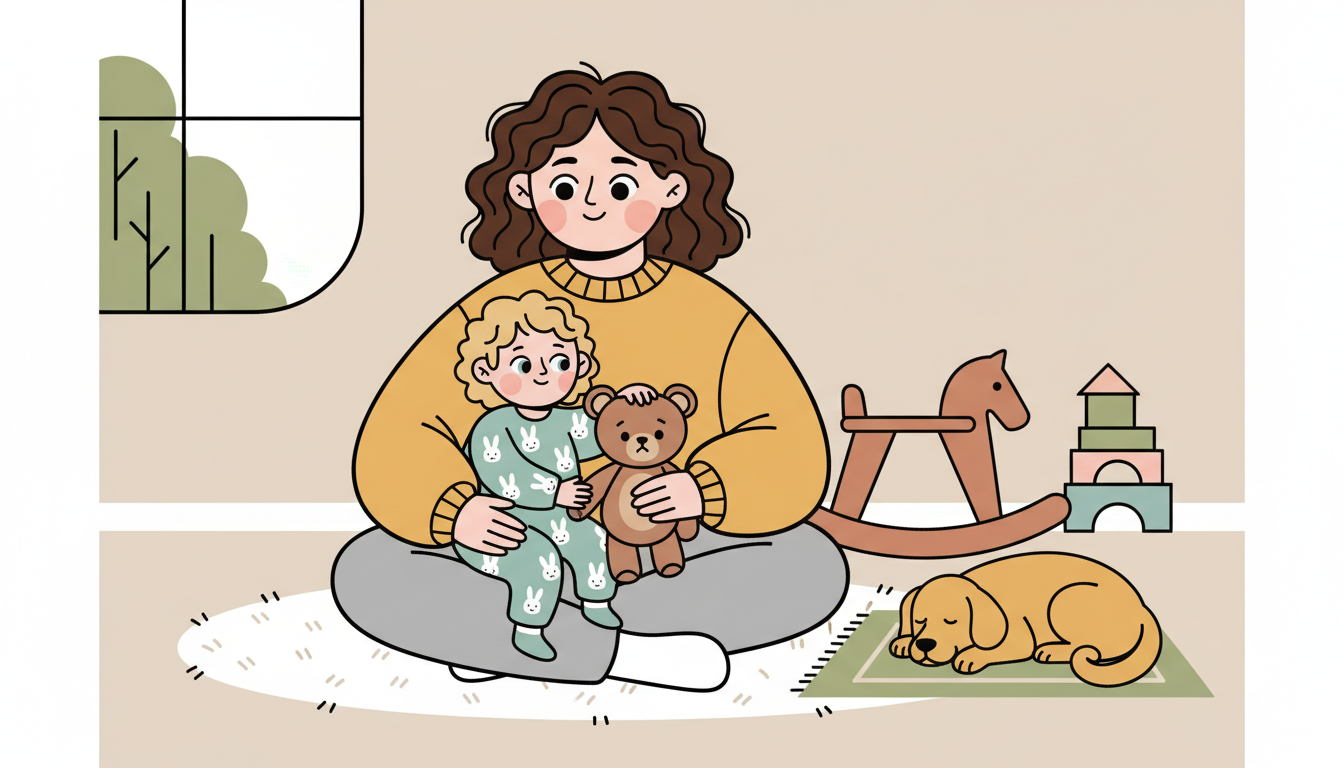
Give your child a stuffed animal or doll and suggest it might be tired, hungry, or sad. Encourage your child to care for it. You might say 'Bunny looks sad. What can we do?' Model gentle touches and soothing words. Let your child practice being kind and caring.
Parte del percorso di sviluppo Steadily — personalizzato per il tuo bambino.
Come svolgere questa attività
Give your child a stuffed animal or doll and suggest it might be tired, hungry, or sad. Encourage your child to care for it. You might say 'Bunny looks sad. What can we do?' Model gentle touches and soothing words. Let your child practice being kind and caring.
Perché funziona
Pretend play caring for dolls teaches children to respond compassionately to others' emotions, a key childhood behavior that predicts stronger adult empathy (Eisenberg, N., Spinrad, T. L., & Knafo-Noam, A., 2015). When parents show empathy and model caring responses, children learn to create safe spaces for emotional expression (Bhansali, B., 2023). Symbolic and pretend play is critical for emotional development at this age.
Consigli per i genitori
Keep it simple. Your child may just hug the toy, and that is enough.
Praise caring behaviors warmly. Say 'You are being so gentle. Bunny feels better now.'
Materiali necessari
Stuffed animals or dolls
Metodi di apprendimento
Symbolic and Pretend PlaySongs, Stories, and RhymesSocial Learning Through Peers

Ti è piaciuta questa attività? Lascia che siamo noi a pianificare per te.
Steadily personalizza ogni attività per il tuo bambino — i suoi interessi, la sua fase di crescita, i tratti che sta sviluppando — così il momento del gioco è più divertente e ogni istante conta.
Scopri come funziona Steadily →