Stuffed animal feelings
2–3 anniEmotional WellbeingMateriali: Stuffed animals or dolls
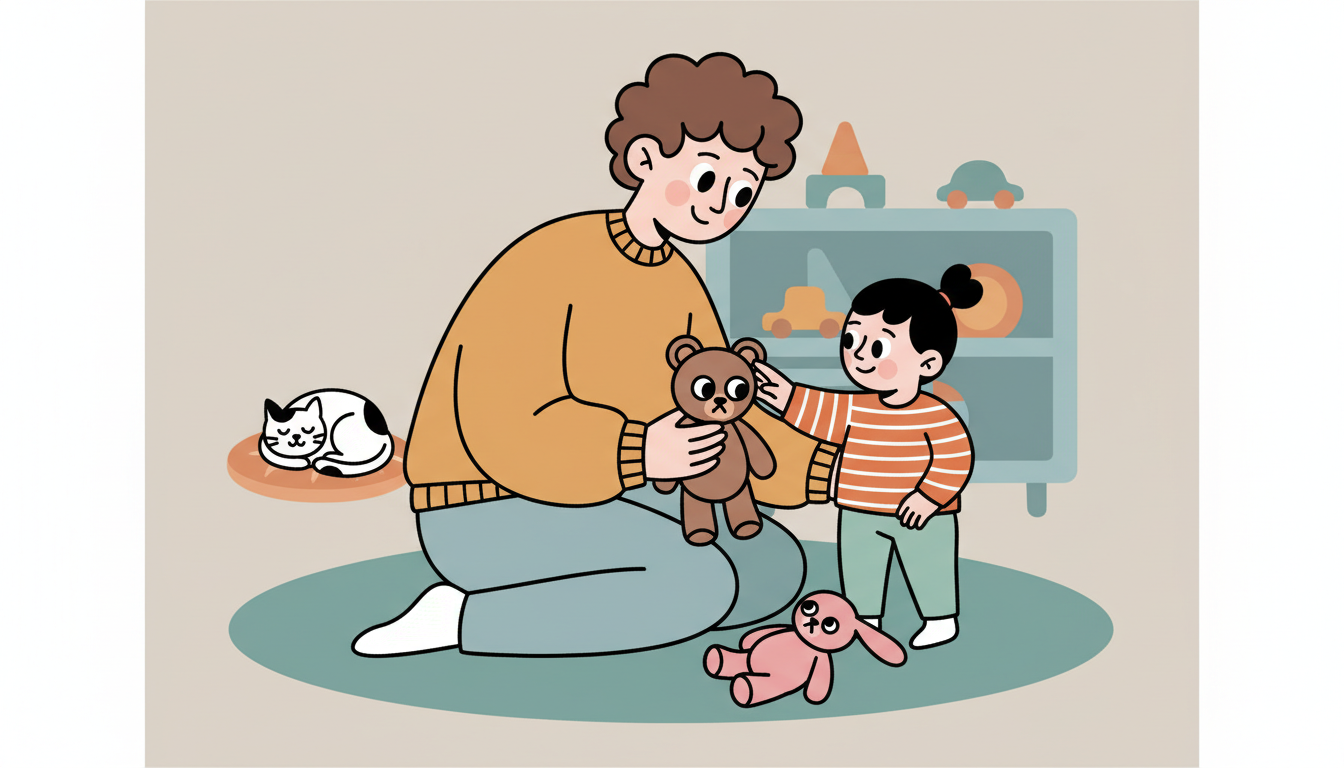
Use stuffed animals or dolls to act out simple emotional scenarios. You might say, 'Teddy fell down. How does Teddy feel?' Let your child respond, then help Teddy feel better together.
Parte del percorso di sviluppo Steadily — personalizzato per il tuo bambino.
Come svolgere questa attività
Use stuffed animals or dolls to act out simple emotional scenarios. You might say, 'Teddy fell down. How does Teddy feel?' Let your child respond, then help Teddy feel better together.
This play-based approach lets your child practice empathy and problem-solving in a safe, pretend context. It's easier to talk about a toy's feelings than their own big emotions.
Perché funziona
Symbolic and pretend play is critical for cognitive, social, and emotional development at this age. Research shows that early emotional intelligence development leads to better emotional recognition and expression skills in adulthood (Goleman, 1995). Empathy is one of the five core components of EQ, and children with higher emotional intelligence experience significantly better relationship satisfaction and mental health outcomes (Bar-On, 2006).
Consigli per i genitori
Follow your child's lead. If they want to make the stuffed animal do something different, go with it.
You can introduce simple solutions like, 'Should we give Teddy a hug to help him feel better?'
Materiali necessari
Stuffed animals or dolls
Metodi di apprendimento
Symbolic and Pretend PlaySongs, Stories, and RhymesSocial Learning Through Peers

Ti è piaciuta questa attività? Lascia che siamo noi a pianificare per te.
Steadily personalizza ogni attività per il tuo bambino — i suoi interessi, la sua fase di crescita, i tratti che sta sviluppando — così il momento del gioco è più divertente e ogni istante conta.
Scopri come funziona Steadily →