Naming feelings together
1–2 anniEmotional WellbeingNessun materiale necessario
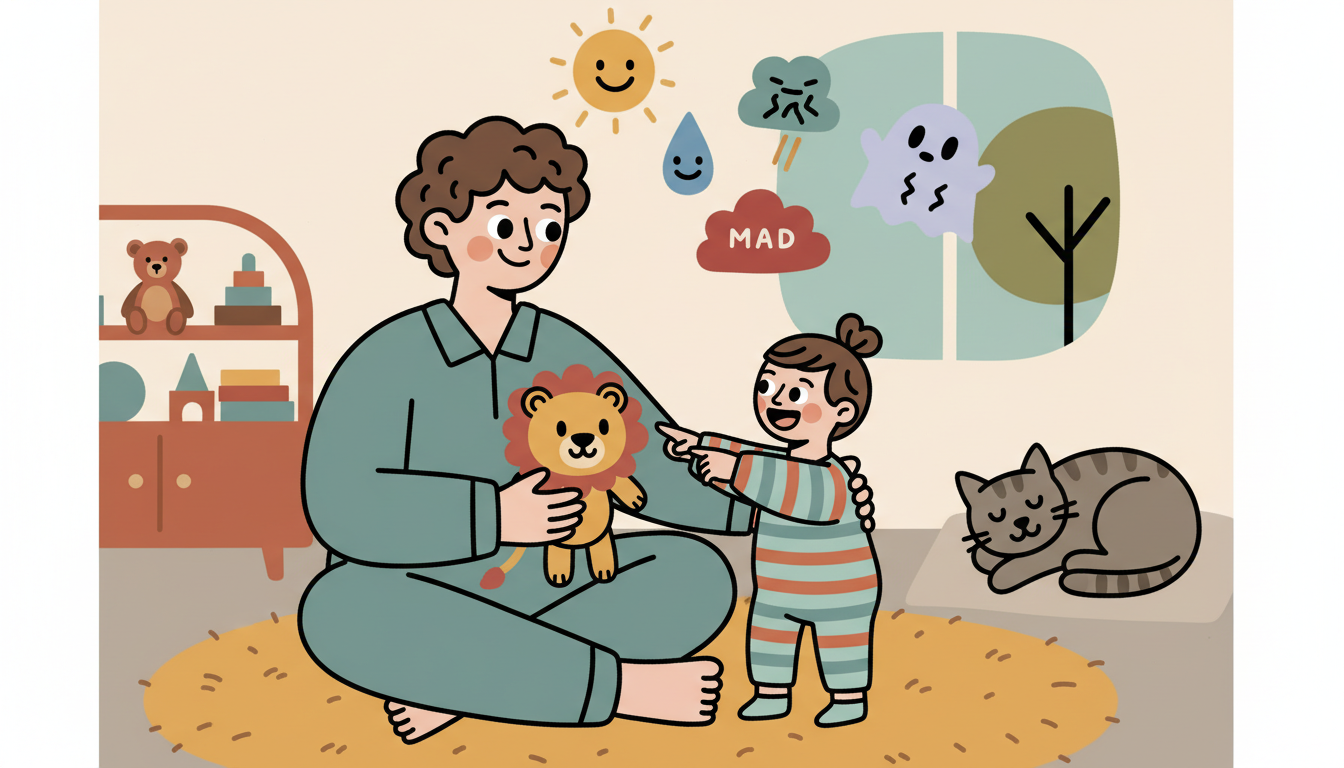
As you play with your child, label emotions as they happen. When your child laughs, say 'You're feeling happy.' When they seem frustrated with a toy, say 'You're feeling frustrated.' Use simple emotion words like happy, sad, mad, and scared. This helps your child connect words to their internal experiences.
Parte del percorso di sviluppo Steadily — personalizzato per il tuo bambino.
Come svolgere questa attività
As you play with your child, label emotions as they happen. When your child laughs, say 'You're feeling happy.' When they seem frustrated with a toy, say 'You're feeling frustrated.' Use simple emotion words like happy, sad, mad, and scared. This helps your child connect words to their internal experiences.
Perché funziona
Language development at this age enables explicit emotion labeling and discussion. When children learn to name their emotions, they develop better emotional recognition and expression skills that carry into adulthood (Goleman, 1995). This builds the foundation for self-awareness, a core component of emotional intelligence.
Consigli per i genitori
Keep it simple with one or two emotion words at a time.
Use a calm, matter-of-fact tone when naming emotions.
Label your own emotions too, like 'I'm feeling tired' or 'I'm feeling happy to see you.'
Materiali necessari
None
Metodi di apprendimento
Language-Rich EnvironmentImitation and ModelingBeginning Symbolic Play

Ti è piaciuta questa attività? Lascia che siamo noi a pianificare per te.
Steadily personalizza ogni attività per il tuo bambino — i suoi interessi, la sua fase di crescita, i tratti che sta sviluppando — così il momento del gioco è più divertente e ogni istante conta.
Scopri come funziona Steadily →