Name the feeling game
3–4 anniFamily ConnectionNessun materiale necessario
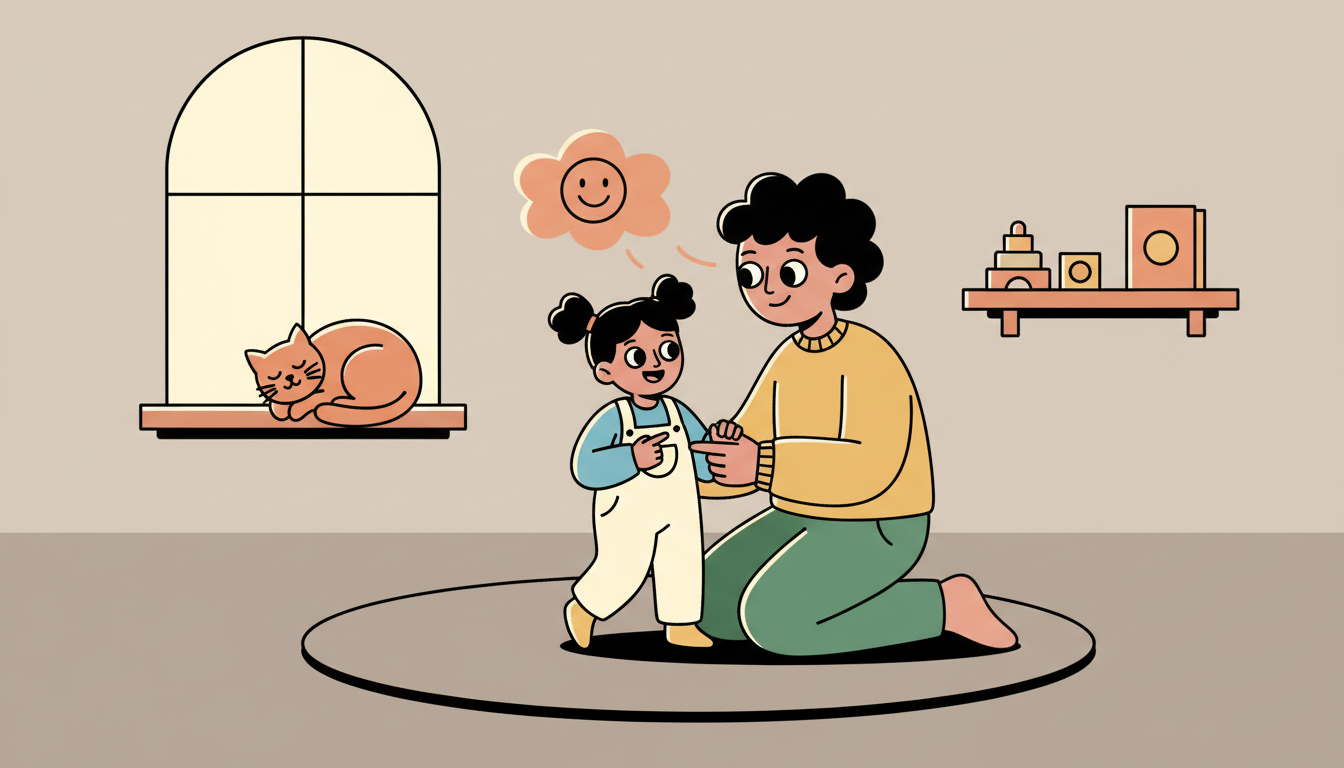
Throughout the day, help your child name their feelings as they experience them. When you notice an emotion, gently label it. "You look excited about going to the park." Or, "I see you are feeling sad about saying goodbye." This helps your child develop emotional vocabulary and feel understood.
Parte del percorso di sviluppo Steadily — personalizzato per il tuo bambino.
Come svolgere questa attività
Throughout the day, help your child name their feelings as they experience them. When you notice an emotion, gently label it. "You look excited about going to the park." Or, "I see you are feeling sad about saying goodbye." This helps your child develop emotional vocabulary and feel understood.
Perché funziona
Helping your child identify and express emotions builds emotional literacy and strengthens your bond. Securely attached children showed greater decrease in negative affect and better emotional recovery when parents were attuned to their emotions (Borelli et al., 2021). This emotional validation promotes developmental competence in emotion expression and helps children appraise situations more effectively (Thompson, 2008).
Consigli per i genitori
Start with basic emotions like happy, sad, angry, scared, and excited. Build vocabulary gradually.
Describe what you see without judgment. Simply notice and name the emotion.
Share your own feelings too. "I feel tired right now" helps your child learn emotions are normal.
Materiali necessari
None
Metodi di apprendimento
Collaborative and Cooperative PlayNarrative and Literacy-Rich ExperiencesProject-Based Learning

Ti è piaciuta questa attività? Lascia che siamo noi a pianificare per te.
Steadily personalizza ogni attività per il tuo bambino — i suoi interessi, la sua fase di crescita, i tratti che sta sviluppando — così il momento del gioco è più divertente e ogni istante conta.
Scopri come funziona Steadily →