How do you feel today
2–3 anniFamily ConnectionNessun materiale necessario
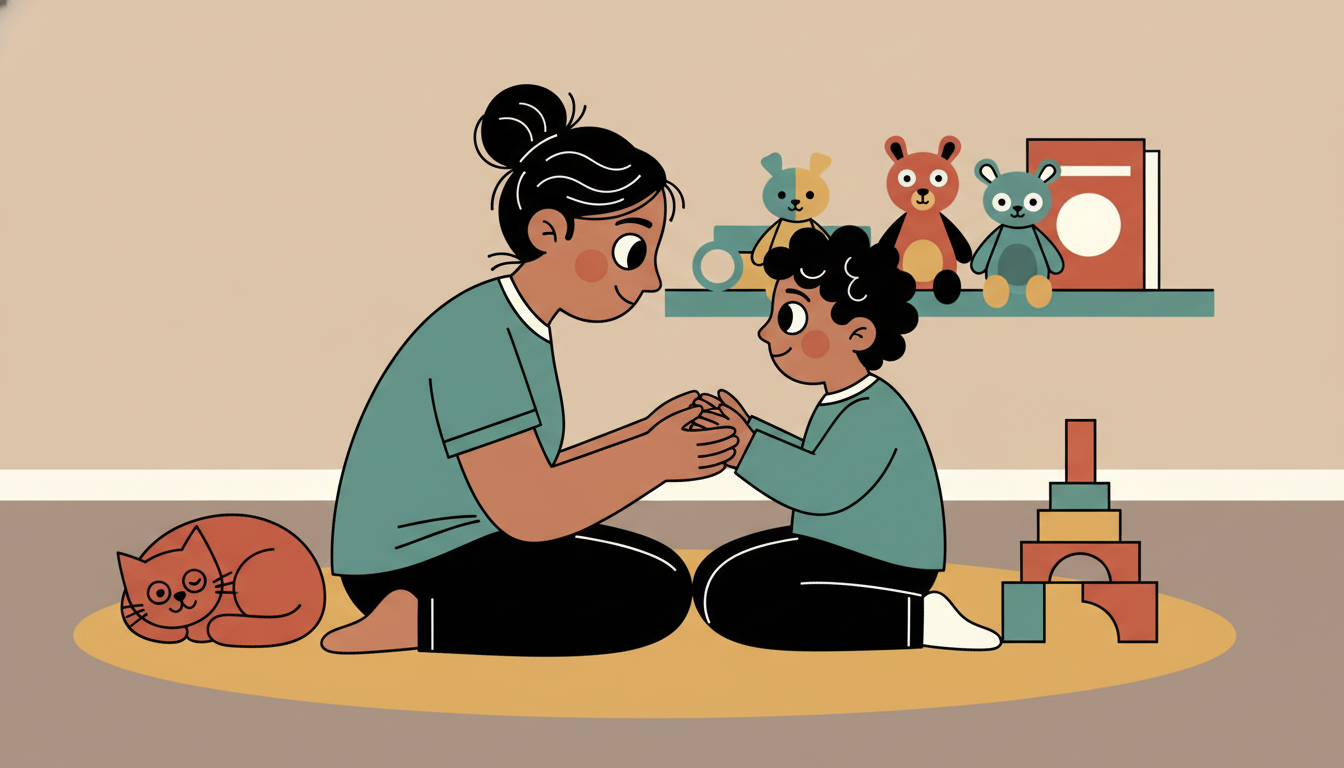
During a quiet moment together, talk about feelings. You might start with 'I feel happy today because we are playing together.' Then ask 'How do you feel?' Accept whatever your child says. Name the feeling and connect it to something specific, like 'You feel excited about the park.'
Parte del percorso di sviluppo Steadily — personalizzato per il tuo bambino.
Come svolgere questa attività
During a quiet moment together, talk about feelings. You might start with 'I feel happy today because we are playing together.' Then ask 'How do you feel?' Accept whatever your child says. Name the feeling and connect it to something specific, like 'You feel excited about the park.'
Perché funziona
Labeling emotions in self and others builds the foundation for empathy. When parents model empathy and validate children's emotional experiences, children develop better social competence and fewer behavioral problems (Liu, S., Wang, L., Zhang, L., & Tian, L., 2020). Children at this age are beginning to develop language for emotions, making this the ideal time to practice emotional vocabulary together.
Consigli per i genitori
Use simple feeling words. Happy, sad, mad, and scared are good starting points.
Share your own feelings first. This models emotional awareness and makes it safe for your child to share.
Materiali necessari
None
Metodi di apprendimento
Symbolic and Pretend PlaySongs, Stories, and RhymesSocial Learning Through Peers

Ti è piaciuta questa attività? Lascia che siamo noi a pianificare per te.
Steadily personalizza ogni attività per il tuo bambino — i suoi interessi, la sua fase di crescita, i tratti che sta sviluppando — così il momento del gioco è più divertente e ogni istante conta.
Scopri come funziona Steadily →