Feelings picture walk
2–3 anniFamily ConnectionMateriali: Family photos or picture books
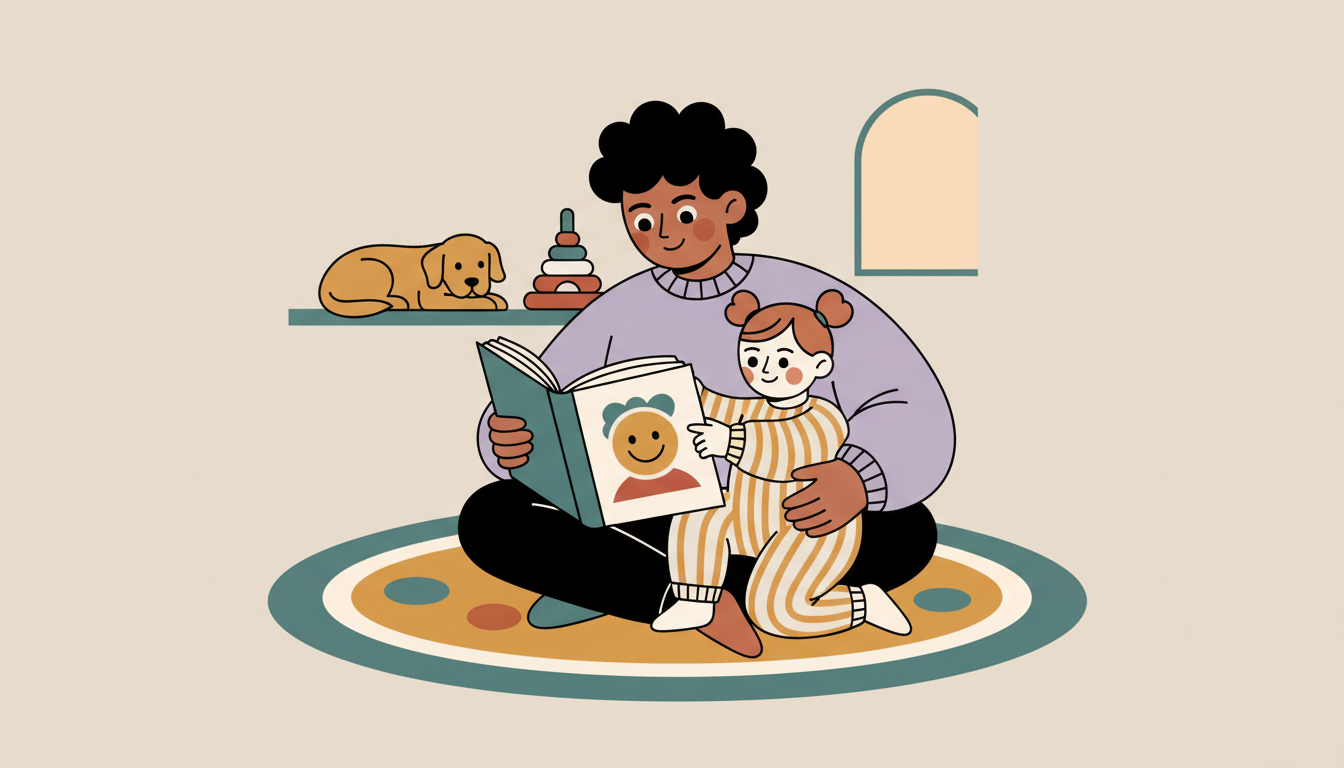
Look at family photos or pictures in books together. Point to faces and ask 'Is grandma happy or sad here?' Talk about what you see in their expressions. You might say 'Look at daddy's big smile. He was so happy that day.' This helps your child practice reading emotional cues in faces.
Parte del percorso di sviluppo Steadily — personalizzato per il tuo bambino.
Come svolgere questa attività
Look at family photos or pictures in books together. Point to faces and ask 'Is grandma happy or sad here?' Talk about what you see in their expressions. You might say 'Look at daddy's big smile. He was so happy that day.' This helps your child practice reading emotional cues in faces.
Perché funziona
Learning to recognize emotions in others is a foundational empathy skill. This activity helps children move beyond egocentric thinking to understand that others have distinct feelings. The ability to distinguish self from others and recognize others' feelings emerges between 24 and 36 months, making this an ideal activity for this developmental window (Hoffman, M. L., 2000). Recognizing and responding sensitively to emotions predicts positive relationships throughout life (Eisenberg, N., Spinrad, T. L., & Knafo-Noam, A., 2015).
Consigli per i genitori
Use photos of people your child knows. Familiar faces make it easier to connect emotions to real people.
Start with clear, strong emotions. Save subtle expressions for when your child is older.
Materiali necessari
Family photos or picture books
Metodi di apprendimento
Symbolic and Pretend PlaySongs, Stories, and RhymesSocial Learning Through Peers

Ti è piaciuta questa attività? Lascia che siamo noi a pianificare per te.
Steadily personalizza ogni attività per il tuo bambino — i suoi interessi, la sua fase di crescita, i tratti che sta sviluppando — così il momento del gioco è più divertente e ogni istante conta.
Scopri come funziona Steadily →