Feelings after setbacks
3–4 anniEmotional WellbeingNessun materiale necessario
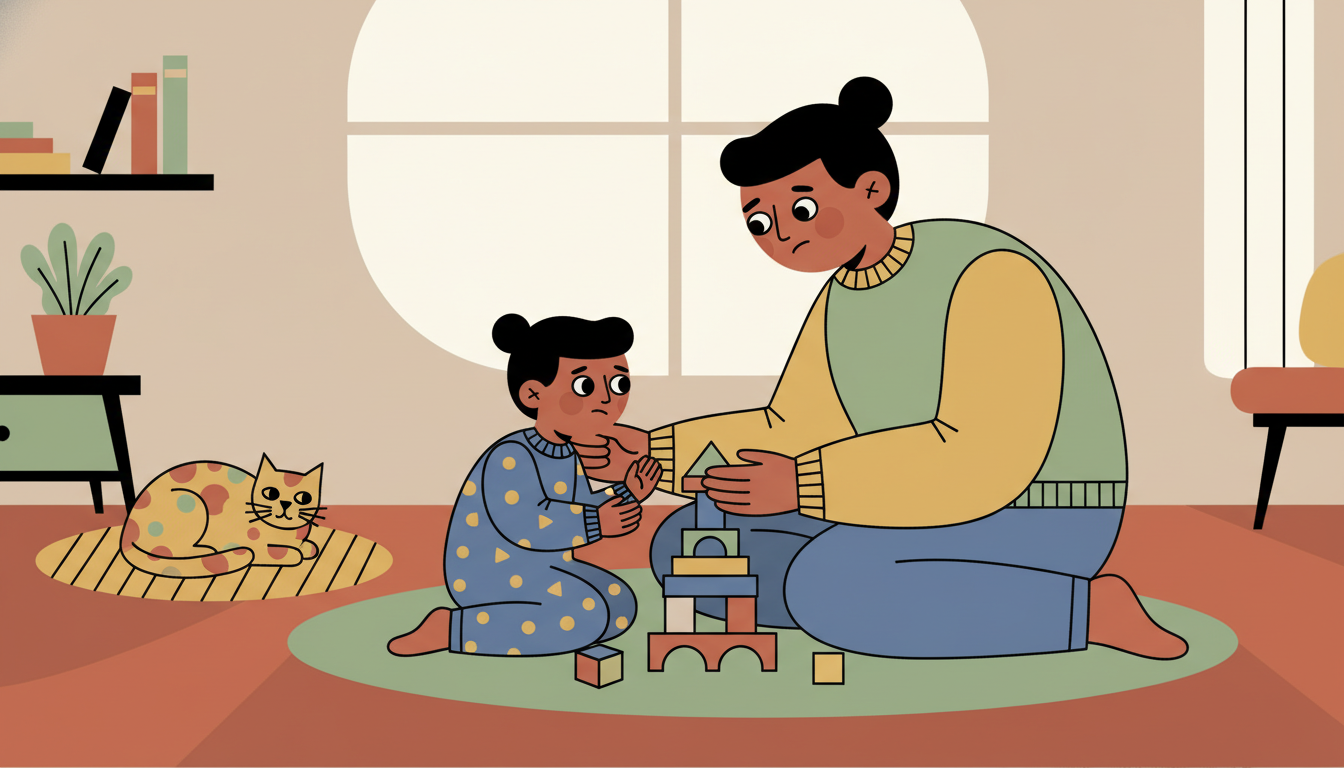
When something doesn't go as planned during play, like a block tower falling or a drawing not turning out right, sit with your child and talk about what happened. Ask how they feel and what might help them feel better. This normalizes disappointment and teaches that we can recover from small setbacks.
Parte del percorso di sviluppo Steadily — personalizzato per il tuo bambino.
Come svolgere questa attività
When something doesn't go as planned during play, like a block tower falling or a drawing not turning out right, sit with your child and talk about what happened. Ask how they feel and what might help them feel better. This normalizes disappointment and teaches that we can recover from small setbacks.
Perché funziona
Discussing feelings after challenges builds emotional regulation skills that form the foundation of resilience. Children with higher emotional and behavioral resilience show significantly better outcomes in managing stress and adapting to difficulties (Liew et al., 2008). This practice helps children develop the self-awareness and coping strategies that protect against anxiety and depression later in life.
Consigli per i genitori
Use simple feeling words like sad, frustrated, or disappointed to help your child identify emotions.
Share a time when something similar happened to you and how you handled it.
Offer choices for what to do next, like trying again or doing something different.
Materiali necessari
None
Metodi di apprendimento
Project-Based LearningInquiry-Based LearningStructured Learning Activities

Ti è piaciuta questa attività? Lascia che siamo noi a pianificare per te.
Steadily personalizza ogni attività per il tuo bambino — i suoi interessi, la sua fase di crescita, i tratti che sta sviluppando — così il momento del gioco è più divertente e ogni istante conta.
Scopri come funziona Steadily →