Feeling faces check-in
3–4 anniFamily ConnectionNessun materiale necessario
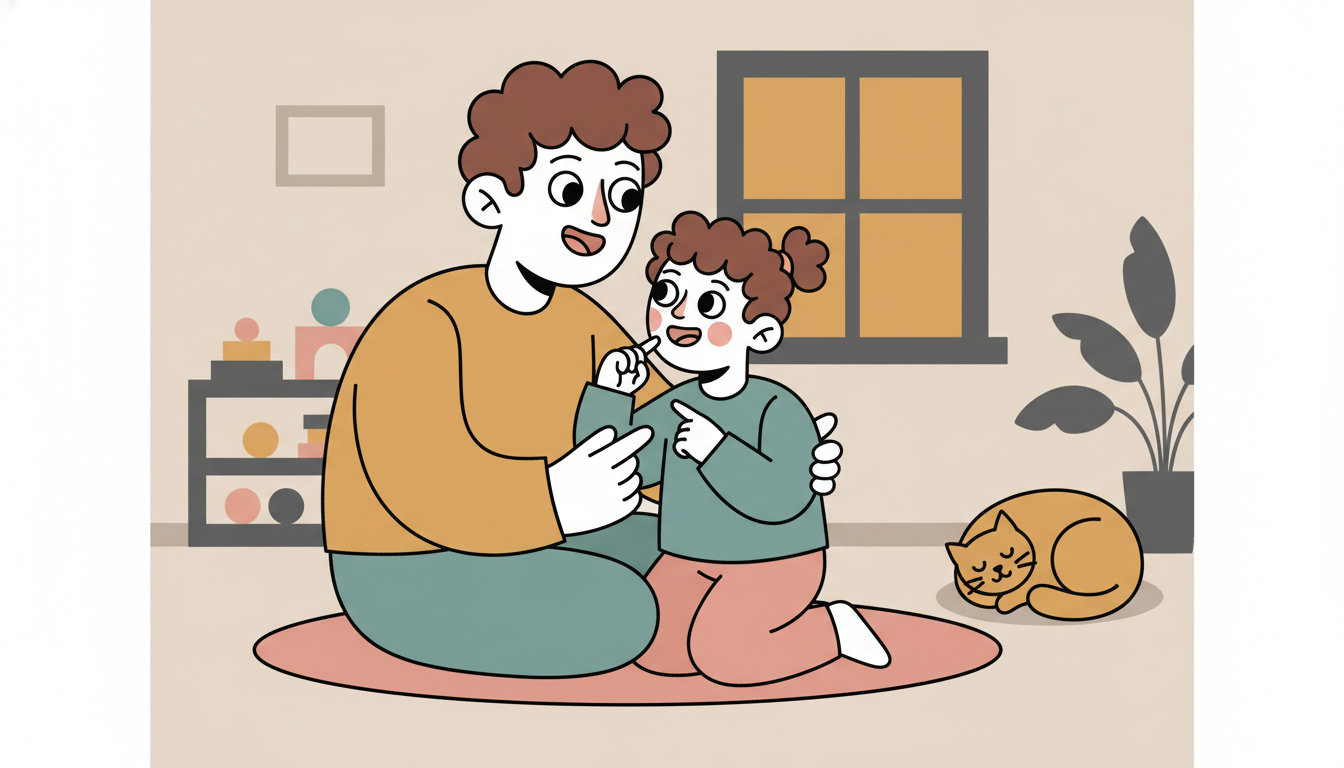
Several times during your time together, pause and ask your child 'How are you feeling right now?' Encourage them to tell you in words rather than just pointing or nodding. Share your own feelings too, using simple statements like 'I feel happy when we play together' or 'I feel tired after work.'
Parte del percorso di sviluppo Steadily — personalizzato per il tuo bambino.
Come svolgere questa attività
Several times during your time together, pause and ask your child 'How are you feeling right now?' Encourage them to tell you in words rather than just pointing or nodding. Share your own feelings too, using simple statements like 'I feel happy when we play together' or 'I feel tired after work.'
Perché funziona
Frequent emotional check-ins build the communication quality factors of mirroring and appropriate response that enhance children's psychological development (Zhang & Li, 2024). When parents validate and reflect feelings before problem-solving, children learn that their emotional experiences are understood and valued. This practice establishes the open communication patterns that correlate with enduring parent-child relationships (Hartos & Power, 2000).
Consigli per i genitori
Make this feel natural rather than like a test by weaving it into activities you're already doing.
When your child shares a feeling, reflect it back like 'It sounds like you're feeling frustrated that the blocks keep falling.'
Use your own feeling statements to model how to express emotions clearly.
Materiali necessari
None
Metodi di apprendimento
Narrative and Literacy-Rich ExperiencesCollaborative and Cooperative PlayInquiry-Based Learning

Ti è piaciuta questa attività? Lascia che siamo noi a pianificare per te.
Steadily personalizza ogni attività per il tuo bambino — i suoi interessi, la sua fase di crescita, i tratti che sta sviluppando — così il momento del gioco è più divertente e ogni istante conta.
Scopri come funziona Steadily →