Emotion story time
2–3 anniEmotional WellbeingMateriali: Picture books
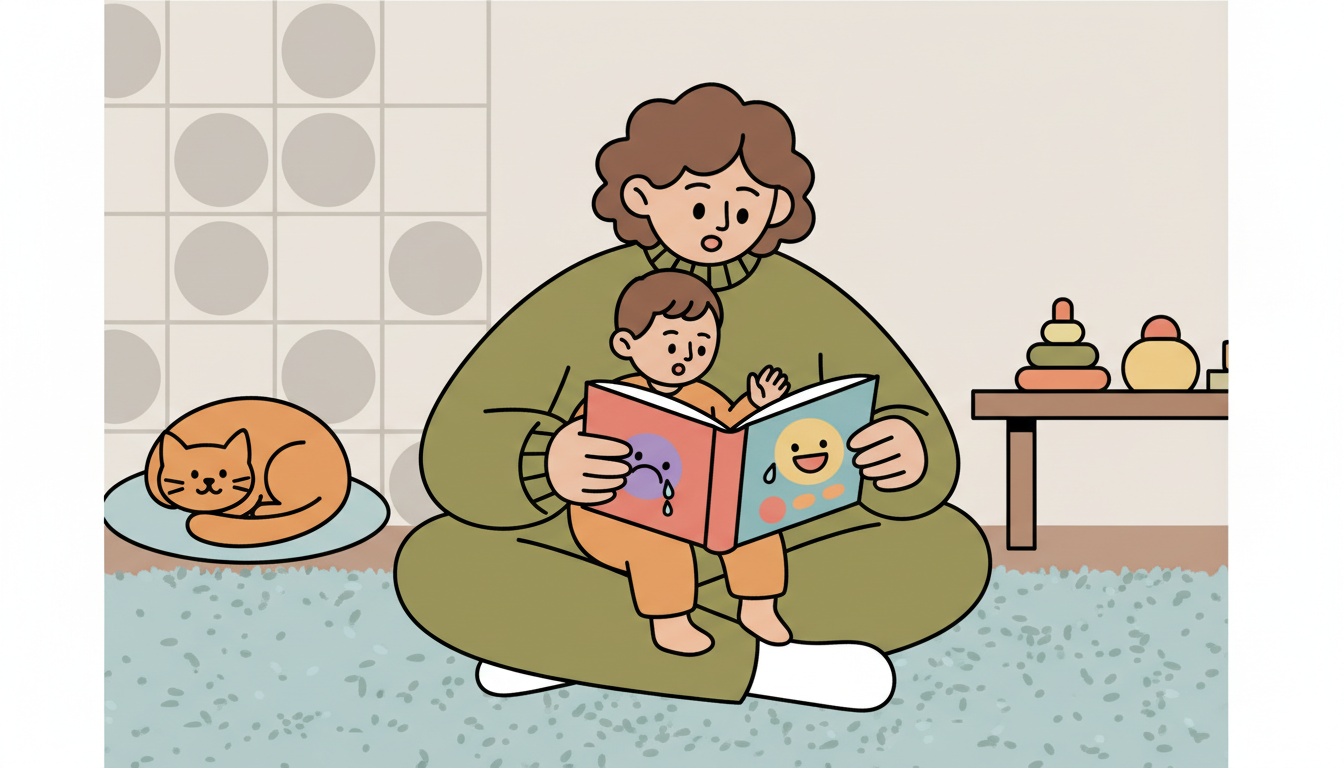
Read a picture book together and pause to talk about how characters might be feeling. Point to facial expressions and ask simple questions like, 'Is he happy or sad?' Name the emotions you see.
Parte del percorso di sviluppo Steadily — personalizzato per il tuo bambino.
Come svolgere questa attività
Read a picture book together and pause to talk about how characters might be feeling. Point to facial expressions and ask simple questions like, 'Is he happy or sad?' Name the emotions you see.
This turns regular reading time into emotional learning. Stories provide a safe way to explore different feelings and build empathy.
Perché funziona
The language explosion at 24-36 months makes this the optimal time for emotional vocabulary development. Early emotional coaching through stories significantly improves children's emotional intelligence (Goleman, 1995). Children with higher emotional intelligence experience better relationship satisfaction and mental health in adulthood (Bar-On, 2006). Stories help children recognize emotions in others, building the empathy component of EQ.
Consigli per i genitori
Use simple feeling words at first like happy, sad, mad, and scared. You can add more complex emotions as your child grows.
Connect the story to your child's experiences. Try saying, 'Remember when you felt sad like that?'
Materiali necessari
Picture books
Metodi di apprendimento
Symbolic and Pretend PlaySongs, Stories, and RhymesSocial Learning Through Peers

Ti è piaciuta questa attività? Lascia che siamo noi a pianificare per te.
Steadily personalizza ogni attività per il tuo bambino — i suoi interessi, la sua fase di crescita, i tratti che sta sviluppando — così il momento del gioco è più divertente e ogni istante conta.
Scopri come funziona Steadily →