Wait for the timer
2–3 anniSuccess MindsetMateriali: Kitchen timer or phone timer
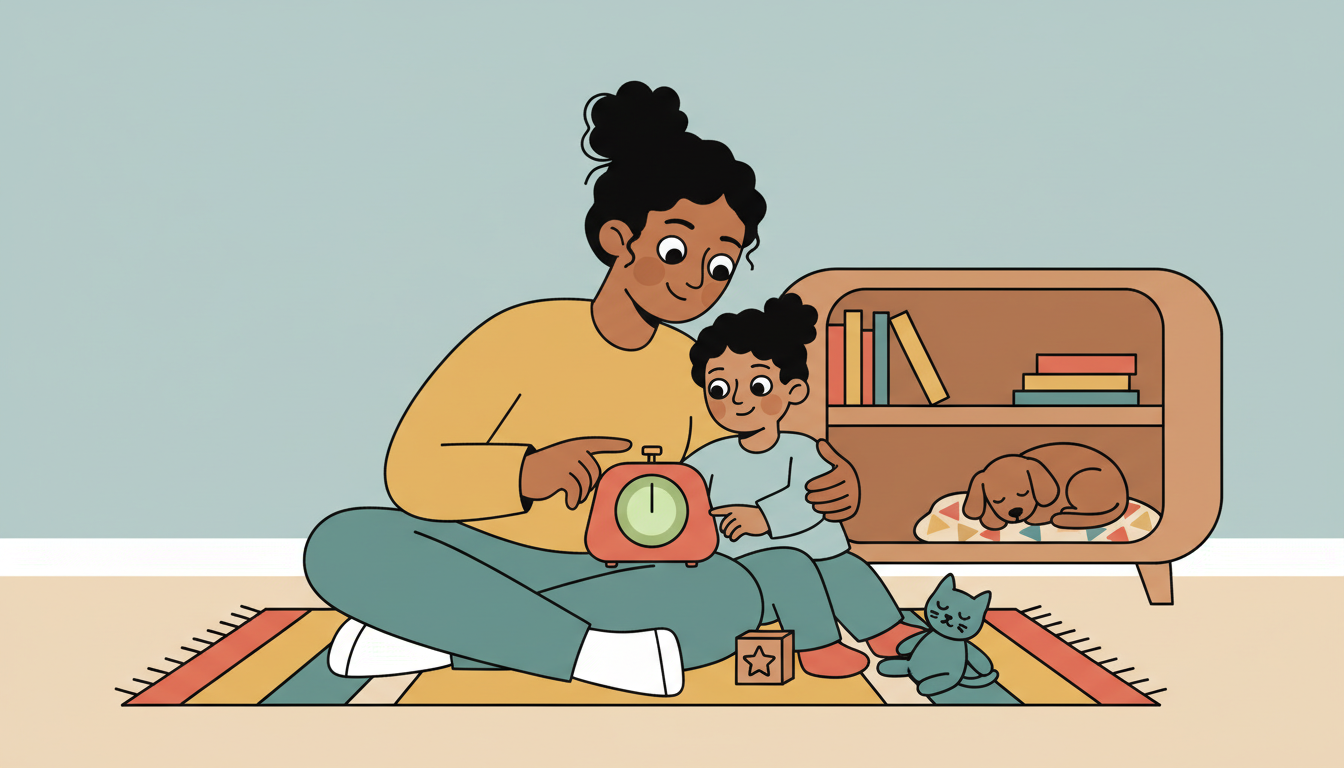
Set a kitchen timer for one to two minutes and practice waiting together. Start with small waits like 30 seconds, then gradually increase. You can wait for a snack, a toy, or a turn at something fun. Let your child watch the timer count down so waiting feels more concrete.
Parte del percorso di sviluppo Steadily — personalizzato per il tuo bambino.
Come svolgere questa attività
Set a kitchen timer for one to two minutes and practice waiting together. Start with small waits like 30 seconds, then gradually increase. You can wait for a snack, a toy, or a turn at something fun. Let your child watch the timer count down so waiting feels more concrete.
Perché funziona
Making waiting visible and predictable helps toddlers develop self-control during this critical period when the prefrontal cortex is rapidly developing. Using concrete tools like timers provides the structure needed for children ages 24-36 months to practice self-regulation successfully. Research shows that cool self-regulation skills developed at age 3 are directly related to academic achievement by age 6 (Liew, Chen, & Hughes, 2010).
Consigli per i genitori
Start with very short waits and gradually build up time.
Give your child language to use while waiting, like 'almost time' or 'timer will beep soon'.
Stay nearby during the wait to offer support and encouragement.
Materiali necessari
Kitchen timer or phone timer
Metodi di apprendimento
Interactive Play-Based LearningSongs, Stories, and RhymesSocial Learning Through Peers

Ti è piaciuta questa attività? Lascia che siamo noi a pianificare per te.
Steadily personalizza ogni attività per il tuo bambino — i suoi interessi, la sua fase di crescita, i tratti che sta sviluppando — così il momento del gioco è più divertente e ogni istante conta.
Scopri come funziona Steadily →