Validation practice
2–3 anniEmotional WellbeingNessun materiale necessario
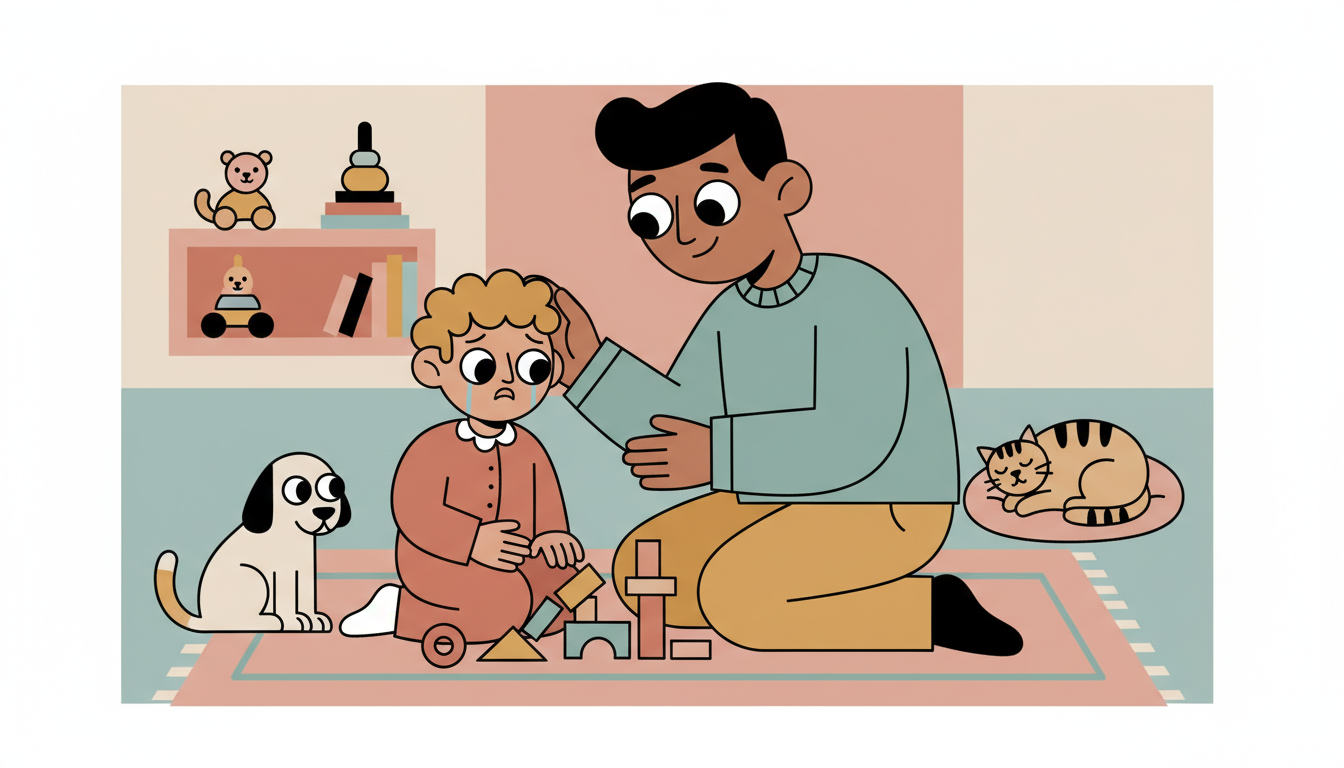
When your child shows any emotion, name it and acknowledge it before trying to solve the problem. You might say, 'You seem really frustrated that the tower fell down. That is frustrating.'
Parte del percorso di sviluppo Steadily — personalizzato per il tuo bambino.
Come svolgere questa attività
When your child shows any emotion, name it and acknowledge it before trying to solve the problem. You might say, 'You seem really frustrated that the tower fell down. That is frustrating.'
This simple practice validates your child's emotional experience. It teaches them that all feelings are okay, even uncomfortable ones. Over time, this builds emotional awareness and trust.
Perché funziona
Emotion coaching is the most evidence-based approach for developing emotional intelligence. Research shows that children whose emotions were acknowledged and labeled by parents at age 2-3 showed significantly better emotional regulation at age 4-5, and this early emotion coaching predicted fewer behavior problems in elementary school (Goleman, 1995). A strong positive link exists between emotional intelligence and better mental health outcomes (Mayer et al., 1999).
Consigli per i genitori
Validate the feeling while still setting limits on behavior. You can say, 'You're angry, and hitting is not okay.'
You don't have to fix the feeling or make it go away. Just naming it is enough.
Materiali necessari
None
Metodi di apprendimento
Symbolic and Pretend PlaySongs, Stories, and RhymesSocial Learning Through Peers

Ti è piaciuta questa attività? Lascia che siamo noi a pianificare per te.
Steadily personalizza ogni attività per il tuo bambino — i suoi interessi, la sua fase di crescita, i tratti che sta sviluppando — così il momento del gioco è più divertente e ogni istante conta.
Scopri come funziona Steadily →