Simple puzzle practice
2–3 anniEmotional WellbeingMateriali: Simple wooden or chunky cardboard puzzles with three to five pieces
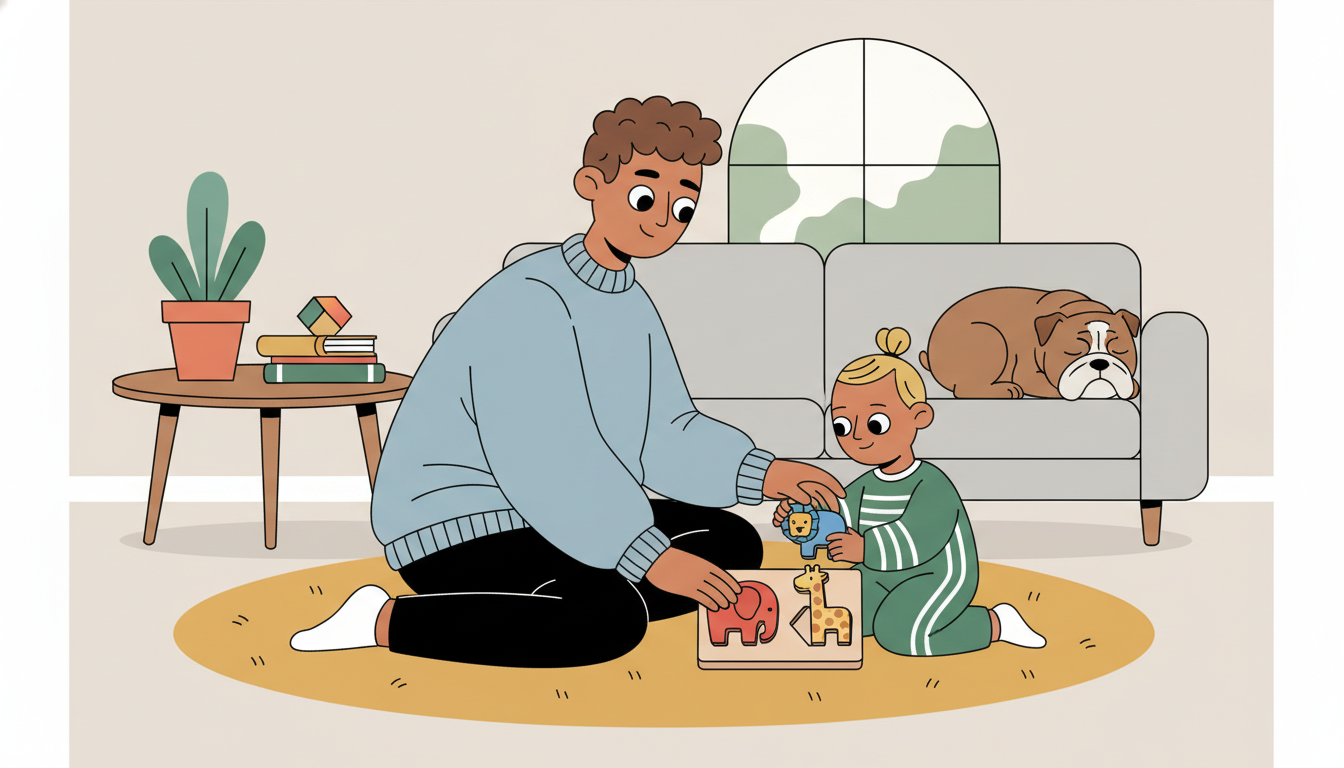
Work on a simple three to five piece puzzle with your child. Choose puzzles with large, chunky pieces that fit their developing fine motor skills. When a piece doesn't fit, resist the urge to immediately fix it. Instead, say, 'That one doesn't fit yet. Let's try turning it.' This teaches your child that persistence pays off and that struggle is part of learning. The satisfaction of finally placing a piece builds confidence in their ability to solve problems.
Parte del percorso di sviluppo Steadily — personalizzato per il tuo bambino.
Come svolgere questa attività
Work on a simple three to five piece puzzle with your child. Choose puzzles with large, chunky pieces that fit their developing fine motor skills. When a piece doesn't fit, resist the urge to immediately fix it. Instead, say, 'That one doesn't fit yet. Let's try turning it.' This teaches your child that persistence pays off and that struggle is part of learning. The satisfaction of finally placing a piece builds confidence in their ability to solve problems.
Perché funziona
Puzzle solving provides the ideal balance of challenge and achievability that builds resilience. Adults with high resilience developed in childhood show a 65% lower risk of anxiety disorders and depression (Masten & Motti-Stefanidi, 2020). By supporting your child through puzzle frustration rather than solving it for them, you help them develop problem-solving skills and emotional regulation that predict better resilience and coping strategies in later childhood.
Consigli per i genitori
Start with easier puzzles and gradually increase difficulty as your child succeeds. This builds confidence before adding challenge.
When your child struggles, offer hints rather than solutions. Point to the right area or suggest, 'Maybe try a different spot.'
Take breaks if frustration builds. Come back to the puzzle later, showing that it's okay to step away and try again.
Materiali necessari
Simple wooden or chunky cardboard puzzles with three to five pieces
Metodi di apprendimento
Interactive Play-Based LearningSymbolic and Pretend PlaySocial Learning Through Peers

Ti è piaciuta questa attività? Lascia che siamo noi a pianificare per te.
Steadily personalizza ogni attività per il tuo bambino — i suoi interessi, la sua fase di crescita, i tratti che sta sviluppando — così il momento del gioco è più divertente e ogni istante conta.
Scopri come funziona Steadily →