Modeling your own feelings
1–2 anniEmotional WellbeingNessun materiale necessario
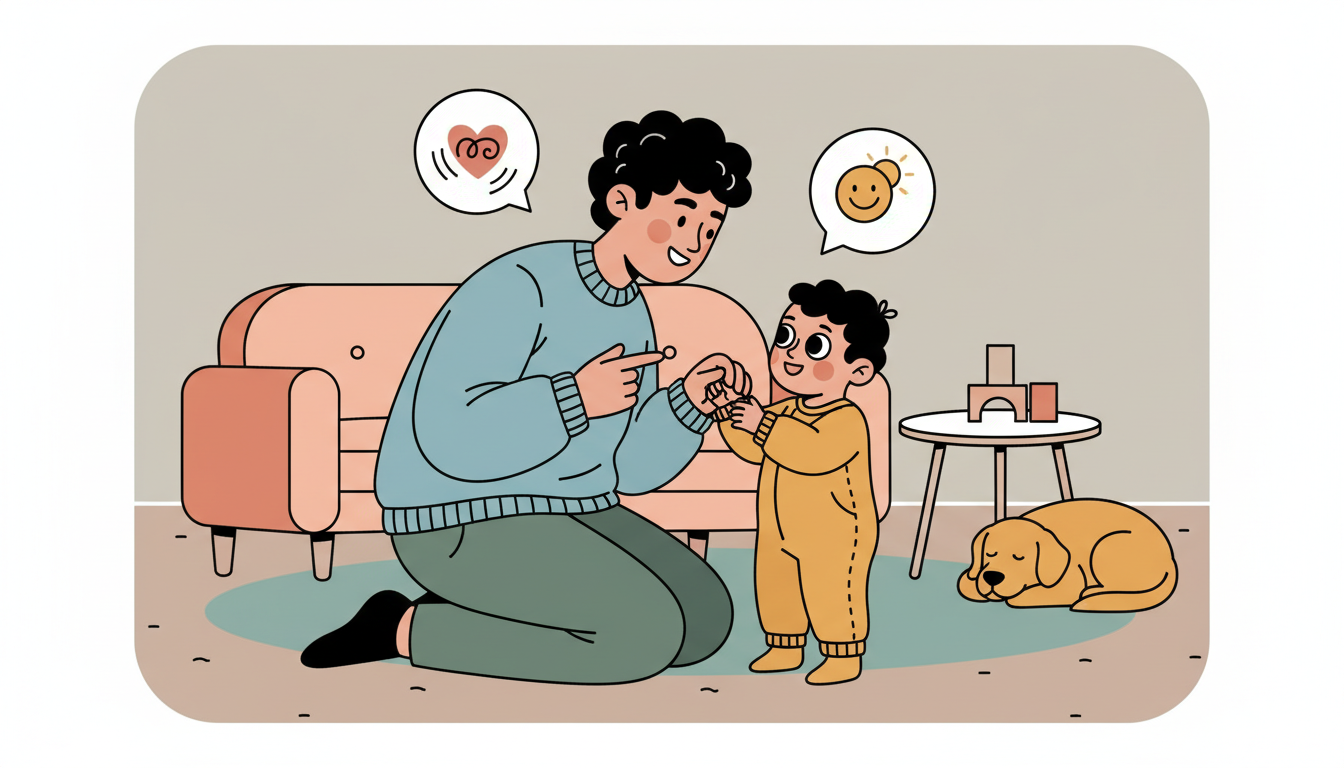
Throughout the day, narrate your own emotions in simple terms your child can understand. Say things like 'I'm feeling happy because we're together' or 'I'm feeling tired, so I need to rest.' Show your child that everyone has feelings and that it's okay to express them. This takes no extra time, just awareness.
Parte del percorso di sviluppo Steadily — personalizzato per il tuo bambino.
Come svolgere questa attività
Throughout the day, narrate your own emotions in simple terms your child can understand. Say things like 'I'm feeling happy because we're together' or 'I'm feeling tired, so I need to rest.' Show your child that everyone has feelings and that it's okay to express them. This takes no extra time, just awareness.
Perché funziona
Learning through imitation and modeling is a powerful tool at this age. When parents model healthy emotional expression, children learn that emotions are normal and manageable. This supports self-regulation development. Research shows a strong positive link between emotional intelligence and better psychological well-being, with early EQ development predicting reduced anxiety in later life (Mayer, Caruso, & Salovey, 1999).
Consigli per i genitori
Use simple emotion words your child knows.
Show appropriate ways to handle emotions, like taking deep breaths when frustrated.
Be honest but avoid overwhelming your child with complex adult emotions.
Materiali necessari
None
Metodi di apprendimento
Language-Rich EnvironmentImitation and ModelingBeginning Symbolic Play

Ti è piaciuta questa attività? Lascia che siamo noi a pianificare per te.
Steadily personalizza ogni attività per il tuo bambino — i suoi interessi, la sua fase di crescita, i tratti che sta sviluppando — così il momento del gioco è più divertente e ogni istante conta.
Scopri come funziona Steadily →