Feelings in picture books
1–2 anniEmotional WellbeingMateriali: Picture books with expressive characters
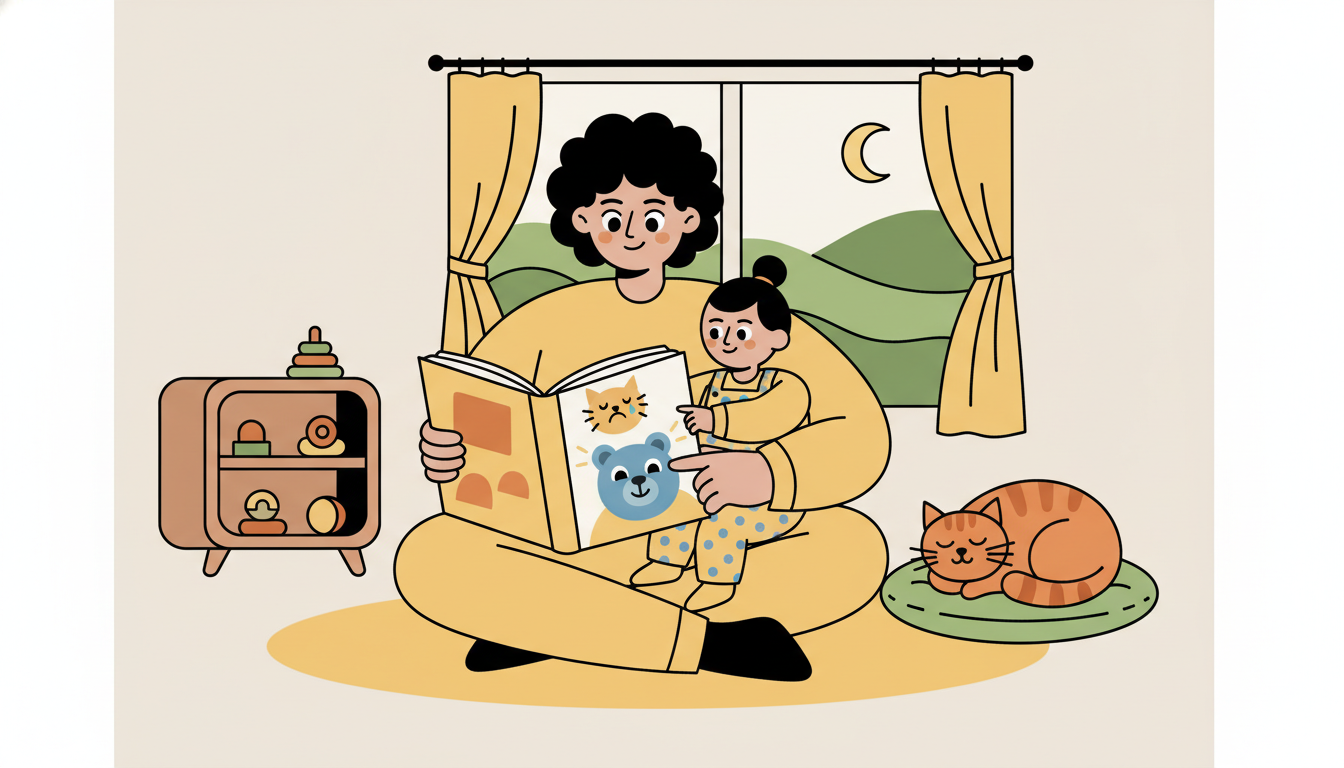
During reading time, point to characters' faces and name their emotions. Ask simple questions like 'Is the bear happy or sad?' Let your child point to the faces. You can use the same book many times, focusing on different emotions each time. This builds emotional vocabulary naturally during a routine you already do.
Parte del percorso di sviluppo Steadily — personalizzato per il tuo bambino.
Come svolgere questa attività
During reading time, point to characters' faces and name their emotions. Ask simple questions like 'Is the bear happy or sad?' Let your child point to the faces. You can use the same book many times, focusing on different emotions each time. This builds emotional vocabulary naturally during a routine you already do.
Perché funziona
Reading about feelings in a language-rich environment supports the vocabulary explosion happening at this age. Research shows that emotional intelligence development in early childhood leads to better emotional recognition and expression skills in adulthood, with improved concentration and study habits (Goleman, 1995). Books provide safe scenarios to explore emotions.
Consigli per i genitori
Choose books with clear, expressive illustrations of faces.
Pause to let your child look at and process the pictures.
Connect the character's emotions to your child's experiences, like 'The rabbit is sad, just like when you dropped your toy.'
Materiali necessari
Picture books with expressive characters
Metodi di apprendimento
Language-Rich EnvironmentImitation and ModelingBeginning Symbolic Play

Ti è piaciuta questa attività? Lascia che siamo noi a pianificare per te.
Steadily personalizza ogni attività per il tuo bambino — i suoi interessi, la sua fase di crescita, i tratti che sta sviluppando — così il momento del gioco è più divertente e ogni istante conta.
Scopri come funziona Steadily →