Feelings during playtime
2–3 anniFamily ConnectionMateriali: Whatever toys you are already playing with
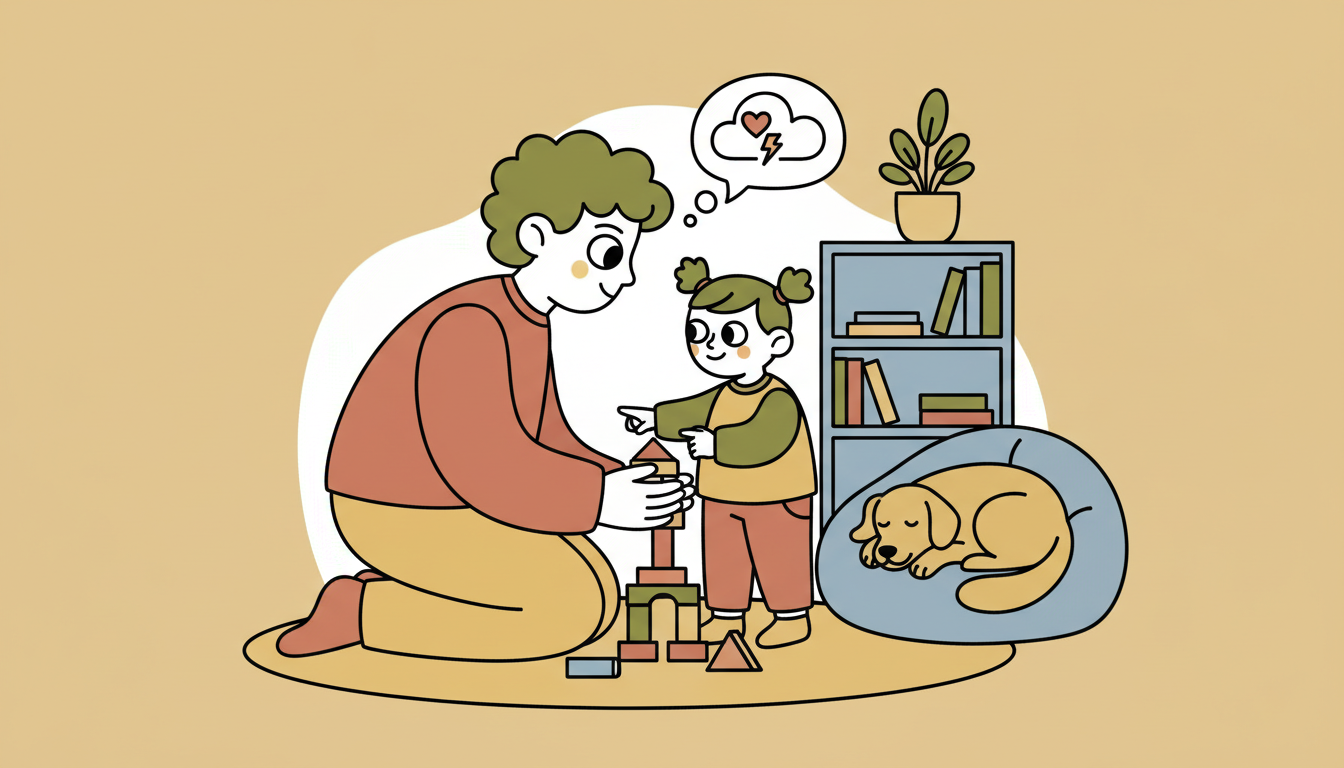
As you play together, narrate the feelings you observe. When your child laughs, say 'You are so happy playing with the blocks.' If they get frustrated, say 'You feel frustrated when the tower falls down. That is hard.' Naming feelings in the moment helps your child connect emotions to experiences.
Parte del percorso di sviluppo Steadily — personalizzato per il tuo bambino.
Come svolgere questa attività
As you play together, narrate the feelings you observe. When your child laughs, say 'You are so happy playing with the blocks.' If they get frustrated, say 'You feel frustrated when the tower falls down. That is hard.' Naming feelings in the moment helps your child connect emotions to experiences.
Perché funziona
Validating children's empathetic and emotional responses in real time builds emotional intelligence. When parents show empathy to their child while teaching about emotions, children develop the safe foundation needed to recognize emotions in themselves and others (Bhansali, B., 2023). Children with empathetic parents show significantly higher social competence (Liu, S., Wang, L., Zhang, L., & Tian, L., 2020).
Consigli per i genitori
Notice and name both positive and challenging emotions. All feelings are valid.
Use simple, clear words. Repeat the same emotion words across different situations so your child learns the patterns.
Materiali necessari
Whatever toys you are already playing with
Metodi di apprendimento
Symbolic and Pretend PlaySongs, Stories, and RhymesSocial Learning Through Peers

Ti è piaciuta questa attività? Lascia che siamo noi a pianificare per te.
Steadily personalizza ogni attività per il tuo bambino — i suoi interessi, la sua fase di crescita, i tratti che sta sviluppando — così il momento del gioco è più divertente e ogni istante conta.
Scopri come funziona Steadily →