Emotion naming practice
6–12 mesiFamily ConnectionNessun materiale necessario
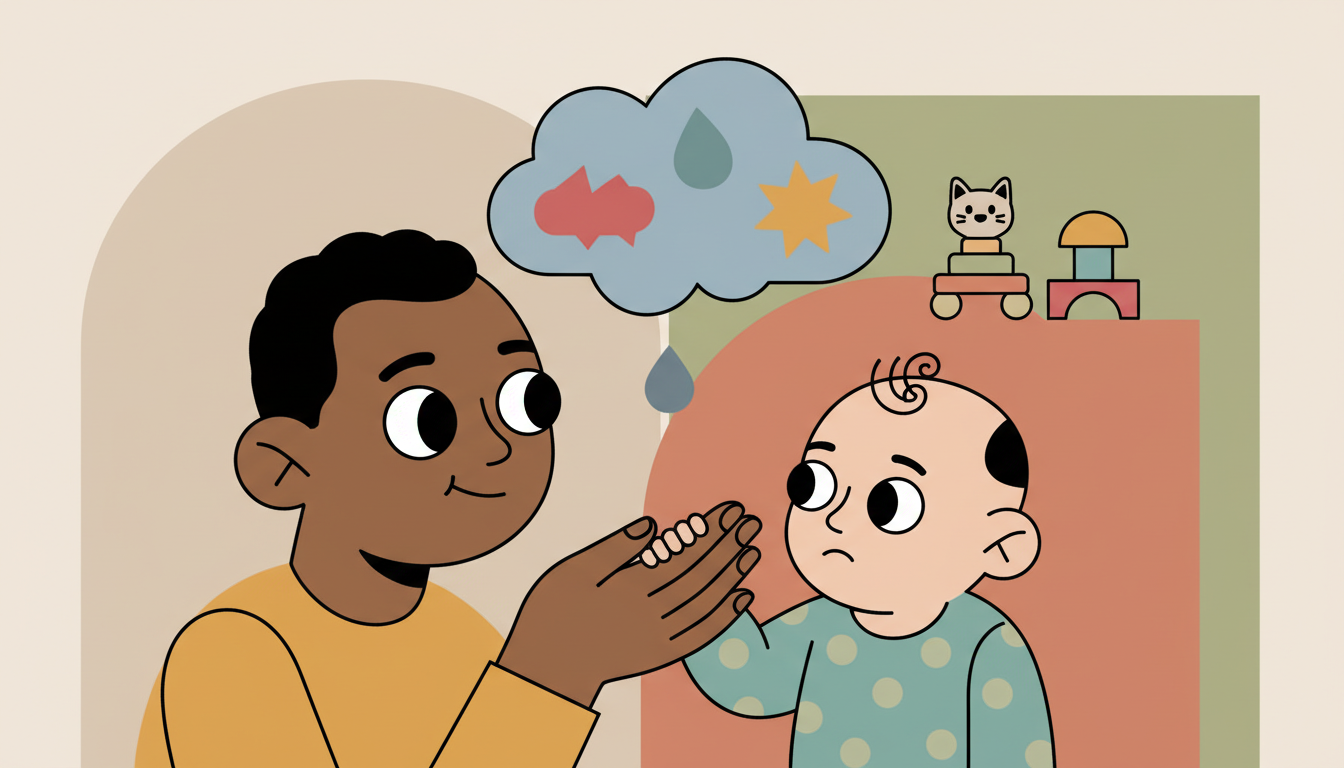
When your child shows distress, name what you see in simple words. Say "You feel upset" or "That was frustrating" in a calm voice. This validates their experience and teaches that emotions are normal and manageable. Your calm naming helps them begin to understand their own feelings.
Parte del percorso di sviluppo Steadily — personalizzato per il tuo bambino.
Come svolgere questa attività
When your child shows distress, name what you see in simple words. Say "You feel upset" or "That was frustrating" in a calm voice. This validates their experience and teaches that emotions are normal and manageable. Your calm naming helps them begin to understand their own feelings.
Perché funziona
Naming emotions calmly teaches that feelings are normal and can be discussed peacefully. This builds the foundation for verbal conflict resolution. Early training in conflict resolution and problem-solving skills leads to significantly better peer relationships and reduced aggression, with children showing 25% fewer behavioral problems (Webster-Stratton & Reid, 2004). Your calm emotion coaching now prepares your child to use words for conflict resolution as they grow.
Consigli per i genitori
Use simple emotion words like upset, sad, mad, or frustrated consistently.
Keep your voice calm and accepting when naming emotions. Avoid sounding worried or stressed.
Pair emotion naming with soothing so your child learns feelings can be managed.
Materiali necessari
None
Metodi di apprendimento
Responsive Interaction

Ti è piaciuta questa attività? Lascia che siamo noi a pianificare per te.
Steadily personalizza ogni attività per il tuo bambino — i suoi interessi, la sua fase di crescita, i tratti che sta sviluppando — così il momento del gioco è più divertente e ogni istante conta.
Scopri come funziona Steadily →