The frustration practice

4–5 सालSuccess Mindsetसामग्री: Materials for chosen challenge such as shoes with laces, small pitcher and cups, or paper and child-safe scissors

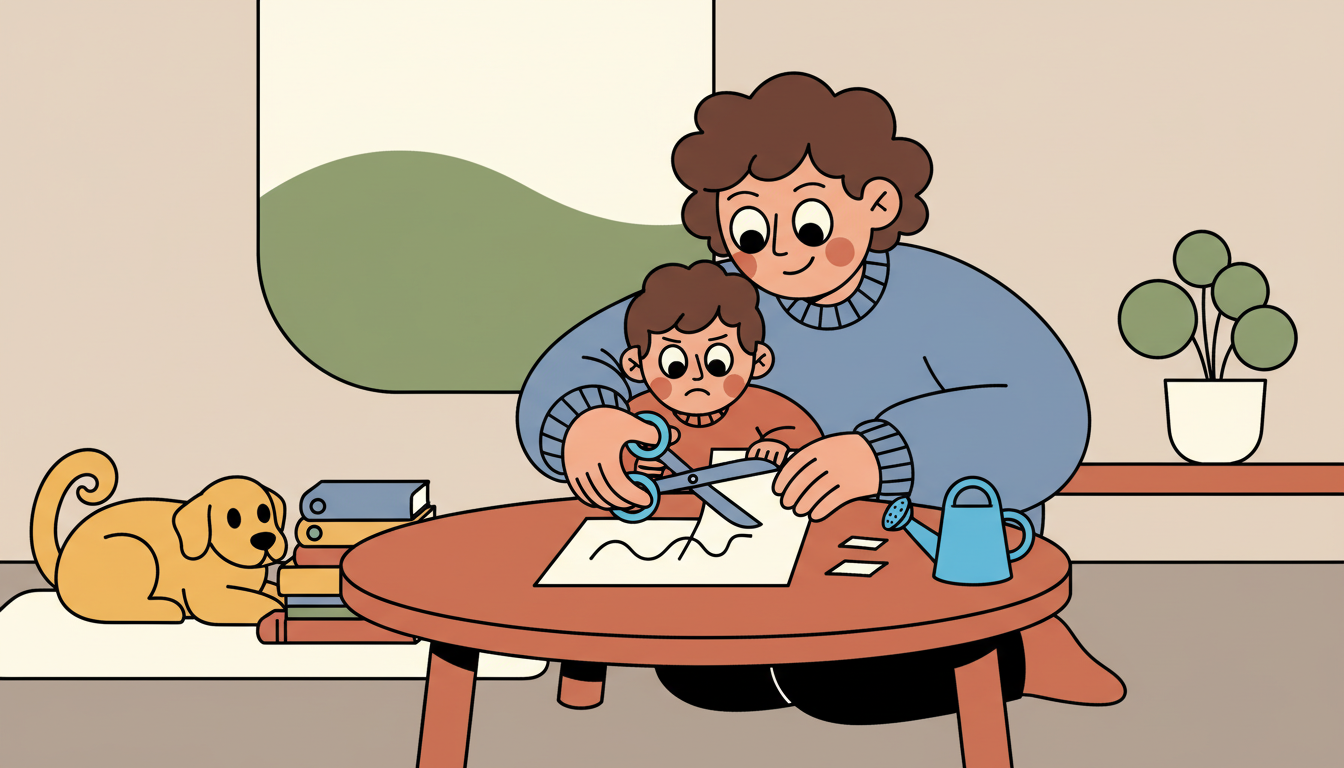
Introduce an activity that is just beyond your child's current ability. It might be tying shoes, pouring water without spilling, or cutting along a curved line. Expect mistakes and plan for them. When frustration appears, name it together. Say 'This is the learning feeling. Your brain is working hard.' Practice for just a few minutes, then stop before meltdown occurs. Return to it the next day. Over time, your child learns that frustration is temporary and practice makes difficult things easier.

Steadily की विकासात्मक यात्रा का हिस्सा — जो तुम्हारे बच्चे के लिए व्यक्तिगत रूप से तैयार की गई है।
The frustration practice

यह गतिविधि कैसे करें

Introduce an activity that is just beyond your child's current ability. It might be tying shoes, pouring water without spilling, or cutting along a curved line. Expect mistakes and plan for them. When frustration appears, name it together. Say 'This is the learning feeling. Your brain is working hard.' Practice for just a few minutes, then stop before meltdown occurs. Return to it the next day. Over time, your child learns that frustration is temporary and practice makes difficult things easier.

यह क्यों काम करता है

Learning to work through frustration and boredom is essential for developing grit. Research shows that gritty students are 30-40% more likely to complete challenging tasks, with effects beginning in early childhood through persistence on challenging tasks (Duckworth et al., 2007). By deliberately practicing with difficult tasks in a supported environment, children learn that frustration is a normal part of learning rather than a signal to quit. This aligns with evidence showing that perseverance of effort has stronger correlations with academic achievement than natural ability. Teaching children to recognize and work through frustration builds the perseverance component of grit.

माता-पिता के लिए टिप्स

Keep sessions very short at first. Two to three minutes of productive struggle is better than 15 minutes of tears. Celebrate small wins within the larger challenge. Notice when they got closer, even if not perfect. Share stories of things that were once hard for you but became easy with practice.

ज़रूरी सामग्री

Materials for chosen challenge such as shoes with laces, small pitcher and cups, or paper and child-safe scissors

सीखने के तरीके

Project-Based and Thematic LearningGuided Discovery and InquiryMetacognitive Strategies

यह गतिविधि पसंद आई? चलो, प्लानिंग हम तुम्हारे लिए कर देते हैं या योजना बनाने का काम हम पर छोड़ दो।

Steadily हर गतिविधि को तुम्हारे बच्चे की रुचियों, उनके पड़ाव, और जिन गुणों को वे विकसित कर रहे हैं उनके अनुसार तैयार करता है — ताकि खेल का समय और मज़ेदार हो और हर पल काम आए।

जानो कि Steadily कैसे काम करता है →
