Emotion matching partners
3–4 सालSuccess Mindsetसामग्री: Mirror (optional)
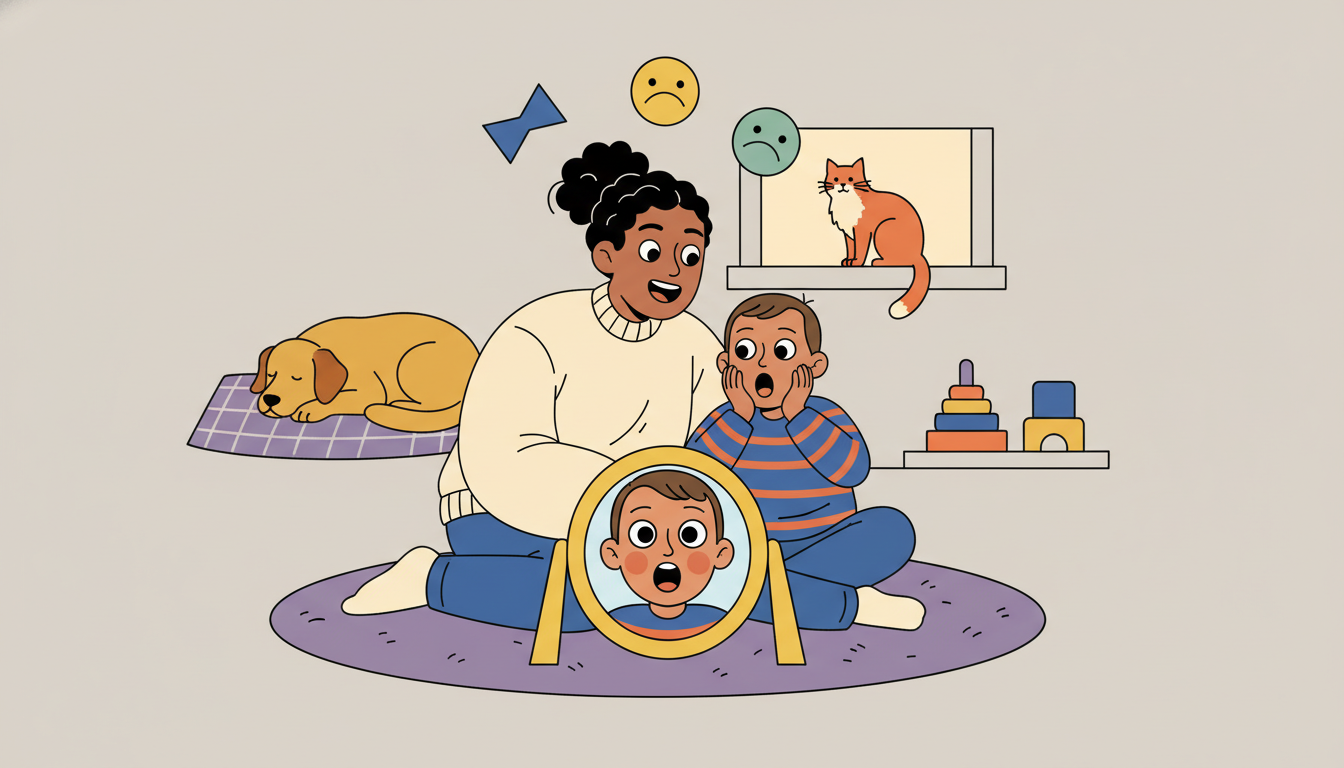
Take turns making facial expressions showing different emotions while the other person guesses the feeling. Then discuss times when you've both felt that way. This helps your child read social cues and understand that others have feelings too. You can use a mirror to practice together.
Steadily की विकासात्मक यात्रा का हिस्सा — जो तुम्हारे बच्चे के लिए व्यक्तिगत रूप से तैयार की गई है।
यह गतिविधि कैसे करें
Take turns making facial expressions showing different emotions while the other person guesses the feeling. Then discuss times when you've both felt that way. This helps your child read social cues and understand that others have feelings too. You can use a mirror to practice together.
यह क्यों काम करता है
Understanding and responding to social cues is a core component of social intelligence that predicts later success. Children with better social skills showed 50-70% higher likelihood of stable adult employment and educational completion (Durlak et al., 2011). At 36-48 months, theory of mind development enables perspective-taking, making this the optimal window for practicing emotion recognition and empathy skills that form the foundation of positive peer relationships.
माता-पिता के लिए टिप्स
Start with basic emotions like happy, sad, angry, and surprised before moving to more complex ones.
Share real examples: 'I felt frustrated when the car wouldn't start. When do you feel frustrated?'
Validate your child's interpretations even if they're not exact. The practice of reading cues matters most.
ज़रूरी सामग्री
Mirror (optional)
सीखने के तरीके
Collaborative and Cooperative PlayStructured Learning ActivitiesProject-Based Learning

यह गतिविधि पसंद आई? चलो, प्लानिंग हम तुम्हारे लिए कर देते हैं या योजना बनाने का काम हम पर छोड़ दो।
Steadily हर गतिविधि को तुम्हारे बच्चे की रुचियों, उनके पड़ाव, और जिन गुणों को वे विकसित कर रहे हैं उनके अनुसार तैयार करता है — ताकि खेल का समय और मज़ेदार हो और हर पल काम आए।
जानो कि Steadily कैसे काम करता है →