Color match game

2–3 सालEmotional Wellbeingसामग्री: Household objects in different colors and colored paper or containers

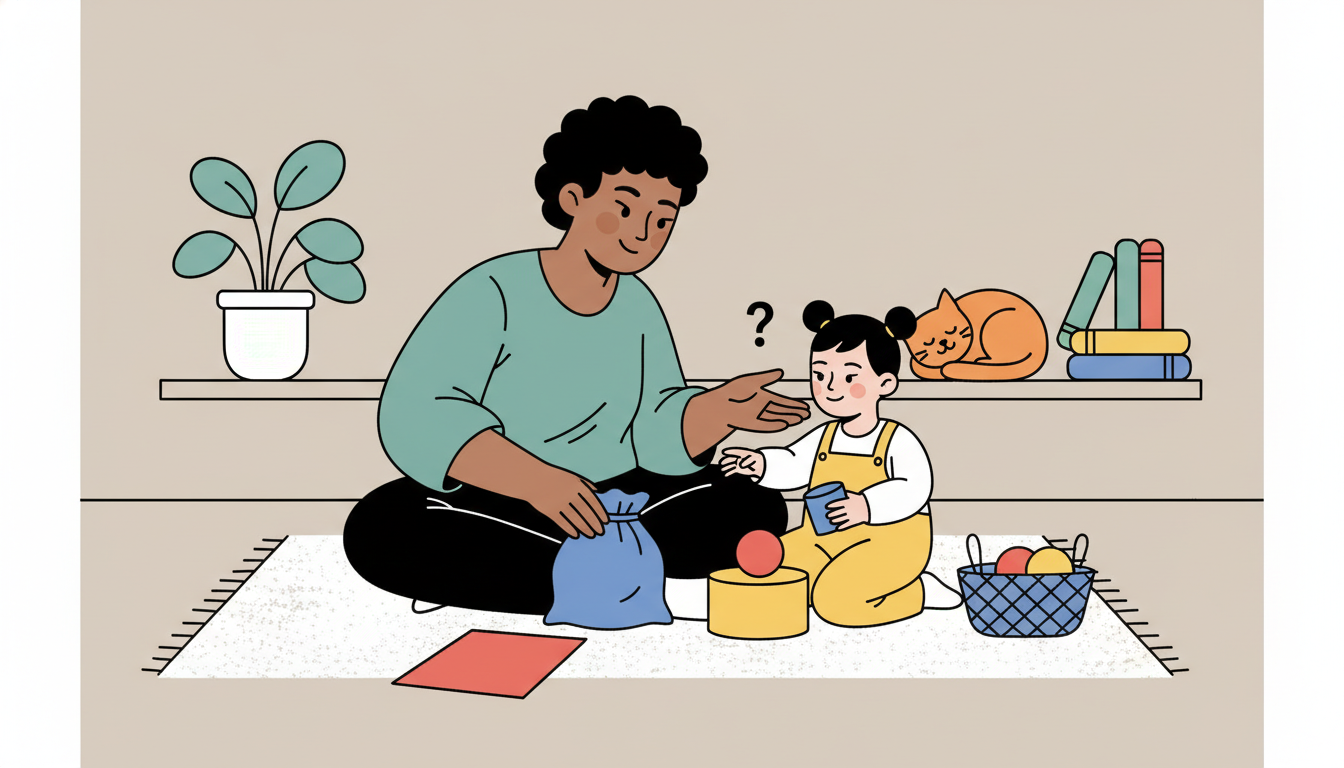
Gather objects of two or three different colors and play a matching game. Place colored paper or containers in front of your child and ask them to find things that match each color. When they pick the wrong color, don't immediately correct them. Instead, ask, 'Does that match?' and let them look again. This gentle prompting helps them learn to self-correct and persist when something doesn't work the first time. The simple challenge matches their ability to categorize by one attribute while building tolerance for making mistakes.

Steadily की विकासात्मक यात्रा का हिस्सा — जो तुम्हारे बच्चे के लिए व्यक्तिगत रूप से तैयार की गई है।
Color match game

यह गतिविधि कैसे करें

Gather objects of two or three different colors and play a matching game. Place colored paper or containers in front of your child and ask them to find things that match each color. When they pick the wrong color, don't immediately correct them. Instead, ask, 'Does that match?' and let them look again. This gentle prompting helps them learn to self-correct and persist when something doesn't work the first time. The simple challenge matches their ability to categorize by one attribute while building tolerance for making mistakes.

यह क्यों काम करता है

This activity builds cognitive resilience through manageable challenges that match developmental capabilities. Research shows that children with multi-domain resilience profiles, including cognitive resilience, demonstrate significantly better outcomes (Oh et al., 2022). The self-correction process teaches children that they can recognize and fix their own mistakes, building both problem-solving skills and emotional regulation. Your supportive scaffolding during this task helps establish the foundation for self-regulatory competence that supports lifelong resilience.

माता-पिता के लिए टिप्स

Start with very different colors like red and blue to make success more likely. Build confidence before adding challenge. When your child self-corrects, celebrate it. Say, 'You figured out where it goes,' which reinforces the value of trying again. Keep the game short, around five to eight minutes. This matches their attention span and keeps frustration manageable.

ज़रूरी सामग्री

Household objects in different colors and colored paper or containers

सीखने के तरीके

Interactive Play-Based LearningSymbolic and Pretend PlaySocial Learning Through Peers

यह गतिविधि पसंद आई? चलो, प्लानिंग हम तुम्हारे लिए कर देते हैं या योजना बनाने का काम हम पर छोड़ दो।

Steadily हर गतिविधि को तुम्हारे बच्चे की रुचियों, उनके पड़ाव, और जिन गुणों को वे विकसित कर रहे हैं उनके अनुसार तैयार करता है — ताकि खेल का समय और मज़ेदार हो और हर पल काम आए।

जानो कि Steadily कैसे काम करता है →
