Emotion color matching
3–4 सालEmotional Wellbeingसामग्री: Crayons or markers
Paper
Assign colors to different emotions together. Maybe red for angry, blue for sad, yellow for happy. Throughout your time together, check in by asking what color they feel. You share your color too. Draw or paint with emotion colors. This gives your child concrete language for abstract feelings.
Steadily की विकासात्मक यात्रा का हिस्सा — जो तुम्हारे बच्चे के लिए व्यक्तिगत रूप से तैयार की गई है।
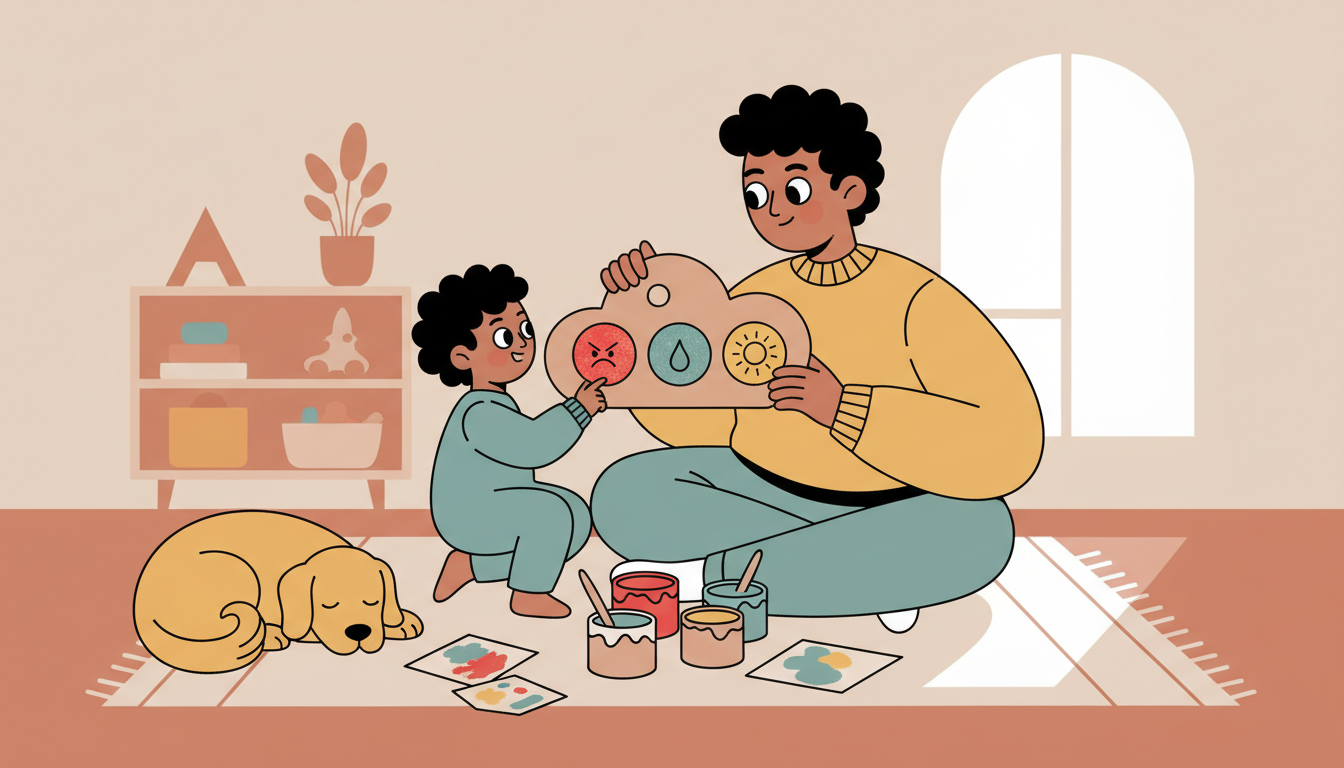
यह गतिविधि कैसे करें
Assign colors to different emotions together. Maybe red for angry, blue for sad, yellow for happy. Throughout your time together, check in by asking what color they feel. You share your color too. Draw or paint with emotion colors. This gives your child concrete language for abstract feelings.
यह क्यों काम करता है
Concrete representations help young children understand abstract emotional concepts during the age when emotional vocabulary naturally expands. Emotional intelligence development in early childhood leads to better emotional recognition, expression, and regulation skills in adulthood (Goleman, 1995). Color coding makes emotions tangible during this critical period.
माता-पिता के लिए टिप्स
Let your child choose which colors match which feelings.
Keep it simple with three or four emotions at first.
Model sharing your own emotion colors honestly throughout the day.
ज़रूरी सामग्री
Crayons or markers
Paper
सीखने के तरीके
Narrative and Literacy-Rich ExperiencesCollaborative and Cooperative PlayInquiry-Based Learning

यह गतिविधि पसंद आई? चलो, प्लानिंग हम तुम्हारे लिए कर देते हैं या योजना बनाने का काम हम पर छोड़ दो।
Steadily हर गतिविधि को तुम्हारे बच्चे की रुचियों, उनके पड़ाव, और जिन गुणों को वे विकसित कर रहे हैं उनके अनुसार तैयार करता है — ताकि खेल का समय और मज़ेदार हो और हर पल काम आए।
जानो कि Steadily कैसे काम करता है →