Balancing challenge
2–3 सालEmotional Wellbeingसामग्री: A thick book, small step stool, or masking tape for a floor line
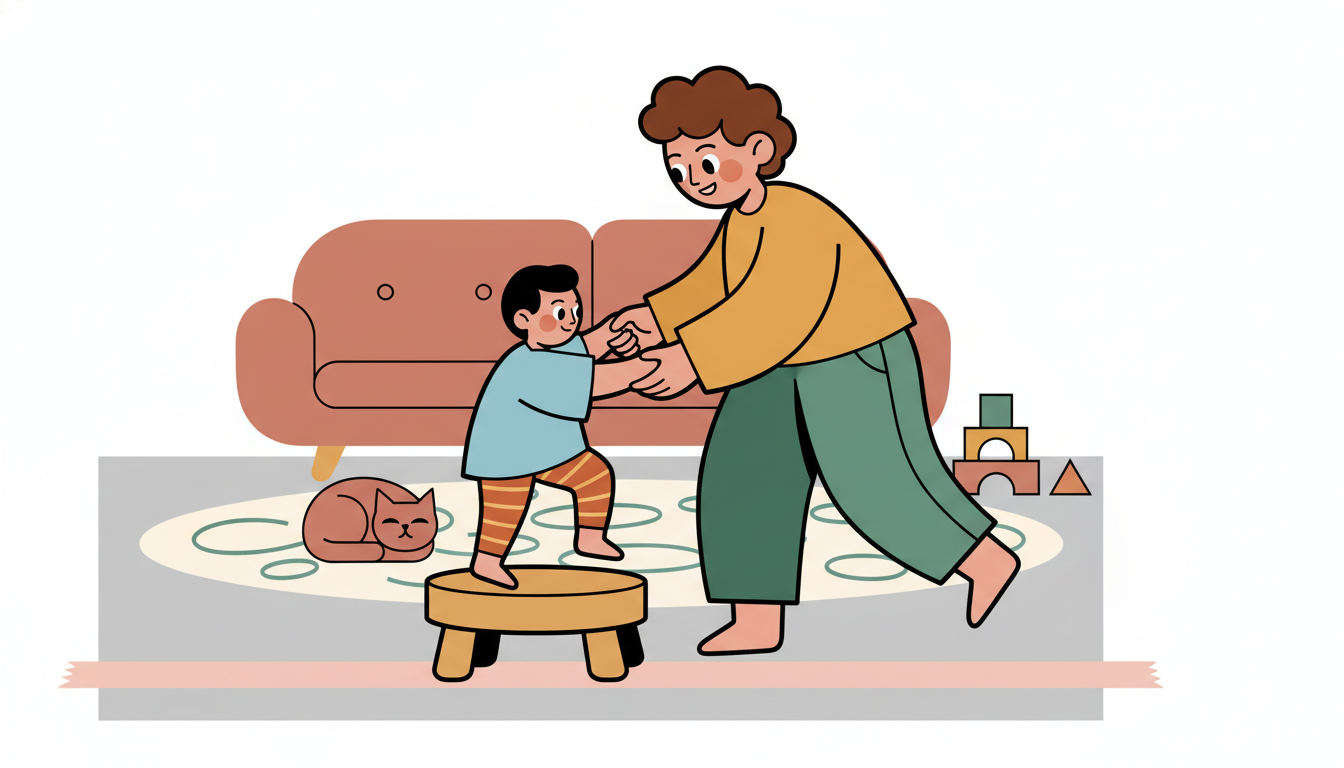
Create a simple balance challenge using a low, stable surface like a thick book or a small step stool. Hold your child's hand and let them practice stepping up and down. You can also place a piece of tape on the floor and practice walking along it. These physical challenges naturally involve wobbling and trying again, which teaches persistence through the body. The success of maintaining balance or getting back up builds confidence that effort leads to success.
Steadily की विकासात्मक यात्रा का हिस्सा — जो तुम्हारे बच्चे के लिए व्यक्तिगत रूप से तैयार की गई है।
यह गतिविधि कैसे करें
Create a simple balance challenge using a low, stable surface like a thick book or a small step stool. Hold your child's hand and let them practice stepping up and down. You can also place a piece of tape on the floor and practice walking along it. These physical challenges naturally involve wobbling and trying again, which teaches persistence through the body. The success of maintaining balance or getting back up builds confidence that effort leads to success.
यह क्यों काम करता है
Physical challenges engage your child's developing gross motor skills while building resilience through natural trial and error. The neurobiology of stress and development shows that manageable physical challenges help children develop healthy stress response systems (Gunnar & Quevedo, 2007). Research confirms that children who experience supported frustration during age-appropriate challenges at age two to three show better stress management in later childhood. Your supportive presence during physical challenges teaches your child that they can handle difficult things with help nearby.
माता-पिता के लिए टिप्स
Stay close and offer a hand for safety, but let your child do the work of balancing. This builds both skill and confidence.
When your child wobbles or steps off, say, 'Oops, let's try again,' in a calm, encouraging voice. Your tone teaches them that setbacks are normal.
Make it playful. Count steps together or pretend you're walking on a bridge. Play makes persistence easier.
ज़रूरी सामग्री
A thick book, small step stool, or masking tape for a floor line
सीखने के तरीके
Interactive Play-Based LearningSymbolic and Pretend PlaySocial Learning Through Peers

यह गतिविधि पसंद आई? चलो, प्लानिंग हम तुम्हारे लिए कर देते हैं या योजना बनाने का काम हम पर छोड़ दो।
Steadily हर गतिविधि को तुम्हारे बच्चे की रुचियों, उनके पड़ाव, और जिन गुणों को वे विकसित कर रहे हैं उनके अनुसार तैयार करता है — ताकि खेल का समय और मज़ेदार हो और हर पल काम आए।
जानो कि Steadily कैसे काम करता है →