Validation practice
2–3 सालEmotional Wellbeingकिसी सामग्री की आवश्यकता नहीं है
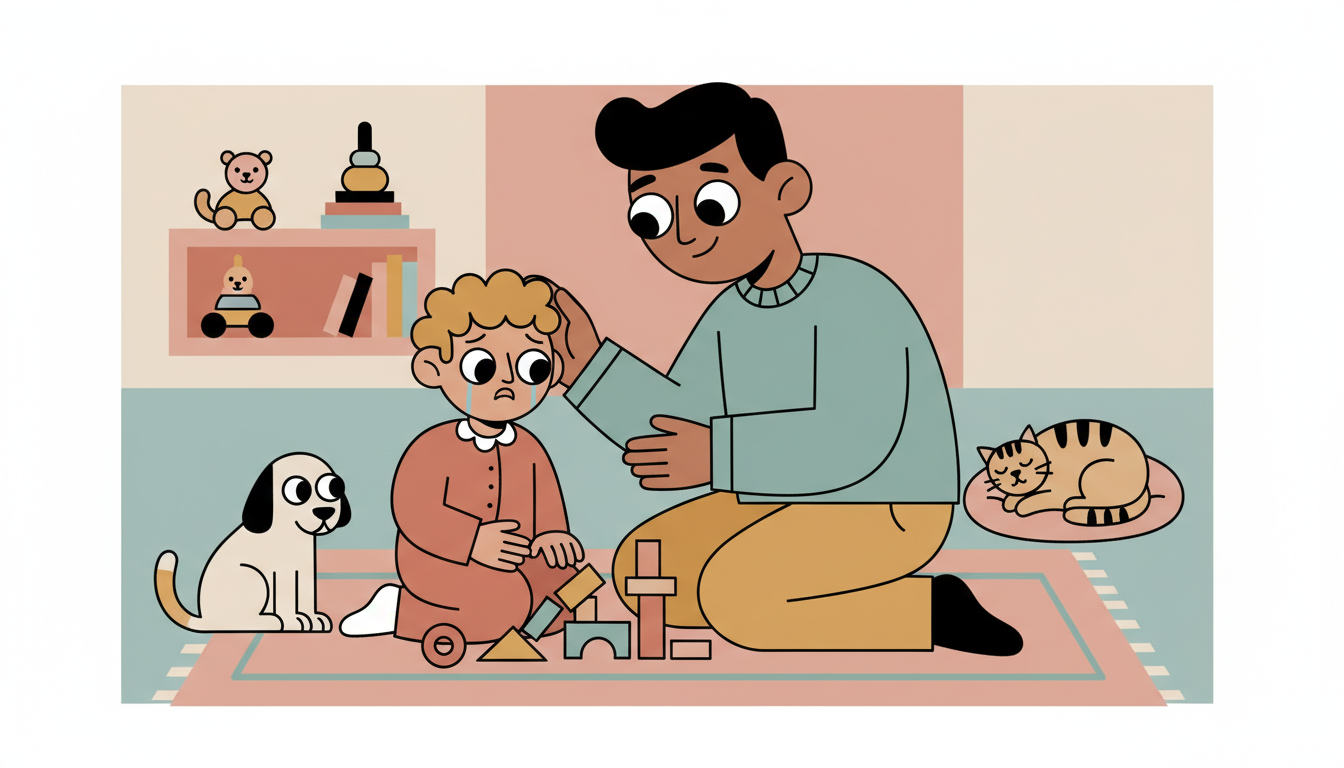
When your child shows any emotion, name it and acknowledge it before trying to solve the problem. You might say, 'You seem really frustrated that the tower fell down. That is frustrating.'
Steadily की विकासात्मक यात्रा का हिस्सा — जो तुम्हारे बच्चे के लिए व्यक्तिगत रूप से तैयार की गई है।
यह गतिविधि कैसे करें
When your child shows any emotion, name it and acknowledge it before trying to solve the problem. You might say, 'You seem really frustrated that the tower fell down. That is frustrating.'
This simple practice validates your child's emotional experience. It teaches them that all feelings are okay, even uncomfortable ones. Over time, this builds emotional awareness and trust.
यह क्यों काम करता है
Emotion coaching is the most evidence-based approach for developing emotional intelligence. Research shows that children whose emotions were acknowledged and labeled by parents at age 2-3 showed significantly better emotional regulation at age 4-5, and this early emotion coaching predicted fewer behavior problems in elementary school (Goleman, 1995). A strong positive link exists between emotional intelligence and better mental health outcomes (Mayer et al., 1999).
माता-पिता के लिए टिप्स
Validate the feeling while still setting limits on behavior. You can say, 'You're angry, and hitting is not okay.'
You don't have to fix the feeling or make it go away. Just naming it is enough.
ज़रूरी सामग्री
None
सीखने के तरीके
Symbolic and Pretend PlaySongs, Stories, and RhymesSocial Learning Through Peers

यह गतिविधि पसंद आई? चलो, प्लानिंग हम तुम्हारे लिए कर देते हैं या योजना बनाने का काम हम पर छोड़ दो।
Steadily हर गतिविधि को तुम्हारे बच्चे की रुचियों, उनके पड़ाव, और जिन गुणों को वे विकसित कर रहे हैं उनके अनुसार तैयार करता है — ताकि खेल का समय और मज़ेदार हो और हर पल काम आए।
जानो कि Steadily कैसे काम करता है →